Why an Organic Diet Is Essential for Your Parrot’s Health
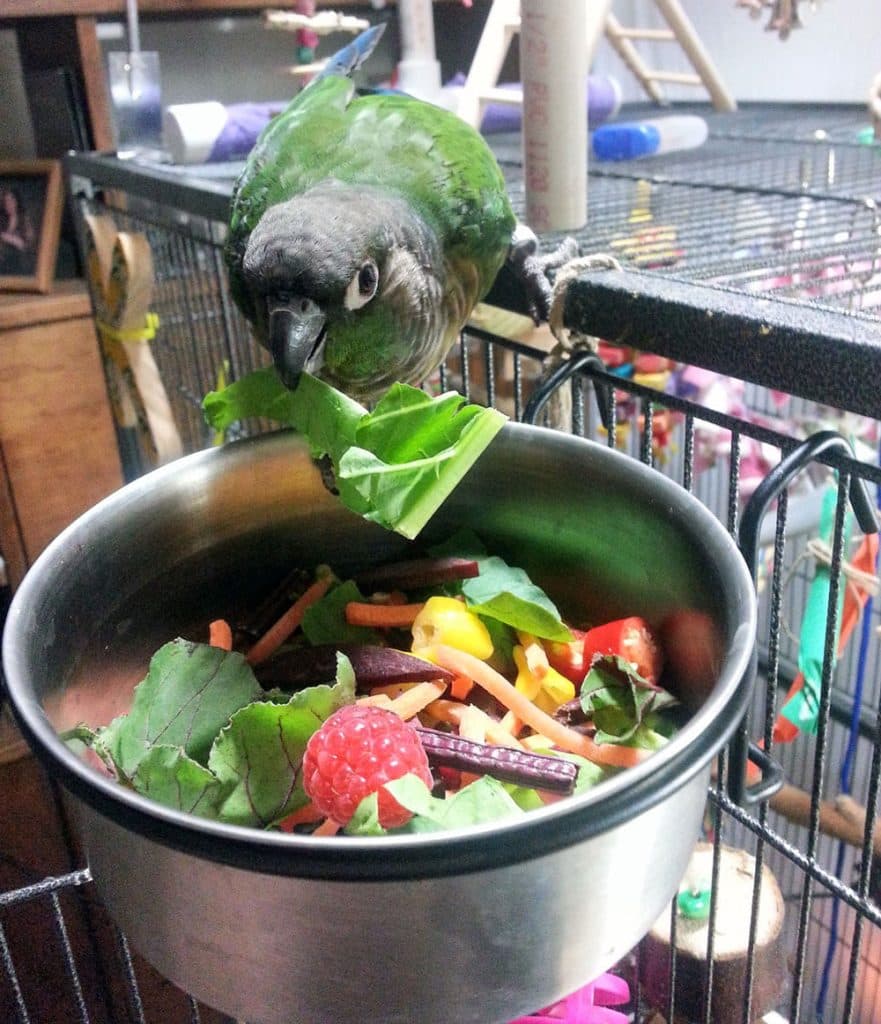
Parrots are among the most sensitive companion animals we keep when it comes to environmental and dietary toxins. From overheated non-stick cookware to trace pesticide residues on their food, exposures that a dog or a person would shrug off can seriously harm a bird. At Bird Sitting Toronto, where we board hundreds of birds every year, the diet we return a bird home eating is one of the biggest levers you have over a long, healthy life. Choosing organic produce — or handling conventional produce carefully — is a meaningful part of that.
Why Parrots Are So Vulnerable to Toxins
Birds do not breathe the way mammals do. Instead of lungs that fill and empty like bellows, a bird moves air through a one-way loop of rigid lungs and a network of thin-walled air sacs that reach into the body cavity and even into hollow bones. Air flows in a single direction across the gas-exchange surface, which makes avian respiration remarkably efficient — and it also means a bird extracts far more of whatever is in the air, good or bad, with every breath.
That efficiency is why the old "canary in the coal mine" was a canary. Fumes that a person barely notices can be rapidly fatal to a bird. The Merck Veterinary Manual documents that gases released by overheated polytetrafluoroethylene (PTFE, the non-stick coating branded as Teflon) can kill birds within minutes. Aerosols, scented candles, self-cleaning-oven fumes, and harsh cleaning chemicals belong in the same category of hazard.
Warning: Keep birds well away from the kitchen when non-stick cookware is in use, and never let a coated pan run dry or overheat. Ventilate, or better yet, cook with stainless steel or cast iron when your bird is in the home.
The same sensitivity that makes airborne toxins dangerous also applies to what your parrot eats. A parrot's body is small, its metabolism is fast, and its liver and kidneys process contaminants that arrive with food. Doses that are trivial for a larger animal are proportionally much larger for a 90-gram cockatiel or a 400-gram Amazon.
What “Organic” Actually Means
Organic produce is grown without synthetic pesticides, herbicides, or fertilizers, without sewage-sludge fertilizer, without genetic engineering, and without irradiation. In Canada, the Canada Organic logo is regulated by the Canadian Food Inspection Agency (CFIA); in the United States the equivalent is the USDA Organic seal. Both certify that a product met a defined national standard rather than relying on a marketing word like "natural," which has no legal meaning.
Organic is not a magic shield — organic farms may still use approved natural pest controls — but certified organic produce consistently carries a far lower residue load, which is exactly what matters for a bird.
Where Fresh Produce Fits in the Diet
Before worrying about pesticides, put fresh food in its proper place. For most parrots, avian veterinary consensus (Association of Avian Veterinarians, Lafeber, VCA Animal Hospitals) supports a diet built on a quality formulated pellet as roughly 75–80% of daily intake, with fresh vegetables and some fruit at about 20–25%, and seeds and nuts held back to about 5% as training treats and enrichment. Pellets provide balanced, consistent nutrition; the fresh portion adds essential vitamins, minerals, and antioxidants, variety, and foraging value.
A few birds are exceptions to the pellet rule — lorikeets need a specialized nectar diet and should avoid high-iron foods, eclectus do best on a whole-food, veg-forward diet, and finches and canaries keep a quality seed mix as their staple. But for the typical hookbill, that 20–25% of the plate is where produce quality — and pesticide exposure — comes into play.
Risks of Conventional Produce
Fresh fruits and vegetables are a cornerstone of that fresh portion, but their benefits are undercut when they arrive coated in chemical residue. Avian veterinary consensus links chronic, low-level pesticide exposure in birds to outcomes such as:
- Immune suppression and slower recovery from illness
- Neurological signs, including tremors and incoordination
- Added stress on the liver and kidneys, the organs that clear these compounds
- Reproductive and long-term cellular harm with sustained exposure
These are not reasons to cut produce out — the fresh portion of the diet is too valuable for that. They are reasons to make it as clean as you reasonably can.
Tip: If organic is unavailable or over budget, conventional produce is still far better than none. Wash thoroughly under running water, scrub firm items, and peel skins or discard outer leaves where practical. A brief soak in a bowl of water with a splash of vinegar, followed by a clean-water rinse, helps lift surface residue.
Warning: Washing removes only surface residue. Systemic pesticides are taken up into the flesh of the plant and cannot be washed or peeled away — the only way to avoid them is to buy organic for the highest-risk items below.
Which Produce Carries the Most — and Least — Pesticide
Not all fruits and vegetables carry the same burden. In her long-referenced article "Kitchen Physician III – Parrots, Produce and Pesticides," Carolyn Swicegood grouped common items by relative pesticide load. The pattern still holds today: thin-skinned, high-water items tend to be the worst offenders, while items with a peel you discard or a tough protective skin tend to be the safest. The Environmental Working Group (EWG) publishes a similar, updated "Dirty Dozen" and "Clean Fifteen" list each year that is worth checking.
| Buy organic when you can (higher residue) | Usually fine conventional (lower residue) |
|---|---|
| Strawberries | Corn |
| Bell peppers (green and red) | Sweet potatoes |
| Spinach | Cauliflower |
| Cherries (U.S.-grown) | Brussels sprouts |
| Peaches | Grapes (U.S.) |
| Cantaloupe (Mexican) | Bananas |
| Celery | Plums |
| Apples | Watermelon |
| Apricots | Broccoli |
| Green beans | |
| Grapes (Chilean) | |
| Cucumbers |
Use this as a priority guide, not a ban list: spend your organic budget on the left column, and don't feel you must buy organic strawberries to justify offering them at all.
Foods to Keep Off the Menu Entirely
Organic or not, some foods are simply toxic to parrots and should never be offered:
- Avocado — persin causes heart failure and can be fatal
- Chocolate — theobromine, and caffeine in coffee, tea, and cola
- Alcohol in any form
- Onion and garlic, raw, cooked, or powdered
- Fruit pits and apple seeds — cherry, peach, apricot, and apple seeds contain cyanogenic compounds
- Salt and very salty human snacks
- Uncooked (dried) beans and raw mushrooms
Tip: Hookbill parrots do not need grit. Unlike some seed-eating birds that swallow whole seeds, parrots shell their food, and offered grit can accumulate and cause a dangerous crop or gizzard impaction. Skip it unless your avian vet specifically prescribes it.
Putting It Together
You do not need a perfect, all-organic pantry to protect your bird — you need a sensible system. Build the diet on quality pellets, keep fresh vegetables and fruit at about a fifth to a quarter of the plate, prioritize organic for the high-residue items above, and wash everything else well. Round it out with a clean, low-fume home environment. For a deeper walk-through of safe handling and preparation, see our guide to keeping your parrot's diet clean and risk-free.
By choosing clean food, you are not just feeding your bird — you are protecting them from invisible exposures that add up quietly over the years and decades a well-cared-for parrot can live.
Explore related topics
Related Articles
Can Parrots Eat Human Food? A Complete Guide to Sharing Meals
Your parrot wants to eat off your plate. Which human foods are safe to share and which are dangerous?
The Complete Guide to Parrot Pellets: Brands, Conversion, and Myths
Pellets should be 50-70% of your parrot's diet, but not all pellets are equal. Here's everything you need to know.
Cooking for Your Parrot: 15 Recipes and Meal Ideas They'll Love
Variety is the spice of your parrot's diet. These easy recipes make feeding time exciting and nutritious.