How Music and Dance Enrich Your Bird’s Life
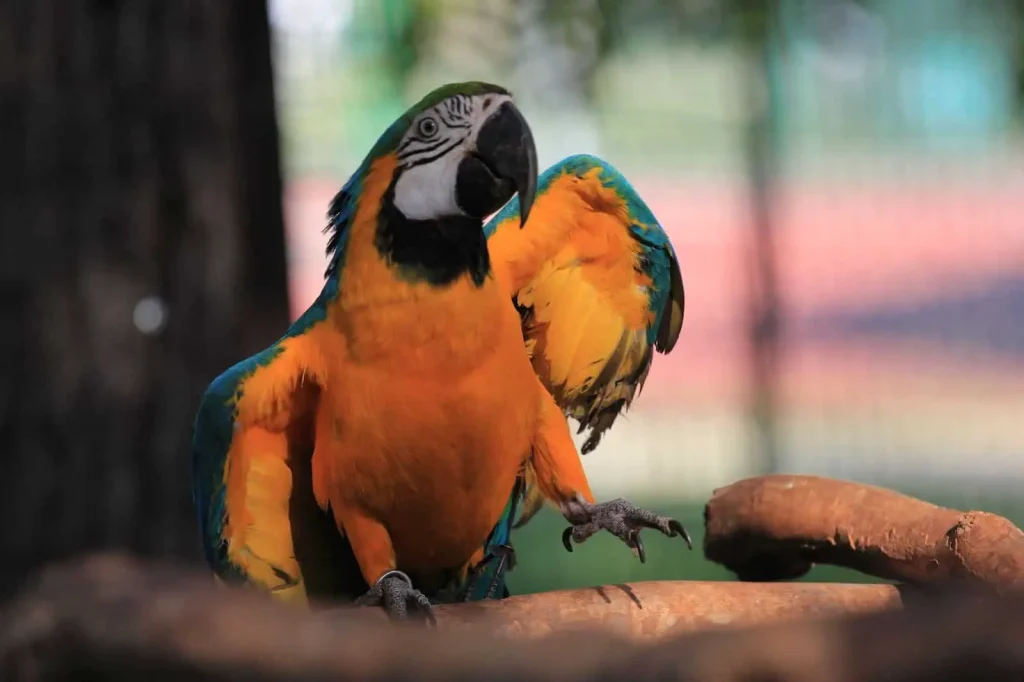
The Emotional Power of Music
Music has a remarkable hold on human emotion. It can pull back a memory, lift a low mood, settle us during stress, or push us through a hard workout. It works across languages and cultures because it speaks to something older than words. So it is a fair question to ask whether the parrot on your shoulder — an intensely social, intelligent animal — feels any of that too.
The short answer, backed by a growing body of research, is that many birds do respond to music in meaningful ways, and that a thoughtful soundtrack can become one of the easiest forms of daily enrichment you offer. Used well, music and movement lower boredom, invite interaction, and strengthen the bond between you. If your bird tends toward anxiety or feather-related stress, pairing calm music with the routines in our guide to reducing stress in pet parrots can make the whole household calmer.
Do Birds Really Respond to Music?
We cannot climb inside a parrot's head and hear what it hears, but we can watch behaviour, and behaviour tells us a great deal. Many species — from humpback whales to songbirds — produce structured, repeating vocal patterns that we would call "song," and parrots are famous mimics who fold whistles, melodies, and household sounds into their own repertoire. Birds also perceive sound differently than we do: their hearing resolves rapid changes in pitch and timing far more finely than ours, which is part of why a parrot can copy the exact cadence of a ringtone or a spoken phrase. For more on how a bird actually experiences its world, see our overview of avian senses and survival.
What matters for enrichment is not whether your bird "understands" a song the way you do, but whether it engages with it — leaning in, vocalizing back, moving, or visibly relaxing. Those responses are real, and they are yours to observe and encourage.
Can Birds Dance? What Snowball Taught Science
For a long time, moving in time to a beat — true rhythmic entrainment — was assumed to be a uniquely human trick. Then along came Snowball, a sulphur-crested cockatoo whose head-bobbing, foot-lifting dances to pop songs were studied by neuroscientist Aniruddh Patel and colleagues, first reported in the journal Current Biology in 2009. When researchers sped the music up and slowed it down, Snowball adjusted his tempo to match, showing he was tracking the beat itself rather than simply repeating a memorized routine. A later study by the same group documented that Snowball had developed at least fourteen distinct, self-invented dance moves — improvised, not trained.
That work reframed dancing as something more than a cute party trick. It became evidence that at least some non-human animals can genuinely perceive and move to a musical beat.
The vocal-learning link
Why parrots and not, say, dogs or cats? Patel's leading explanation is the vocal-learning hypothesis: the same brain machinery that lets an animal learn new sounds by ear — hearing a sound, then reshaping its own vocal output to match — is closely tied to the ability to lock movement onto an external rhythm. Complex vocal learners are a short list: humans, parrots, songbirds, hummingbirds, and a handful of others. Your parrot's talent for mimicry and its capacity to dance appear to spring from the same neural roots. That is also why beat-keeping shows up so reliably in parrots and so rarely in animals that do not learn their vocalizations.
For your bird, the practical takeaway is simple: movement to music is normal, healthy, species-typical behaviour, and it belongs in the same category as foraging and play when you think about keeping your parrot mentally and physically healthy.
Why Music and Dance Matter for Enrichment
Captive parrots have big, busy brains and, often, not enough to do. Under-stimulation is a common root of screaming, feather-destructive behaviour, and general restlessness. Music and dance help on several fronts at once:
- Mental stimulation. A varied, changing soundscape gives an active mind something to track and respond to.
- Physical movement. Bobbing, wing-flapping, and stepping side to side are gentle exercise, especially valuable for indoor birds during a long Toronto winter.
- Social bonding. Singing, whistling, or dancing with your bird is shared, positive attention — the currency parrots value most.
- Emotional regulation. Slow, quiet music can settle a wound-up bird; upbeat music can coax a bored one into play.
At Bird Sitting Toronto, where we board hundreds of birds every year, low background music during the day is one of the simplest tools we use to keep a room of parrots relaxed and occupied.
Building Music into Your Bird's Day
You do not need a plan or a playlist app. You need attention and a little consistency.
- Experiment with genres. Try classical, acoustic, reggae, jazz, and upbeat pop on separate days and watch what draws your bird in. Preferences are individual — one cockatiel will bop to a fast pop hook while the next relaxes to fingerstyle guitar.
- Anchor it to routines. Soft music during morning cage cleaning or in the hour before the cover goes on becomes a comforting, predictable cue.
- Join in. Sing, whistle a phrase, sway, or lift a foot. Many birds mirror their person, and a bird that dances with you is getting the enrichment and the relationship at the same time.
- Rotate the experience. Just as you swap toys to keep them interesting, change the music. Pair new songs with a fresh foraging toy so the whole session feels novel — and keep those toys clean between uses per our guide to cleaning parrot toys and cage accessories.
A simple daily rhythm
A gentle template many owners find easy to keep: quiet acoustic or classical music in the morning while you tidy the cage; an interactive song or two during afternoon out-of-cage time, where you actively dance and whistle together; and then true quiet in the evening as the room winds down toward sleep. The goal is contrast — active and social, then calm and still — not sound all day long.
Reading Your Bird's Response
Let your bird tell you whether the music is a hit. Watch the body language rather than assuming.
| What you see | Likely meaning | What to do |
|---|---|---|
| Head-bobbing, foot-tapping, "tall" relaxed posture, whistling or singing along | Enjoyment and engagement | Keep going; join in and interact |
| Fluffed but loose feathers, beak grinding, one foot tucked up, drowsy | Calm and content | A good background choice for winding down |
| Wing-flapping in place, excited vocalizing back at you | Wants to interact | Step in, dance, and give attention |
| Raised crest, pinned (rapidly narrowing) eyes, screaming, lunging or pacing | Overstimulation | Lower the volume or switch to calmer music |
| Retreating to the back of the cage, crouched low, trying to hide, rapid breathing | Fear or stress | Turn it off; try a quieter genre later |
Every bird is an individual, so treat this as a starting map, not a rulebook. The pattern you learn over a couple of weeks is worth more than any general chart.
Keeping It Safe: Volume, Sleep, and Quiet Hours
Music is enrichment only when it is on your bird's terms. A few guardrails keep it that way.
Tip: Keep the volume at a comfortable conversational level — roughly the loudness of normal speech in the room. If you would have to raise your voice to talk over it, it is too loud for sensitive avian ears.
Warning: Do not place a speaker right against or on top of the cage, and never use music your bird cannot escape. A bird confined next to a loud, sustained sound source has no way to retreat. Position speakers across the room and always leave your bird an option to move away.
Sound also has to respect sleep. Avian veterinary consensus holds that most parrots need roughly 10 to 12 hours of uninterrupted, dark, quiet sleep each night; chronic sleep disruption is linked to irritability, hormonal behaviour, and stress. Wind the music down well before bedtime and keep the sleeping hours genuinely quiet. And as with any new activity, supervise the first sessions — if a startled bird flaps hard and injures a wing or bleeds a feather, our guide to first aid for birds will walk you through the immediate steps.
Conclusion: A Musical Bond That Benefits You Both
Music and dance tap into something genuinely wired into your parrot's brain — the same vocal-learning ability that lets it mimic your voice also lets it feel and move to a beat. Offered thoughtfully, with attention to your bird's reactions, a sensible volume, and protected sleep, a little daily music becomes real enrichment: less boredom, more movement, and more shared, joyful moments between the two of you. Turn something on, watch how your bird answers, and let the two of you find your rhythm together.
Explore related topics
Related Articles
Do Parrots Understand What They Say? The Science Is Surprising
Is your parrot just mimicking or do they actually understand? The research says it's more complex than simple mimicry.
How to Stop My Parrot from Screaming: A Step-by-Step Plan
Your parrot's screaming is driving you crazy. This structured plan addresses the root cause, not just the symptom.
Teaching Your Parrot to Whistle Tunes: A Fun Training Guide
Cockatiels are famous for it, but many species can learn tunes. Here's how to teach your bird to whistle your favorite song.