Avian Senses and Survival: How Parrots Experience the World
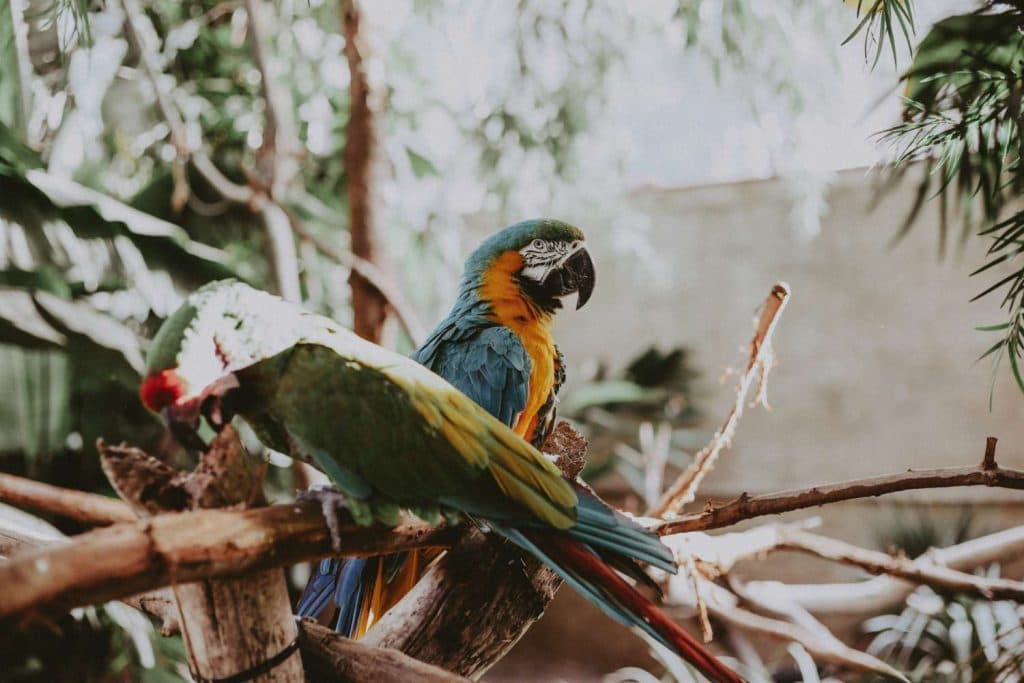
Your parrot is watching, listening, and reading the room far more carefully than you might realize. Every prey animal survives by paying attention, and parrots are no exception. In the wild they make constant, split-second decisions about where to forage, when to flee, who to bond with, and how to move through a busy canopy. Those same instincts are alive and well in your living room.
At Bird Sitting Toronto, where we board hundreds of birds every year, we have learned that understanding how a parrot experiences the world is the difference between a bird that feels safe and one that feels hunted. Once you start to see the room through your bird's senses, a lot of "mystery" behaviour — the sudden startle, the long stare at a blank wall, the flat refusal of a new food — stops being mysterious.
Among all the senses, vision and hearing do the heavy lifting for survival, while smell, taste, and touch play quieter but genuine supporting roles.
Vision: A Parrot's Survival Superpower
Vision is by far the most developed and relied-upon sense your parrot has. Like most prey animals, its eyes sit on the sides of the head rather than the front, giving it a nearly 360-degree field of view. That panoramic coverage is a threat-detection system: a wild parrot can register movement from almost any direction without turning its head.
This wide placement comes with a trade-off. Because the two eyes overlap only a little, binocular vision and true depth perception are limited compared with ours. Parrots make up for it in other ways, including the ability to shift focus extremely fast — an enormous advantage when threading through branches in flight or veering away from a predator.
A few features make avian eyesight genuinely remarkable:
- Large eyes. A parrot's eyes are big relative to its head, gathering plenty of light and detail.
- Two foveae per eye. Each eye contains two focal points, so your bird can concentrate on more than one thing at once — tracking food up close while still monitoring the horizon.
- A protective third eyelid. Parrots blink using a transparent nictitating membrane that sweeps across the eye to clean and shield it while keeping vision essentially uninterrupted.
- Weak night vision. Their eyes are built for daylight, which is why nocturnal hunters like owls pose such a serious threat in the wild — and why a bird stranded in the dark can panic and thrash.
- Ultraviolet colour vision. Parrots see a broader colour spectrum than humans, including ultraviolet light. This UV sensitivity helps birds read subtle differences in plumage, which matters for choosing a mate, and helps them spot ripe or nutritious food.
Tip: Because parrots perceive UV and process a wider colour range than we do, the lighting in your home is not a small detail. Full-spectrum avian lighting and access to natural daylight support both vision and overall wellbeing. The Association of Avian Veterinarians and Lafeber both note that appropriate UV-A/UV-B exposure benefits many companion parrots kept indoors, where ordinary window glass filters most useful UV out.
Hearing: Tuned for the Flock
Hearing is the parrot's second great survival sense, and in the wild it is deeply social. Flock members use calls to stay in contact, coordinate movement, and — critically — warn one another the instant a threat appears. When your bird "screams" as you leave the room, it is very often running that same contact-call instinct: it has lost sight of its flock and is trying to locate you.
Here is what avian anatomy and behaviour tell us about how your parrot hears:
- Parrots detect a narrower range of frequencies than humans, especially at the very high and very low ends.
- Within that range, however, they perceive rapid changes in pitch and tone far better than we do. A sound that seems flat or simple to us may carry a wealth of detail to a parrot — part of why they can mimic speech and melody so precisely.
- Parrots have no external ear flaps, but their inner ears contain the same three chambers found in the human ear.
- The middle ear has a single bone, the columella, where humans have three (the hammer, anvil, and stirrup).
- Specialized feathers called auriculars cover the ear openings, protecting them without muffling incoming sound.
Warning: A parrot's sharp, detail-rich hearing means loud or chaotic households are genuinely stressful. Sustained loud music, shouting, or a blaring TV can raise a bird's baseline anxiety and, over time, contribute to feather-destructive behaviour. Give your parrot a quieter zone of the home and predictable daily rhythms.
Smell and Taste: Quiet but Real
For years, birds were assumed to have a poor sense of smell. That view has softened. Parrots specifically have not been studied as thoroughly, but research on other bird species shows that olfaction matters more than once believed — playing a part in navigation, locating food, and even mate selection. It is fair to say a parrot's sense of smell is understated rather than absent.
Taste, meanwhile, is modest but present. Parrots clearly show food preferences even though their equipment is far simpler than ours.
| Feature | Parrot | Human |
|---|---|---|
| Approximate taste buds | Fewer than 100 | Around 10,000 |
| Location of taste buds | Base of the tongue and back of the throat | Across the tongue, including the tip |
| Tongue structure | Contains a bone; hardened at the tip to manipulate food | Soft, muscular, no bone |
Even with so few taste buds, this sense earns its keep: it likely helps wild parrots reject spoiled or toxic foods before they swallow.
Tip: Because taste is limited and preferences form early, converting a seed-addicted parrot to a balanced diet takes patience, not force. Most parrots do best on a diet built around a quality pellet — roughly 75 to 80 percent of daily intake — with about 20 to 25 percent fresh, vegetable-forward foods and only about 5 percent seeds or nuts as treats. Introduce new foods repeatedly and without pressure; a bird may need to see a new vegetable a dozen times before it registers as food. This gradual, pellet-based approach reflects the dietary guidance you will find from the Association of Avian Veterinarians and in the Merck Veterinary Manual.
Touch: Building Trust Through the Skin
Touch is less headline-grabbing than vision or hearing, but it still shapes how your parrot navigates and relates to the world. Sensory nerve endings in the skin let birds detect pressure, temperature, and pain. Practically, this sense helps them preen effectively, handle objects and food, and move carefully through their surroundings.
Touch also has a powerful social dimension. In a wild flock, allopreening — birds grooming one another — reinforces pair bonds and eases tension. In your home, gentle and clearly welcome contact, along with mutual grooming behaviours, is part of how a parrot builds physical trust with its human caretakers. The key word is welcome: forced handling reads as a predator's grip, not affection.
Why This Matters for Your Bird's Care
None of this is trivia. When you understand that your parrot sees UV patterns you cannot, hears detail you would miss, and startles easily because its whole nervous system is wired for survival, a better home starts to design itself:
- Position the cage so your bird has a clear, wide view but also a wall or solid corner at its back for security.
- Offer full-spectrum light and real daylight wherever you can.
- Keep the household soundscape calm and the daily routine predictable.
- Introduce new foods and objects gradually, respecting a prey animal's caution.
- Read touch as a conversation, not a command — let your bird opt in.
Parrots perceive the world very differently than we do, with a precision honed by millions of years of evolution. Their exceptional eyesight, finely tuned hearing, and selective use of smell, taste, and touch are what let them thrive in the wild. Understanding those senses is exactly what lets us build safer environments and deeper bonds with them in our homes.
Explore related topics
Related Articles
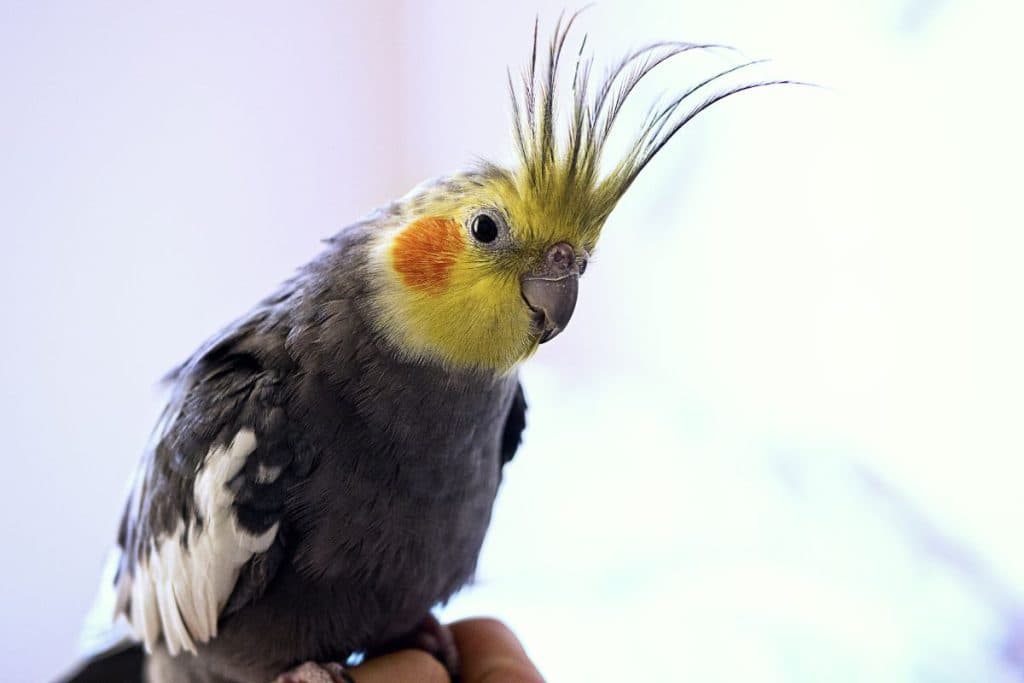
How Birds Use Their Senses for Survival: A Parrot’s Sensory World
Vision and hearing dominate a parrot's world, but smell, taste, and touch all shape how your bird eats, bonds, and stays safe. Here's how each avian sense works, and how to use that knowledge to build a calmer, richer home for your companion parrot.
Building Natural Branch Perches: A Step-by-Step Guide
Natural branches are the best perches — varied diameter, texture, and chewing opportunity. Here's how to prepare them safely.
Creating a Parrot-Safe Outdoor Space: Aviaries and Screen Porches
Fresh air and sunshine are incredible for parrots. Here's how to give outdoor time safely.