Lorikeet Care Guide: The Complete Owner's Handbook
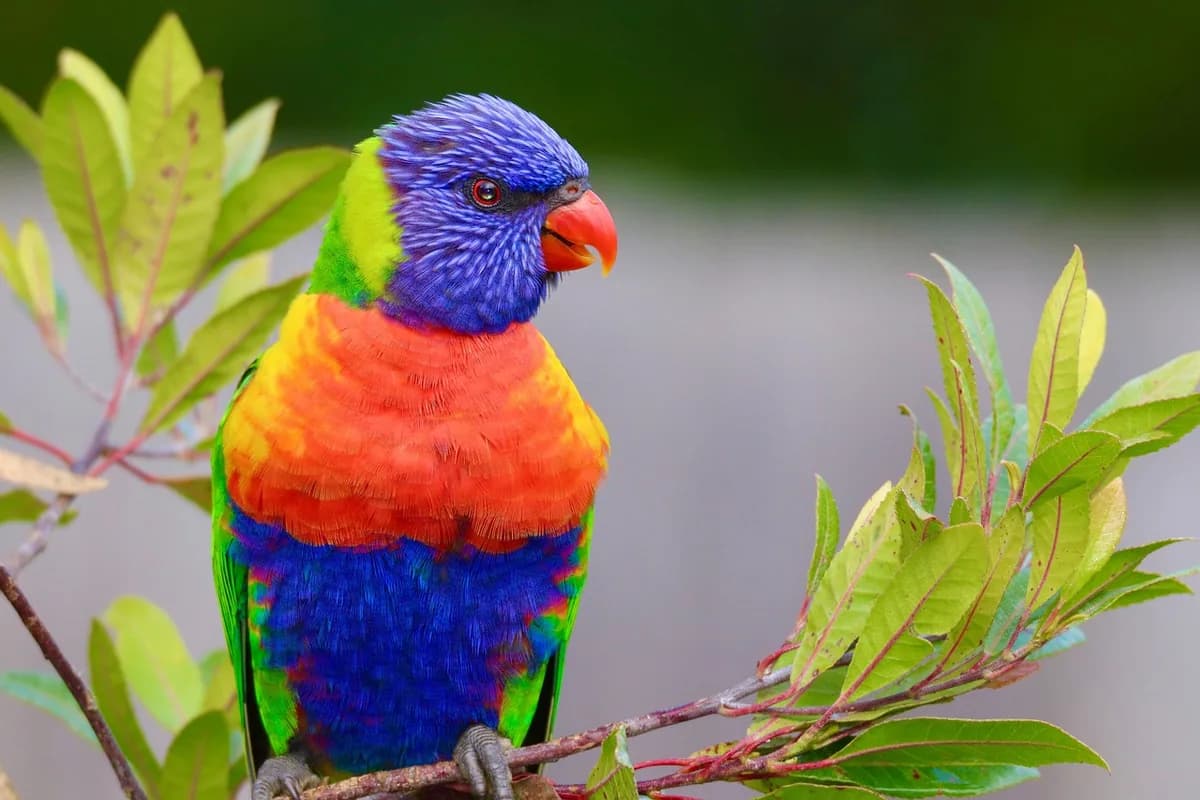
There is no parrot quite like a lorikeet. Where most companion birds crunch seed and pellets, lorikeets lap up liquid nectar with a specialized brush-tipped tongue. Where other parrots perch and observe, lorikeets bounce, wrestle, hang upside down, and dive into their bath with an enthusiasm that borders on comedy. At Bird Sitting Toronto, where we board hundreds of birds every year, the lorikeets are unmistakable — the most acrobatic, the most affectionate, and reliably the messiest guests in the room.
This guide is the hub for lorikeet care. It covers who these birds are, how to house them properly, and the daily rhythm that keeps them healthy. For the deep detail on feeding, behavior, health, and training, follow the links to the dedicated articles.
Is a Lorikeet Right for You?
Lorikeets belong to the Loriinae subfamily and hail from Australia, Southeast Asia, and the Pacific Islands. They range from small to medium — roughly 15 to 38 cm (6 to 15 in) and 20 to 280 g depending on species, from the compact Goldie's lorikeet to the substantial rainbow lorikeet. With good care they live 15 to 30 years, so this is a genuine long-term commitment.
They are best suited to experienced, hands-on keepers. Consider the realities before you commit:
- Noise (4/5): Lorikeets are loud. Piercing contact calls, chatter, and shrieks are part of the package. They are a poor match for shared walls and thin-walled condos.
- Talking (3/5): Some learn a handful of words and mimic whistles, but they are valued far more for personality than speech.
- Mess: Their liquid nectar diet produces liquid, projectile droppings. Expect to wipe walls and floors daily. This is normal, not a sign of illness.
- Energy: These are hyperactive, playful, affectionate birds that demand hours of interaction and enrichment every day.
If you want a calm, quiet, low-mess parrot, a lorikeet is the wrong bird. If you want a vibrant, comical, deeply interactive companion and you can handle the cleanup, few birds are more rewarding.
Housing Your Lorikeet
Lorikeets are perpetual-motion birds, and they need horizontal room to fly, swing, and play. Prioritize length over height.
| Spec | Recommendation |
|---|---|
| Minimum cage (single bird) | 90 x 60 x 90 cm (36 x 24 x 36 in); bigger is always better |
| Bar spacing | 1.3 to 1.9 cm (1/2 to 3/4 in) to prevent head entrapment |
| Cage shape | Rectangular — corners give a bird security; avoid round cages |
| Room temperature | Comfortable indoor range, roughly 18 to 27 C (65 to 80 F); avoid drafts and sudden swings |
| Humidity | 40 to 60% — helpful in dry Toronto winters when indoor heating drops humidity |
A few lorikeet-specific housing notes:
- Perches: Offer natural wood perches of varying diameters (grapevine, manzanita, dowel-free branches) to exercise the feet and prevent pressure sores. Add a few positioned for climbing and swinging.
- Bath access: Lorikeets are enthusiastic bathers. Provide a shallow dish or clip-on bath, or mist them — daily bathing is important for feather health and is one of their favorite activities.
- Easy-clean surfaces: Because of the liquid droppings, choose a cage with a wide seed guard or removable skirt, and place washable mats or acrylic panels around it. Position the cage away from the kitchen (cookware fumes are deadly) and out of direct sun and drafts, but in a social part of the home.
Tip: Line the cage tray with plain paper and change it at least once daily. The sugary, watery droppings ferment quickly, and a clean tray is your first defense against the bacterial and yeast problems lorikeets are prone to.
Diet at a Glance
This is the single biggest way lorikeets differ from other parrots: they are nectar specialists, not seed or pellet birds. Feed a commercial wet or dry lorikeet nectar diet as the foundation, supplemented with fresh fruit, edible flowers, and pollen. Their brush-tipped tongue is built for exactly this.
Two rules matter enormously:
- Nectar spoils fast. Make it fresh and change it at least twice a day, more in warm weather. Spoiled nectar breeds bacteria and yeast.
- Avoid high-iron foods. Lorikeets are prone to iron-storage disease (haemochromatosis), so keep dietary iron low.
The full breakdown, safe and toxic food lists, and hydration details live in the diet and nutrition guide.
A Daily Care Routine
- Morning: Serve fresh nectar and a plate of chopped fruit and vegetables. Remove yesterday's food. Refill water. Do a quick head-to-tail look-over for anything off.
- Midday: Change the nectar (it will have started to spoil). Offer a bath or misting. Rotate a foraging toy.
- Afternoon/evening: Out-of-cage time — several hours of supervised play, flying, and interaction. Lorikeets thrive on physical, social engagement.
- Night: Wipe down surfaces, remove all remaining wet food, and settle your bird for 10 to 12 hours of dark, quiet sleep.
Health, Enrichment, and Socialization in Brief
- Health: The big lorikeet-specific risks are iron-storage disease, candidiasis (yeast) from the sugary diet, bacterial infection from spoiled nectar, and obesity. Establish care with an avian vet and read the common health issues guide.
- Enrichment: These are athletes. Provide swings, ladders, foraging toys, and destructible items, and rotate them often to keep that busy brain occupied.
- Socialization: Lorikeets bond intensely and need daily one-on-one time. They can turn bitey when hormonal — learning to read the signals in the behavior and body language guide prevents most bites, and the training tips will help you channel that energy into cooperative behavior.
The Bottom Line
A lorikeet is a demanding, extraordinary companion — a rainbow-colored acrobat who will greet you with genuine joy every day, for well over a decade. Give it a large cage, a fresh nectar diet, daily baths, hours of play, and a good avian vet, and you will have one of the most entertaining birds in the world sharing your home.
Explore related topics
Related Articles

Best Talking Parrot Species Ranked: From Chatterbox to Silent Type
Which parrots actually talk? Here's an honest ranking with realistic expectations for each species.
Bourke's Parakeet: The Complete Care Guide for This Gentle Species
Bourke's parakeets are the calmest, quietest parrots you'll ever meet. Perfect for beginners and apartments.
Lineolated Parakeet: The Complete Care Guide for Linnies
Lineolated parakeets (linnies) are quirky, quiet, and surprisingly cuddly. Here's everything you need to know.