Flock Life and Parrot Security: Why Social Living Matters
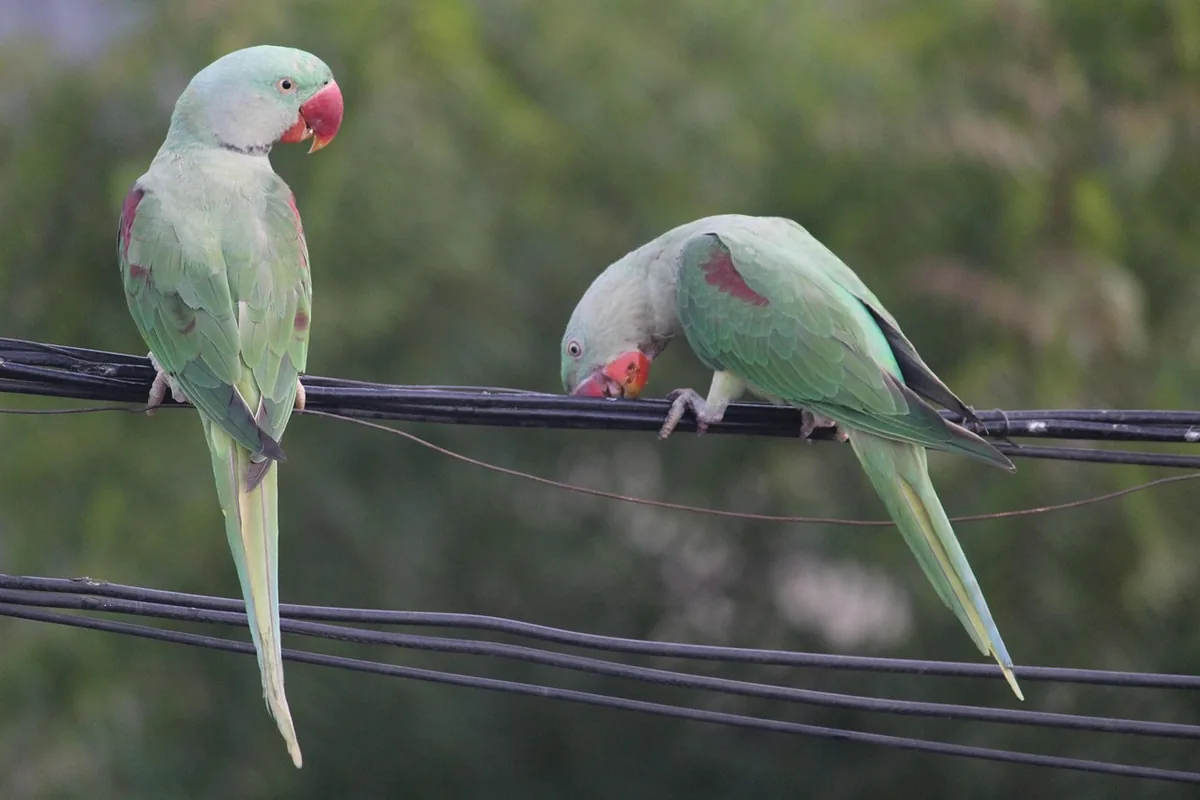
Watch a wild flock of macaws lift off a clay lick in a single wheeling mass, and you are seeing a survival strategy tens of millions of years in the making. A parrot on its own in nature is a rare, vulnerable sight. Everything about how these birds are built — their eyes, their voices, their instincts — assumes company. When you bring a parrot home, you do not switch that wiring off. You inherit it. Understanding the flock is the fastest way to understand the bird sitting on your shoulder.
At Bird Sitting Toronto, where we care for hundreds of birds a year, the companions who cope best with a new environment are almost always the ones who feel securely folded into a "flock" — whether that flock is a family, a bonded mate, or a trusted sitter.
Parrots Are Natural Flock Animals
In the wild, parrots depend on group living for both survival and social connection. Some species tend to keep to their own kind: African greys, for instance, often gather in large single-species roosts. Others — Amazons, macaws, and many conures — readily mix, foraging and travelling alongside different parrot species and sharing the same food trees and clay licks.
Flock size is not fixed. It shifts with the species, the time of day, and the task at hand. A flock will often break into small foraging parties at first light, spread across the canopy through the day, then reassemble into a large, noisy roost at dusk. That expand-and-contract rhythm is deliberate: small groups forage efficiently, large groups sleep safely.
Why Flock Living Is Essential for Survival
Parrots are prey animals, and the flock is their primary defense. In nature it is unusual to see a parrot entirely alone — a solitary bird is often sick, injured, or elderly, and therefore an easy target. Numbers change the math for a predator.
The mechanism is simple and effective. While some flock members feed, others act as sentinels, heads up and scanning the sky and treeline. The moment one bird sounds the alarm, the whole group is airborne. A predator that dives into a swirling, screaming flock struggles to lock onto any single target — the confusion of many bodies moving at once is itself a shield.
The most dangerous threats come from above. Birds of prey are built for ambush, and a diving raptor is astonishingly fast: a falcon in a full stoop can exceed 300 km/h (about 190 mph), giving a parrot only a heartbeat to react.
| Threat | Where it hunts | Main risk to |
|---|---|---|
| Hawks, falcons, eagles | The open sky | Flying and perched adults |
| Owls | Dusk and dark roosts | Roosting adults |
| Snakes | Nest cavities and branches | Eggs and chicks |
| Monkeys and other tree mammals | The canopy | Eggs and nestlings |
Tip: Your parrot inherited that sky-watching instinct. Many companion birds panic at anything passing overhead — a ceiling fan switching on, a hand reaching down from above, a hawk's shadow crossing a window. Approach at or below eye level, and introduce overhead movement slowly, and you will spook your bird far less often.
To understand more about how parrots pick up on danger before you ever do, see our guide to avian senses and survival.
A Typical Day in the Life of a Wild Flock
Wild flocks run on a predictable daily schedule, and that predictability is part of what keeps them safe. A typical day looks like this:
| Time of day | What the flock is doing |
|---|---|
| Dawn | Wake, stretch, and call to reassemble the group |
| Sunrise | Fly out to foraging grounds |
| Midday | Rest in the shade — preen, bathe, socialize, and play |
| Afternoon | Return to foraging as the heat eases |
| Dusk | Fly back to a communal roost for the night |
Notice how much of the day is not about food. The midday lull is devoted to grooming, bathing, and play — the social glue that holds a flock together. Companion parrots crave that same rhythm of activity and rest. A steady daily routine at home gives them the security they would otherwise draw from the flock; you can read more in our overview of essential ways to keep your parrot healthy and thriving.
More Than Safety: Social and Emotional Benefits
Flock life is not only about staying alive — it is where a parrot learns to be a parrot. Beyond protection, the group offers a rich social world built on play:
- Physical play and games of chase
- Beak fencing and gentle wrestling
- Mock fights that rehearse real conflict without the risk
Young parrots learn the skills that keep them alive — what is safe to eat, where the water is, how to read an alarm call — largely by watching older, experienced flock members. Dr. Irene Pepperberg's decades of work with Alex, an African grey, showed how powerfully these birds learn in a social context: her celebrated "model/rival" method worked precisely because greys are wired to learn by watching another individual succeed. Your parrot is doing the same thing when it studies you. For safe ways to channel that curiosity, see our guide to cleaning your bird's toys and cage accessories.
Parrot Communication and the Contact Call
Parrots are relentlessly vocal because a flock has to stay in touch across dense forest where members often cannot see one another. Their calls carry a surprising amount of information:
- Greetings that confirm who is nearby
- Alarms that scramble the flock into the air
- Location updates — "I'm over here, where are you?"
- Emotional states, from contentment to alarm
The most important of these is the contact call: a bird calls out, and a flockmate calls back, and both are reassured that the group is intact. This single instinct explains one of the most common frustrations owners bring to us. When you leave the room and your bird shrieks, it is not misbehaving — it is contact-calling the flock that just vanished. Answer with a word or a whistle and you complete the exchange, exactly as a flockmate would.
Warning: Never punish a contact call by yelling back. To your parrot, a raised voice from across the house sounds like a loud answering call — proof that the flock is responding and worth calling for. Punishment tends to make the screaming louder, not quieter. Reward the quiet calls, answer the reasonable ones, and the volume settles on its own.
That same flock instinct is why parrots handle a planned, calm handover to a sitter far better than a sudden absence. Understanding the contact call also helps you spot stress early; our guide to reducing stress in pet parrots covers this in depth.
You Are Their Flock
In captivity, you and your household become the flock. This is not sentimentality — it is biology. Your parrot does not merely enjoy being included in daily life; its nervous system expects it. A bird left alone in a back room for most of the day is, in flock terms, a bird that has been abandoned, and avian veterinary consensus links that kind of chronic isolation to stress behaviours such as feather-destructive plucking, screaming, and depression.
Fortunately, being a good flock is mostly about presence:
- Let your parrot join the family at mealtimes — flocks eat together
- Keep them in the room while you read, work, or watch television
- Offer supervised out-of-cage time when you are simply nearby
None of this requires constant hands-on attention. Often the bird just wants to be within earshot and eyeline of its flock, doing its own thing while you do yours. That steady, low-key inclusion is what builds a parrot's sense of security and belonging. And because a lone bird has no flockmate to watch over it, keep a bird first-aid kit ready — in the wild, the flock is the safety net; at home, that job is yours.
A Social Life Is a Safe Life
For a parrot, flock life is not a luxury layered on top of survival — it is survival. The flock keeps the bird safe, teaches it the skills it needs, and gives it the social contact its brain is built to expect. When you understand that instinct and honour it — answering the contact call, folding the bird into the ordinary rhythm of your day, planning calm handovers when you travel — you are not spoiling your parrot. You are giving it the one thing millions of years of evolution taught it to need: a flock it can count on.
Explore related topics
Related Articles
Ethical Bird Ownership: Breeder, Rescue, or Pet Store?
Where you get your bird matters — for the bird, for the species, and for the industry. Here's an honest look.
How Parrots Bond with Humans: The Science of the Human-Bird Relationship
The bond between a parrot and their human is real, deep, and scientifically documented. Here's how it works.
Joining the Bird Community: Clubs, Forums, and Resources for Parrot Owners
You don't have to figure out bird ownership alone. Here's where to find your bird-loving community.