Why Good Hygiene Is Essential for Your Bird's Health
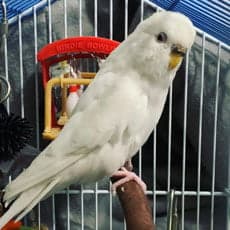
In the wild, birds instinctively avoid roosting near their own waste, forage for fresh food and water, and bathe in rain showers that keep their feathers waterproof and gleaming. Foraging and chewing naturally wear their beaks and nails to a healthy length. A companion bird in your Toronto living room has none of that. Everything that keeps your bird clean, dry, and disease-free now depends on you. At Bird Sitting Toronto, where we board hundreds of birds every year, the clearest difference between the birds that thrive and the birds that struggle is the consistency of their day-to-day hygiene routine.
Why Cleanliness Directly Affects a Bird's Health
To understand why hygiene matters so much for birds — far more than it does for a cat or a dog — it helps to know how a bird breathes. Birds do not have a diaphragm or the simple in-and-out lungs that mammals rely on. Instead, air moves in a single direction through an interconnected system of roughly nine air sacs that reach deep into the body and even into hollow bones. The Merck Veterinary Manual describes this flow-through arrangement as remarkably efficient at extracting oxygen. It is what powers sustained flight at altitude, but it is also why birds absorb airborne particles and fumes far more readily than we do. The old "canary in the coal mine" was no accident: a bird's respiratory tract reacts to bad air long before ours does.
A dirty environment is therefore not merely unpleasant. It is a source of specific, well-documented illness:
- Aspergillosis — a serious fungal respiratory infection caused by Aspergillus mold, which thrives in damp bedding, spoiled food, and unwashed dishes.
- Psittacosis (chlamydiosis) — a bacterial infection spread through dried droppings and respiratory secretions. It is zoonotic, meaning it can pass from your bird to you and your family, so hygiene protects the whole household.
- Bacterial and fungal overgrowth — stale water and old food let gram-negative bacteria multiply quickly, leading to crop and gut infections.
The Association of Avian Veterinarians and broad avian veterinary consensus both stress that most of these conditions are preventable through routine sanitation. Add one more crucial fact: birds are prey animals and instinctively hide weakness. By the time a bird visibly looks sick, it is often already seriously unwell. Prevention through hygiene is not optional — it is the front line of avian care.
Warning: Never use non-stick (PTFE/Teflon) cookware, self-cleaning ovens, aerosol sprays, or scented candles near birds. Overheated non-stick coatings release fumes that are odorless to you but can be rapidly fatal to a bird. Keep the kitchen and the birdcage well separated and well ventilated.
The Three Pillars of Avian Hygiene
Good bird hygiene comes down to three areas working together: the environment, food and water, and personal grooming.
1. Environmental Cleanliness
The cage is your bird's entire world, so it earns the most attention.
- Line the cage tray with plain paper or newspaper and change it daily. Droppings are your best early-warning system, and you can only read them if the liner is fresh.
- Clean the cage, perches, and toys on a regular schedule to prevent the buildup of biofilm and bacteria.
- Reach for bird-safe cleaning products. A dilution of one part white vinegar to three parts water handles everyday grime; for true disinfection, an avian-safe veterinary product such as F10 is the gold standard. Always rinse thoroughly and let surfaces dry before the bird returns.
- Stay on top of pest control to keep mites, ants, and pantry moths away from the cage and food stores.
- Skip sandpaper perch covers and cage-floor grit. Hookbill parrots do not need grit to digest their food, and swallowing it can cause a dangerous crop impaction.
Tip: Keep two sets of dishes and a spare set of perches. While one set soaks or air-dries, the other is in service, so cleaning day never leaves your bird with an empty, boring cage.
A simple routine keeps everything on track:
| Frequency | What to do |
|---|---|
| Daily | Change water (ideally twice), remove perishable foods within 2–4 hours, spot-clean droppings, replace the cage liner, wash food and water dishes |
| Weekly | Scrub perches, wash and rotate toys, wipe down cage bars and tray, weigh your bird on a gram scale |
| Monthly | Deep-clean and disinfect the whole cage with a bird-safe product, launder cage covers, inspect perches and toys for wear |
2. Food and Water Safety
- Provide fresh, clean drinking water every day — ideally changed twice, since birds routinely drop food and droppings into their bowls.
- Wash food and water dishes daily in hot, soapy water, then rinse well. A dishwasher's hot cycle works nicely for ceramic and stainless dishes.
- Remove fresh fruit, vegetables, cooked food, sprouts, and soaked pellets within two to four hours, especially in a warm room. These spoil fast and grow bacteria quickly.
A quick word on the menu itself, since diet and hygiene overlap at the food bowl. For most parrots, a good day's food is roughly 75–80% quality pellets, 20–25% fresh vegetables and leafy greens, and only about 5% seeds or nuts as treats. Lorikeets are the exception — they need a specialized nectar diet and should avoid high-iron foods — and eclectus parrots do best on a veg-forward, additive-free plate. Whatever the mix, the hygiene rule never changes: fresh food in, spoiled food out, on time.
Tip: Position perches so they do not sit directly above the food or water dishes. It is the single easiest way to keep droppings out of the bowls.
3. Personal Grooming
- Offer your bird daily opportunities for bathing — a shallow dish, a gentle mist from a spray bottle of room-temperature water, or a shower perch. Bathing keeps feathers supple and helps control the fine feather dust that powder-down species like cockatiels, cockatoos, and African greys produce. An air purifier in the bird's room helps keep that dust out of everyone's lungs.
- Regularly monitor the beak, nails, and feathers. A healthy beak and nails stay at a natural length through normal chewing and climbing; overgrowth, flaking, or asymmetry can signal an underlying health problem. Leave any trimming to an avian veterinarian or experienced groomer — never file or clip a beak yourself.
Reading the Early Warning Signs
Because birds mask illness so well, hygiene and daily observation go hand in hand. Learn the subtle signals that something is wrong:
- Fluffed-up feathers for long stretches, or sleeping down on the cage floor
- Tail bobbing with each breath, or open-mouthed breathing
- Changes in droppings — color, consistency, or volume
- Reduced appetite or steady weight loss (this is why the weekly gram-scale weigh-in matters)
- Discharge from the nostrils or eyes, or matted feathers around the face
- Sudden quietness or a change in normal vocalizations
Warning: Any of these signs together, or a bird sitting on the floor of its cage, is an emergency. Contact an avian veterinarian the same day. Birds decline fast, and hours matter.
Cleanliness Is Care
Good hygiene is not a tedious chore list — it is daily preventive medicine and one of the most practical ways you show your bird love. A clean cage, fresh food and water, safe cleaning products, and a few minutes of observation each day protect your bird from the illnesses that cleanliness quietly prevents. Whether you are caring for your own flock or, like our team at Bird Sitting Toronto, looking after someone else's cherished companion, the standard is the same: keep the environment clean, watch closely, and your bird will reward you with years of bright-eyed, feather-perfect health.
Explore related topics
Related Articles
Cage Cleaning Schedule: The Daily, Weekly, and Monthly Checklist
A clean cage is essential for health. This checklist breaks down exactly what to clean and when.
Bird-Safe Homemade Household Cleaners You Can Make Today
Many store-bought sprays and scented cleaners release fumes that are dangerous to a bird's ultra-sensitive lungs. Here are simple, effective cleaners you can mix from pantry staples—room by room—plus the safety rules that keep your flock protected.
Disinfectants for Birds: Prevention Starts with Cleanliness
The right disinfecting routine is one of the simplest ways to protect your bird from bacterial, viral, and parasitic disease. Here is how to clean first, disinfect second, choose a bird-safe product, and dilute bleach correctly — plus a comparison table and a quarantine protocol for new arrivals.