Disinfectants for Birds: Prevention Starts with Cleanliness
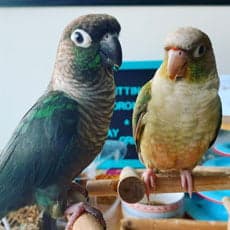
Your bird lives in an environment you build and refresh every single day: bowls, perches, toys, cage bars, and the tray beneath it all. Every one of those surfaces is a place where bacteria, viruses, and parasites can quietly take hold. Contaminated dishes, shared toys, a secondhand cage, even the clothes you wore to a pet store — any of them can carry pathogens into your bird's world.
The good news is that a consistent disinfecting habit is one of the highest-return, lowest-effort things you can do for your bird's health. At Bird Sitting Toronto, where we board hundreds of birds every year, biosecurity is not an afterthought — it is the quiet foundation that keeps every guest healthy. This guide shows you how to do the same at home.
Cleaning vs. Disinfecting: They Are Not the Same Thing
The single most common mistake bird owners make is assuming that a surface which looks clean is clean. It usually is not. Cleaning and disinfecting are two separate steps, and you need both.
- Cleaning removes visible dirt, droppings, food, and grease, along with most of the germs riding on them. A wiped-down surface can still harbor thousands of invisible pathogens.
- Disinfecting kills the microorganisms that remain after cleaning. This is the step that actually protects your bird from illness.
The order matters enormously. Organic matter — droppings, food residue, feather dust — chemically inactivates most disinfectants. If you disinfect a dirty surface, you are largely wasting the product. Always clean first, then disinfect the clean surface.
Tip: Give any disinfectant its contact time (also called dwell time). Most products need to stay visibly wet on the surface for several minutes — commonly around 10 minutes — to actually kill germs. Spraying and immediately wiping dry does almost nothing. Read the label for the exact figure.
Why Disinfection Matters for Bird Owners
Birds are famously good at hiding illness until they are seriously unwell, so prevention beats treatment every time. A lapse in hygiene can expose your bird to serious diseases, including:
- Psittacosis (caused by Chlamydia psittaci) — notably, this one is zoonotic, meaning it can pass from birds to people
- Avian influenza
- Exotic Newcastle disease
- Avian polyomavirus
- Bacterial infections such as E. coli and Klebsiella
You should be especially rigorous in a few high-risk moments:
- Bringing home a new bird — quarantine is non-negotiable (see the protocol below)
- Returning from bird shows, pet expos, or pet stores
- Receiving or buying used cages, dishes, perches, or toys
Bird-Safe Disinfectant Options
Birds have small, exquisitely sensitive respiratory systems, so the product you choose matters as much as how you use it. Below are the workhorses most avian veterinarians and boarding facilities rely on.
Avian-Registered Disinfectants (Pet Focus, F10)
Products formulated and registered specifically for veterinary and avian use — such as Pet Focus and F10SC — are the easiest choice for everyday cages, bowls, toys, and feeding stations. They are designed to be effective against a broad range of bacterial, viral, and fungal agents while remaining safe for animal environments when diluted and used as directed. Because they are made for this job, they take the guesswork out of dilution and safety.
Bleach (Sodium Hypochlorite)
Ordinary unscented household bleach is inexpensive, widely available across Canada, and highly effective against most avian pathogens — which is why it remains a standard recommendation in avian medicine. It must be diluted and handled correctly.
- Dilution: roughly 1:30 — about 120 mL (½ cup) of household bleach per 4 L (1 gallon) of water. Mix fresh; diluted bleach loses potency within about 24 hours.
- Never use it near your bird. Chlorine gas off-gassing from bleach is a respiratory irritant. Remove all birds from the room first.
- Rinse, dry, ventilate. After the contact time, rinse the surface thoroughly with clean water, let it dry completely, and air out the room before the bird returns.
Warning: Never mix bleach with ammonia or with vinegar or other acids. Bleach plus ammonia produces toxic chloramine gas; bleach plus acid produces chlorine gas. Both can be fatal to a bird in an enclosed space — and dangerous to you. Use bleach on its own, and rinse before introducing any other cleaner.
Grapefruit Seed Extract (GSE)
GSE is often marketed as a natural, non-toxic disinfectant. Be honest with yourself about what it can and cannot do: the evidence for GSE as a reliable surface disinfectant is limited and inconsistent (avian veterinary consensus), and some of the antimicrobial activity attributed to commercial GSE has been traced to synthetic preservatives in the product rather than the grapefruit extract itself. It is fine as a supplemental, gentle option for lightly soiled dishes or food-prep surfaces, but do not rely on it for true disinfection — for example against Chlamydia or a viral outbreak. When you need to kill pathogens, reach for an avian-registered product or properly diluted bleach.
At a Glance
| Disinfectant | Best for | Key strengths | Cautions |
|---|---|---|---|
| Pet Focus / F10SC | Everyday cages, bowls, toys | Formulated and registered for animal use; broad-spectrum | Follow label dilution; rinse food-contact surfaces |
| Household bleach (1:30) | Deep cleans, used equipment, outbreak response | Cheap, widely available, highly effective | Remove birds; never mix with ammonia/acids; rinse, dry, ventilate |
| Grapefruit seed extract | Light, everyday touch-ups | Gentle, low-odour | Evidence is limited/inconsistent — not a true disinfectant |
Safety Guidelines for Using Any Disinfectant
- Always read the label and follow the dilution and contact-time instructions exactly.
- Wear gloves and ensure good ventilation while you work.
- Never use a product that is not clearly safe for animals — if you want gentler options, see our guide to bird-safe homemade cleaners.
- Clean before you disinfect. Organic matter neutralizes disinfectants.
- Remove your bird from the room for anything stronger than plain soap and water, and let surfaces dry before the bird returns.
Quarantine: Your First Line of Defence for New Birds
No disinfecting routine can substitute for quarantine. When you bring home a new bird — or bring one back from a show — house it in a completely separate room, ideally with separate air, for 30 to 45 days. Care for your existing birds first each day and the newcomer last, wash your hands between them, and keep their bowls, towels, and cleaning tools strictly separate. Many avian illnesses incubate silently for weeks; quarantine gives problems time to surface before they can reach the rest of your flock.
Tip: Dedicate a colour-coded set of bowls, sponges, and towels to the quarantine bird so nothing ever cross-contaminates your main cages.
An Ounce of Prevention
Disinfecting can feel like a chore, but it is quietly one of the most powerful tools you have. Clean first and disinfect second, choose a product made for birds or dilute your bleach correctly, respect contact times, and quarantine every new arrival. Do those few things consistently and you will prevent far more disease than any treatment could ever cure. General biosecurity and clean-then-disinfect guidance here reflects the Association of Avian Veterinarians and the Merck Veterinary Manual; when in doubt about a specific product or a sick bird, call your avian vet.
Explore related topics
Related Articles
Cage Cleaning Schedule: The Daily, Weekly, and Monthly Checklist
A clean cage is essential for health. This checklist breaks down exactly what to clean and when.
Bird-Safe Homemade Household Cleaners You Can Make Today
Many store-bought sprays and scented cleaners release fumes that are dangerous to a bird's ultra-sensitive lungs. Here are simple, effective cleaners you can mix from pantry staples—room by room—plus the safety rules that keep your flock protected.
Why Good Hygiene Is Essential for Your Bird's Health
Companion birds depend on you for the clean environment they'd find naturally in the wild. Here's why hygiene is preventive medicine for a bird — from their uniquely sensitive air-sac respiratory system to the daily, weekly, and monthly routines that keep cages, food, water, and feathers disease-free.