The Vital Role of Exercise in Your Parrot’s Health
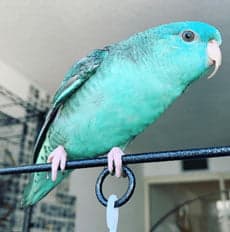
Why Exercise Matters for Parrots
In the wild, your parrot's ancestors are athletes. Free-flying flocks routinely cover long distances every day, foraging for food, escaping predators, courting mates, and defending territory. A wild African grey or Amazon may fly kilometres before its first full crop of the morning. All of that flying, climbing, and chewing adds up to hours of vigorous aerobic activity, every single day.
The parrot in your Toronto living room carries that exact same body and metabolism, but almost none of the daily demand that shaped it. At Bird Sitting Toronto, where we board hundreds of birds every year, one of the clearest differences between a bird that thrives and a bird that struggles is simply how much it is allowed to move. Exercise is not an extra or a luxury. It is a core physical need, on par with a clean diet and fresh water.
The Benefits of Physical Activity
Movement and play do far more than pass the time. Regular activity is preventive medicine that supports your bird from beak to tail:
- Cardiovascular fitness — sustained flight and climbing keep the heart and major vessels conditioned.
- Muscle and bone strength — flapping and gripping maintain the powerful flight muscles across the keel and keep joints mobile.
- Mental stimulation — foraging and problem-solving occupy one of the most intelligent minds in the animal kingdom.
- Stress reduction and relief from boredom — a busy body means a calmer bird.
A parrot that flies, climbs, and works for its food burns calories, keeps its flight muscles strong, and stays mentally occupied. That same activity drains the nervous energy that would otherwise surface as screaming, biting, or feather destruction.
Tip: Think of activity as an investment, not a chore. It is far easier to keep a parrot fit and busy from the start than to rehabilitate one that has already become overweight, deconditioned, or frustrated.
The Dangers of a Sedentary Lifestyle
In captivity, pet birds often live far more inactive lives than nature intended. A parrot that spends most of the day perched in one spot, offered a rich diet and little to do, is set up for weight gain and a cascade of long-term problems. Avian veterinary consensus, echoed by resources such as the Merck Veterinary Manual and VCA Animal Hospitals, links avian obesity to:
- Poor circulation and heart disease, including atherosclerosis (hardening of the arteries)
- Respiratory difficulty, because a fat-laden abdomen crowds the air sacs
- Fatty liver disease (hepatic lipidosis)
- Fatty tumours (lipomas)
- Kidney dysfunction
- Arthritis, pododermatitis, and joint strain from carrying extra weight
Some species are especially prone. Amazon parrots, budgies, and Quaker parrots are well known among avian veterinarians for putting on weight and developing lipomas or arterial disease when kept sedentary on a fatty diet. Beyond the physical toll, an under-stimulated bird is also more likely to slide into depression, lethargy, chronic screaming, aggression, and feather plucking.
Warning: If your bird is overweight, never crash-diet it or withhold food. Rapid weight loss or fasting can trigger hepatic lipidosis, a dangerous flood of fat to the liver that can be fatal. Any weight-loss plan must be gradual and supervised by an avian veterinarian.
How Much Exercise Does a Parrot Need?
There is no single number that fits every bird, but avian veterinary consensus always favours more movement, not less. Most companion parrots benefit from several hours of supervised, out-of-cage activity every day, on top of a cage large enough to climb, stretch, and flap fully inside. Treat the ranges below as sensible daily minimums, not ceilings.
| Species group | Suggested daily out-of-cage active time | Notes |
|---|---|---|
| Budgies, parrotlets, lovebirds | 2–3+ hours | Small but energetic; love flight and swings |
| Cockatiels | 2–3+ hours | Strong fliers when conditioned; prone to weight gain |
| Conures, caiques | 3–4+ hours | High-energy clowns that need to burn it off |
| African greys, Amazons, eclectus | 3–4+ hours | Intelligent; combine physical and foraging work |
| Lorikeets | 3–4+ hours | Very active; still need a nectar diet, not pellets |
| Cockatoos, macaws | 4+ hours | The highest-need birds; boredom turns destructive fast |
Every parrot is an individual. A young, flighted conure will demand far more than an older grey recovering from illness. Watch your own bird's body condition, posture, and energy, and adjust accordingly.
How to Help Your Bird Stay Active
The goal is simple: give your bird both reasons and room to move for most of its waking day.
Flighted time and wing exercise
If your bird is flighted and your home is safely bird-proofed (windows covered, ceiling fans off, other pets secured), supervised flight is the single best cardio workout it can get. If your bird is clipped or nervous about flying, you can build the same muscles through gentle "flapping" exercises: let the bird balance on your hand, then slowly lower your hand a few inches so it beats its wings for a few seconds at a time. A handful of repetitions, a couple of times a day, adds up quickly.
Climbing and foraging
Ladders, ropes, and boings turn ordinary movement into a full-body workout. Even better, make your bird earn its meals. Tuck portions into foraging toys, wrap treats in paper, or scatter chopped vegetables so your parrot has to climb, tear, and search, exactly as it would in the wild. Foraging can occupy the hours a wild bird would spend hunting for breakfast, and it exercises the mind alongside the body.
Toy rotation
A cage full of the same old toys quickly becomes invisible. Rotate a few toys in and out every week so there is always something novel to investigate, shred, and conquer. Novelty keeps the heart and muscles working, sharpens coordination, and lowers stress by giving pent-up energy somewhere productive to go.
Tip: Toronto winters keep everyone indoors, birds included. When outdoor light and warm-weather activity drop off, deliberately add indoor conditioning: more out-of-cage time, more foraging challenges, and a play stand near a bright window so your parrot stays busy through the dark months.
Fuel the Activity With the Right Diet
Exercise and nutrition are two halves of the same job. The most reliable base for most parrots is a diet built around roughly 75 to 80 percent high-quality pellets, 20 to 25 percent fresh, vegetable-forward foods, and only about 5 percent seeds or nuts offered as treats. That balance keeps calories in check while activity burns them off. (Lorikeets are the exception and need a specialized nectar diet; eclectus are additive-sensitive and do best on an especially veg-forward menu.) A fatty, all-seed diet paired with an inactive lifestyle is the fastest route to the obesity problems described above.
Track Weight and Loop In Your Avian Vet
The surest way to know whether your routine is working is to measure it. A small digital kitchen scale that reads in grams lets you weigh your bird at the same time each day or week and catch gradual gain or loss early, long before it is visible to the eye. A change of even a few grams in a small parrot is worth noting.
Bring those numbers to your annual avian vet visit and ask your veterinarian to assess body condition and tailor an activity and weight plan to your individual bird. A little daily movement, the right diet, and honest tracking will keep your parrot stronger, happier, and with you for many more years.
Explore related topics
Related Articles
Parrot Foot Health: The Complete Guide to Perches and Exercise
Your parrot's feet are their most important tool. The right perches prevent arthritis, bumblefoot, and pressure sores.
Out-of-Cage Time: How Much Does Your Parrot Really Need?
Cage life isn't enough. Here's the science on out-of-cage time — how much, how to provide it safely, and why it matters.
Fun and Easy Ways to Get Your Parrot Moving
Your parrot was built to fly, climb, and forage all day — but cage life makes it easy to become a perch potato. Here's how to turn lazy time into playtime with in-cage climbing, out-of-cage play zones, flapping games, trick training, and a simple daily routine that keeps your bird lean, strong, and mentally sharp.