Fun and Easy Ways to Get Your Parrot Moving
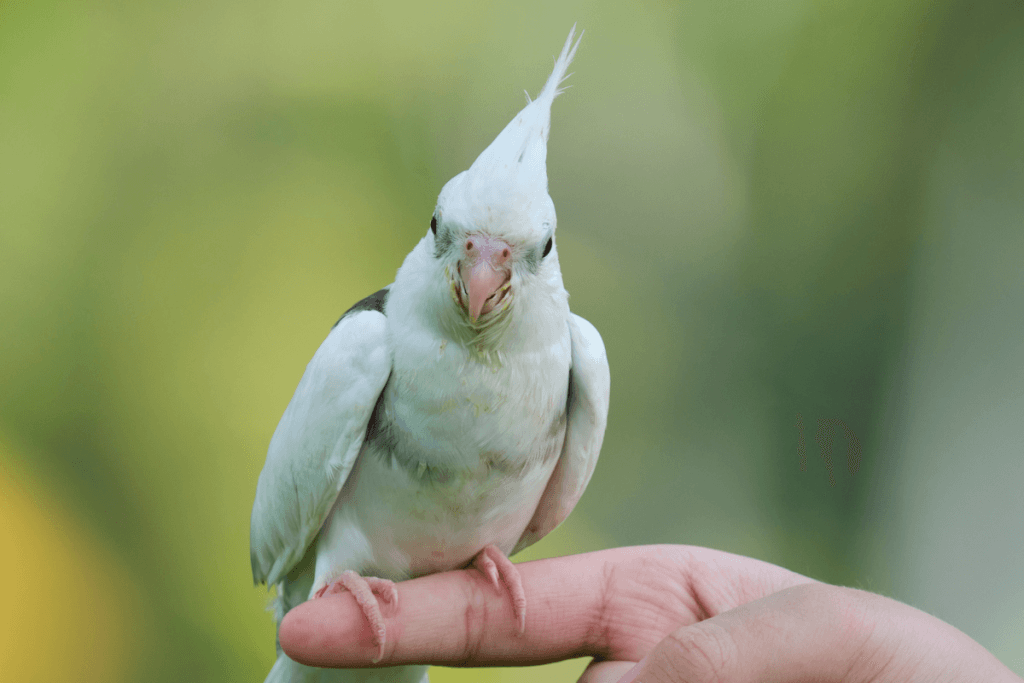
Turn Lazy Time into Playtime
In the wild, a parrot is one of the busiest animals in the forest. It climbs, forages, chews, and flies several kilometres a day just to make a living. Your companion bird carries all of that same hardware, but a cage and a full food bowl remove most of the reasons to use it. The result is what we affectionately call a "perch potato" — a bird that sits, snacks, and slowly loses condition.
At Bird Sitting Toronto, where we board hundreds of birds every year, the difference between an active parrot and a sedentary one is visible the moment they arrive: the active birds are brighter-eyed, better feathered, and far more resilient to the stress of a new environment. The good news is that getting your bird moving is genuinely fun, and a little creativity goes a long way. By introducing engaging games, stimulating toys, and dedicated play areas, you can motivate even the laziest bird to get up and go.
Why an Active Parrot Is a Healthy Parrot
Exercise is not a luxury for parrots — it is preventive medicine. Avian veterinary consensus, echoed by the Merck Veterinary Manual and VCA Animal Hospitals, links chronic inactivity (especially when paired with a fatty, all-seed diet) to a cluster of common companion-bird problems:
- Obesity, particularly in Amazons, budgies, and cockatiels, who put on weight easily and hide it under their feathers.
- Hepatic lipidosis (fatty liver disease), a frequent consequence of excess dietary fat plus too little movement.
- Atherosclerosis — fatty deposits in the arteries that strain the heart of an under-exercised bird.
- Arthritis and pododermatitis ("bumblefoot") from long hours standing still on the same perch.
- Feather-destructive behaviour, which is often rooted in boredom and pent-up energy that has nowhere to go.
Movement burns calories, keeps joints and flight muscles strong, aids digestion, and gives your bird's busy brain a job to do. It pairs with — not replaces — a proper diet: for most parrots that means roughly 75 to 80 percent quality pellets, 20 to 25 percent fresh vegetable-forward foods, and only about 5 percent seeds and nuts as treats. Exercise plus that balance is how you keep a parrot lean into old age.
Tip: Weigh your bird weekly on a gram scale, ideally first thing in the morning before breakfast. A steady weight is one of the best early-warning signs you have. A gradual climb usually means too many calories and too little activity; a sudden drop warrants a call to your avian vet.
Quick-Reference: Building a Movement Routine
Not every kind of exercise looks the same. Think in three layers — focused sessions with you, free-choice movement on their own, and passive background activity that keeps the body ticking over all day.
| Type of activity | What it looks like | Daily target |
|---|---|---|
| Focused movement | Flapping games, step-ups, recall, trick training with you | Two 5–10 minute sessions |
| Free-choice out-of-cage | Playgym, cargo nets, foraging around a room | 1–2 hours supervised |
| Passive background | Climbing toys, swings, ladders, foraging inside the cage | All day, every day |
A good baseline is at least two focused 5–10 minute sessions each day, combined with generous out-of-cage time and a cage that is set up to keep your bird busy on its own. Watch your bird's energy and breathing throughout — if they seem tired or begin breathing heavily, pause and let them rest before continuing.
Get Moving Inside the Cage
Your bird spends most of its life in its cage, so make the cage itself a place that rewards movement.
- Choose toys that inspire climbing and swinging — swings, ladders, vines, rings, and bungees.
- Offer destructible, manipulative, and preening toys that keep your bird busy and shifting position.
- Place foraging toys or treats at different heights, so your bird has to climb (or flap) to reach breakfast instead of standing over a full bowl.
- Vary perch diameters (roughly 1 to 4 cm / 0.4 to 1.6 in) and use natural branch perches so different foot muscles get worked. Avoid sandpaper perch covers, which do nothing for exercise and abrade the delicate skin of the foot.
The cage must be big enough to matter. For a small parrot such as a budgie or cockatiel, aim for a minimum of about 60 x 60 x 90 cm (24 x 24 x 36 in), with bar spacing appropriate to the species; larger parrots need considerably more. Whatever the size, your bird should be able to open its wings fully and flap without hitting the bars or toys — full wing-flapping clearance is the single most important measurement for exercise.
Warning: Bigger is better, but never at the cost of safety. Skip zinc- or lead-containing hardware, check chains and quick-links for gaps that can trap a toe, and inspect rope and fabric toys for frayed threads that can wrap around feet. A hazard your bird plays on eight hours a day deserves a weekly once-over.
Get Moving Outside the Cage
The biggest gains come from time out of the cage, where your bird can stretch, explore, and truly move.
- Set up an out-of-cage play zone with a playgym, ladders, and cargo nets to climb and explore.
- Encourage flap-for-balance work: with your bird perched on your hand, gently move your arm in a smooth arc or up and down so it opens its wings to steady itself. Thirty seconds of this is a real workout.
- Play interactive games — hide and seek, a gentle ball toss, or a slow chase — to combine movement with trust-building.
- Dance together. Many parrots are natural movers, and a favourite song is a surprisingly good way to get both of you off the couch.
- Use bath or shower time on a shower perch, where warm mist prompts vigorous flapping and full-body preening afterward.
Tip: Always let a bird come to a hand offered from a slightly lower position, and keep out-of-cage sessions in a bird-proofed room — windows covered, ceiling fans off, other pets excluded, and no open water or hot cookware nearby.
Trick and Flight Training
Training is exercise for the body and the brain at once. Dr. Irene Pepperberg's decades of work with parrot cognition show just how much these birds thrive on mental challenge, and a physical task attached to a reward is a parrot's idea of a great afternoon.
- Practice step-up exercises and simple recall to build cooperation and get your bird crossing distances on cue.
- Teach fun tricks — ring toss, a small basketball hoop, retrieving a toy — for combined mental and physical enrichment.
- Explore flight training indoors, or introduce a properly fitted, bird-safe harness for supervised outdoor time. An indoor or outdoor flight cage can also give safe, contained flying opportunities.
Keep every session short, upbeat, and built on reward-based methods. You are aiming to end while your bird still wants more, never to drill it into exhaustion.
Warning: Never take an un-harnessed bird outdoors, even a clipped one — a gust of wind or a startle can carry a "flightless" bird surprisingly far, and Toronto has plenty of hawks. Watch for signs of over-exertion in any session: open-mouthed breathing, tail-bobbing with each breath, or a bird that will not step up because it is winded. When you see these, stop and let your bird recover fully before the next round.
Make It a Habit
The best exercise plan is the one that actually happens, so anchor it to your day: a flapping game and fresh foraging setup with breakfast, out-of-cage play in the evening, and a five-minute trick session whenever you have a moment. Rotate toys weekly so novelty keeps your bird curious, and let its energy and breathing guide the pace.
With a little creativity and consistency, even the most sedentary parrot can learn to love moving. A more active bird is a healthier, happier, longer-lived companion — and watching a perch potato rediscover its wings is one of the real joys of sharing your home with a parrot.
Explore related topics
Related Articles
Parrot Foot Health: The Complete Guide to Perches and Exercise
Your parrot's feet are their most important tool. The right perches prevent arthritis, bumblefoot, and pressure sores.
Out-of-Cage Time: How Much Does Your Parrot Really Need?
Cage life isn't enough. Here's the science on out-of-cage time — how much, how to provide it safely, and why it matters.
The Vital Role of Exercise in Your Parrot’s Health
Wild parrots fly for hours every day, but a pet bird can spend most of its life standing still. Here is why daily exercise is non-negotiable for your parrot's heart, weight, and mind, how much your species really needs, and simple ways to keep your bird moving all year in Toronto.