Fun and Interactive Games to Play with Your Parrot
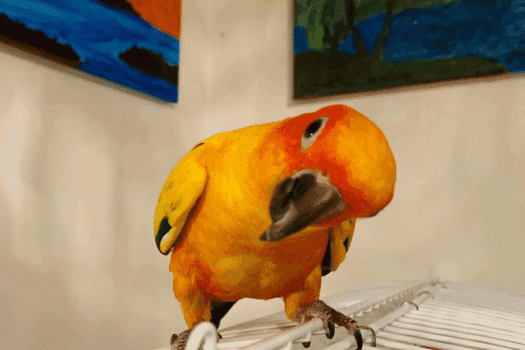
Parrots are flock animals to their core. In the wild they spend their days foraging, flying, and squabbling with companions, and a companion bird looks to you and your family to fill that flock role. One of the warmest, most effective ways to do that is through play. Games give your bird physical exercise, mental stimulation, and — just as importantly — the shared, silly, trust-building moments that deepen your bond.
At Bird Sitting Toronto, where we care for hundreds of birds every year, the ones who play are almost always the ones who are the calmest, the most confident, and the best-feathered. Below are the games we come back to again and again, along with how to read your bird before you start and how to keep every session safe.
First, Read Your Bird
Before any game, take five seconds to check in. Parrots communicate loudly with their bodies, and a good play session is one your bird opts into rather than one imposed on them.
Look for the green lights: relaxed, smooth feathers, a bird leaning toward you, "talking" or soft chatter, tongue-clicking, or an eager step up. Now watch for the stop signs: pinned or "flashing" eyes paired with a fanned tail, feathers slicked tight against the body, a raised foot held like a little stop sign, backing away, or a beak that means it. A cockatiel's crest tells you a lot too — up and forward is curious, flat and low can mean fear or a warning.
Tip: Let your bird end the game. If they step away, lose interest, or start preening, the session is over — and that is a win, not a rejection. Ending on a good note is exactly how you get an enthusiastic yes next time.
Peekaboo (a.k.a. "Where's the Mama?")
This gentle classic — called "Where's the Mama" in our house — has endless versions. Hide under a blanket on the couch or bed and let your bird tug the covers away to "find" you. Or step just out of the room and call to them until they peek around the corner, usually with an excited chirp — often followed straight away by a game of chase.
Peekaboo works because it taps into two things parrots love: object permanence and contact calling. In a wild flock, birds keep in touch by calling back and forth to confirm everyone is safe. When you disappear and reappear, you are speaking your bird's native social language. As a bonus, teaching your bird that you always come back can ease the separation anxiety behind a lot of screaming.
Chase Me!
A big hit with our African greys, this one is pure theatre. Wiggle your fingers, "creep" toward your bird across the floor or bed, and announce, "I'm gonna get a birdie!" The anticipation of playful, feather-light tickles is the whole game — most of the fun happens in the build-up. Keep the touch gentle, stay off the tail and wings, and let your bird chase you back so the roles trade.
Toss and Catch
Crumple a piece of paper or grab a lightweight whiffle ball and toss it gently near your bird. Many parrots will snatch it up and fling it right back — sometimes with startlingly good aim. If they miss, congratulations, you have just invented fetch (you fetch, they supervise). It is easy exercise for them and a surprising amount of cardio for you.
Warning: Skip anything small enough to swallow or shred into pieces, and avoid soft plastics or painted items your bird might ingest. Stick to bird-safe toys and untreated paper.
Dancing Together
Put on some upbeat music and move. Parrots are among the very few animals documented in avian cognition research to spontaneously move in time to a musical beat — those head bobs and foot lifts are the real thing, not just imitation. Hold your bird securely (or let a steady dancer perch on your hand) and sway to the rhythm. Before long you will have a bobbing, weaving dance partner. Vary the tempo to keep it interesting and watch which songs get the biggest reaction.
Flying Fun
Flapping is fantastic cardio, and it builds the chest and wing muscles that keep a parrot healthy. At our house we take the birds out once a day and jog gently while they perch on a hand, encouraging them to flap and "fly" along — often to a chorus of joyful "whee!" sounds. If your bird is fully flighted and your room is safe, supervised recall flights between two people are wonderful exercise and a brilliant bonding game.
Foraging Games: Make Them Work for It
Wild parrots spend much of the day searching for food, and avian veterinary consensus is that recreating that effort at home reduces boredom, feather-damaging behaviour, and screaming. Turn snacks into a puzzle:
| Foraging game | How to set it up | Best for |
|---|---|---|
| Crumpled paper packets | Wrap a healthy treat in untreated paper for your bird to unwrap | Beginners of any size |
| Muffin-tin puzzle | Cover treat cups with toys or crumpled paper to lift and toss aside | Curious problem-solvers |
| Skewer of greens | Thread leafy greens and veg chunks onto a stainless foraging skewer | Big chewers, greys, amazons |
| Cardboard shred box | Hide a treat in a box of clean paper strips to dig through | Cockatoos, destructive players |
Use your bird's diet to set the difficulty. Because a healthy parrot's daily food is roughly 75–80% pellets and 20–25% fresh vegetables and greens, save the high-value stuff for foraging: a sliver of nut or a single seed lands as a jackpot precisely because seeds and nuts should make up only about 5% of the diet, as treats.
Trick Training Is Play
Teaching tricks — target training, turn-around, wave, retrieve — is just structured play with a payoff, and parrots are smart enough to relish it. The cognitive research of Dr. Irene Pepperberg with Alex the grey showed just how much these birds can learn and enjoy learning. Keep sessions short (a few minutes), always use positive reinforcement, and reward with a tiny piece of a favourite veg or the occasional seed rather than a big fatty payout. Never punish a "wrong" answer; simply reset and try again. A bird that trusts the game will offer you behaviours all on their own.
Play It Safe
A few household rules keep games fun instead of frightening — or dangerous.
- Watch the air. Fumes from overheated non-stick (PTFE/Teflon) cookware, self-cleaning ovens, and some space heaters can kill a bird within minutes. Never play near the kitchen while cooking, and keep the air clear of aerosols, scented candles, and smoke.
- Ceiling fans off. A flighted or flapping bird and a spinning fan are a tragic combination. Turn fans off and close windows and doors before any flying game.
- No treats from the toxic list. If you reward with food, keep it bird-safe. Never offer avocado (persin), chocolate (theobromine), caffeine, alcohol, onion or garlic, fruit pits or apple seeds (which are cyanogenic), salty or heavily processed snacks, uncooked beans, or mushrooms.
- Mind other pets. Even a friendly dog or cat can injure a bird in a split second. Supervise closely, and remember a cat scratch or bite is a veterinary emergency because of the bacteria involved.
Warning: If your bird ever eats something questionable or is exposed to fumes and seems off — fluffed, wheezing, unsteady, or unusually quiet — treat it as urgent and call your avian veterinarian right away.
Get Creative and Have Fun
The possibilities are endless. Follow your bird's lead, invent your own variations, and do not be afraid to be silly — your bird certainly will be. The point is not a perfectly executed trick; it is the shared, trusting, laughter-filled time together. Play with your parrot most days and you will be rewarded with a calmer, more confident companion — and plenty of happy chirps along the way.
Explore related topics
Related Articles
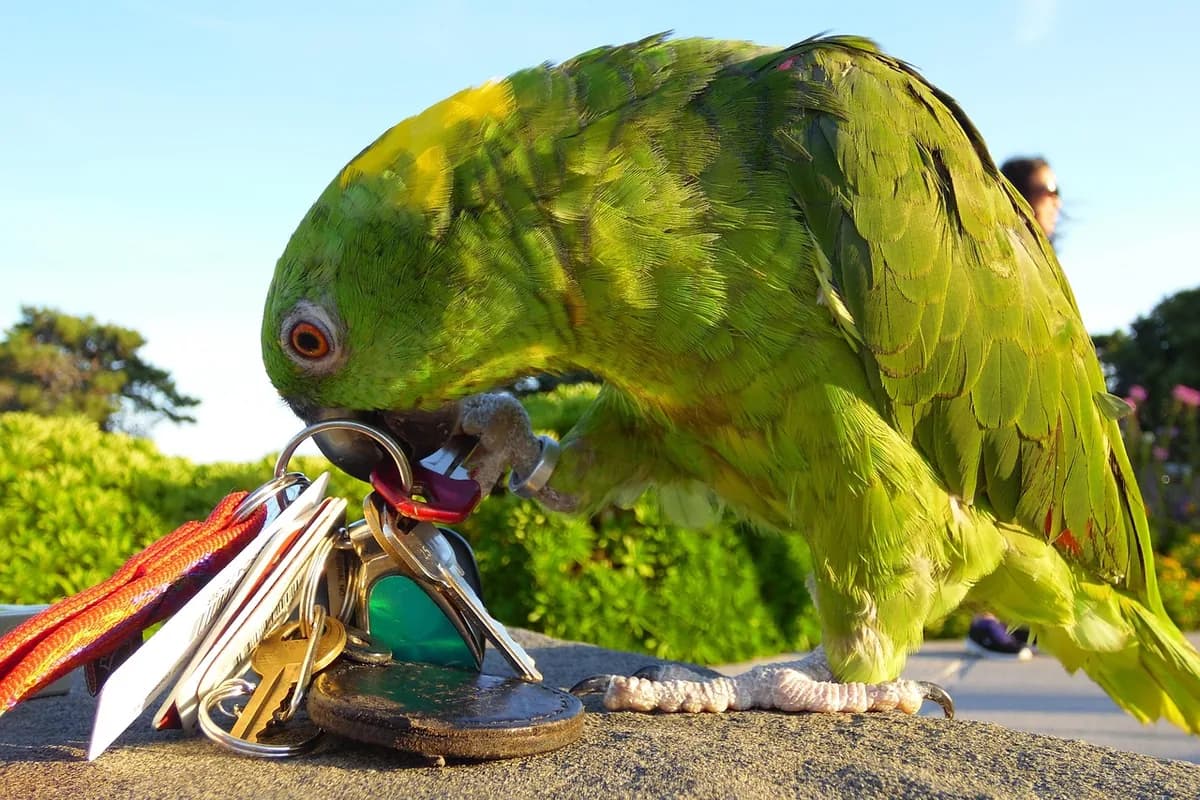
Safe Toys for Happy, Healthy Parrots
The right toys keep a parrot's beak, feet, and mind healthy — the wrong ones cause choking, foot injuries, or heavy-metal poisoning. Here is how to choose bird-safe materials, match toy size to your species, build foraging into daily play, and run a simple safety routine.
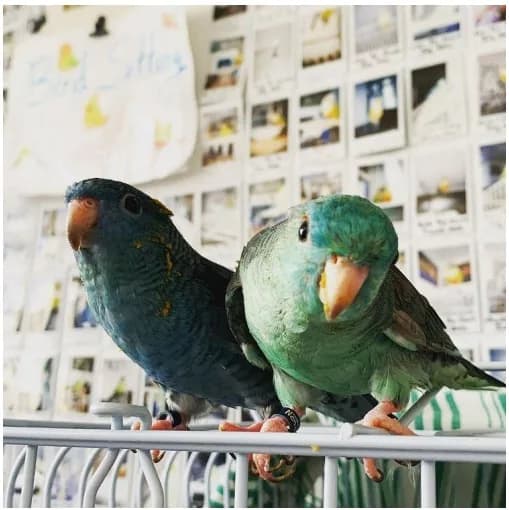
Creating Safe Play Spaces for Your Parrot
A well-planned out-of-cage play area lets your parrot climb, forage, and join the family safely. Here is how to choose the right play stand, pick non-toxic woods and metals, bird-proof the room against fans, glass, open water, and kitchen fumes, and supervise the way a pro would.
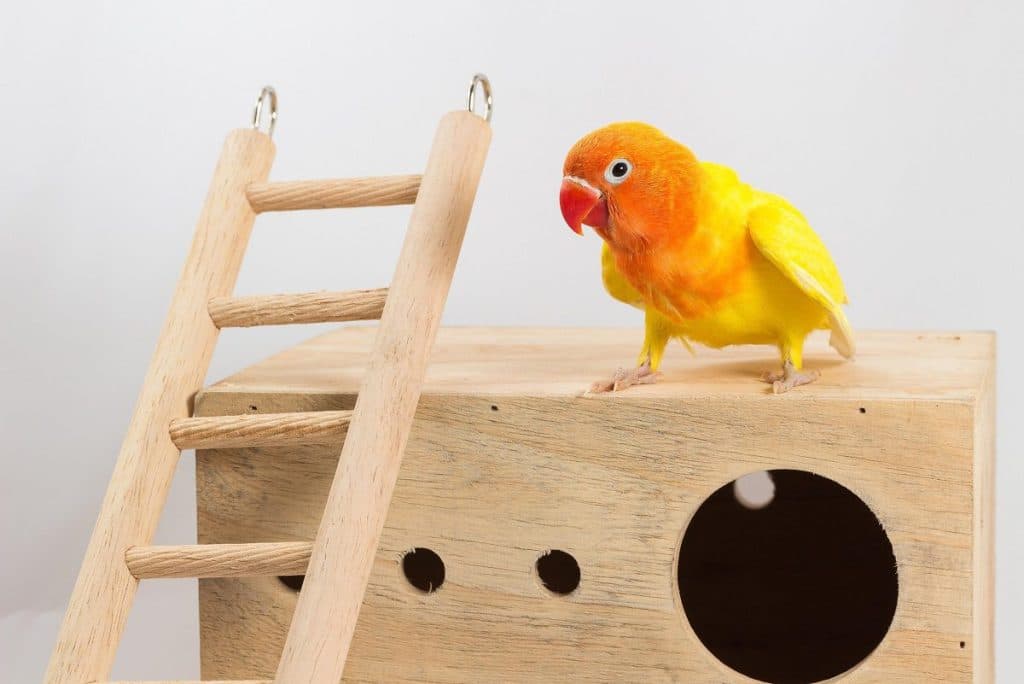
Encouraging Play: A Key to a Happy, Healthy Parrot
Play is not a luxury for parrots—it is preventive medicine. Learn why enrichment protects against plucking, screaming, and biting, how to teach even a wary rescue bird to play, which toy types deliver which benefits, and how to keep every toy safe.