Optimizing Perch Placement in Your Parrot's Cage
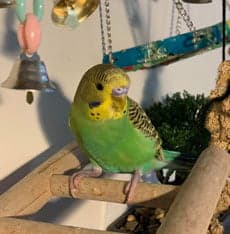
Your parrot stands on its perches for nearly every waking and sleeping hour of its life. That single fact should change how you think about them. A perch is not decoration, and it is not just a place to hang a toy; it is the surface your bird's feet, tendons, and joints rest on around the clock. Get the sizes and placement right and you support foot health, mental stimulation, exercise, and sleep. Get them wrong and you invite the two most common cage-related problems avian veterinarians see: pressure sores and worn, damaged feet.
At Bird Sitting Toronto, where we board hundreds of birds every year, the cages that keep birds calm and comfortable almost always share one trait: thoughtful perching. Here is how to build that setup at home.
Why Perch Placement Matters
In the wild, a parrot rarely grips the same surface twice in a row. It travels across branches of different diameters, textures, and flexibility, constantly shifting where its weight lands. That variety keeps circulation moving through the foot and spreads pressure across the whole sole.
A cage full of identical dowels does the opposite. When every perch is the same smooth, uniform diameter, the same points on the foot bear weight all day. Over time this produces flattened, reddened soles that can progress to bumblefoot (pododermatitis), a painful ulceration the Merck Veterinary Manual associates with poor perching, inactivity, and unsanitary surfaces. Chronic uniform perching is also linked to arthritis in the toes and hocks. The fix is simple, and it is the theme of this entire article: variety, plus smart positioning.
Getting the Diameter Right
Diameter is the single most important and most overlooked detail. A good perch lets your bird's toes wrap roughly two-thirds to three-quarters of the way around, never all the way and never stretched flat. If the toenails meet on the underside, the perch is too thin; if the foot lies almost flat, it is too fat. Lafeber and avian veterinary consensus both stress offering a range of sizes rather than one "correct" one, so the foot flexes through different positions during the day.
Use the following as a starting point, then watch how your bird actually stands:
| Bird size (examples) | Suggested main perch diameter |
|---|---|
| Budgie, small finch | 1.0-1.3 cm (about 0.5 in) |
| Cockatiel, conure, lovebird | 1.3-2.0 cm (0.5-0.75 in) |
| Amazon, African grey, small cockatoo | 2.0-3.0 cm (0.75-1.2 in) |
| Large macaw, large cockatoo | 3.0-5.0 cm (1.2-2.0 in) |
Tip: Natural wood branches taper along their length, which means a single branch offers several diameters at once. That is precisely why they beat machined dowels, and why they should be the backbone of your setup.
Best Practices for Placement
Where you put each perch matters as much as what it is made of.
- Stagger the heights. Install perches at different levels to encourage climbing, hopping, and short wing-flaps. Movement between levels is free exercise and enrichment.
- Do not overcrowd. Too many perches turn the cage into an obstacle course and steal the open space a bird needs to stretch and flap. Leave clear flight and stretch lanes.
- Allow tail clearance. Keep perches far enough from the bars that tail feathers do not constantly brush or bend against them. Chronic rubbing frays and breaks feathers.
- Never perch above food or water. A perch positioned over the bowls means droppings land in the food and water, a direct route to bacterial contamination. Keep the space above dishes clear.
- Give a dedicated sleep perch up high. Birds instinctively roost at the highest point, so the top perch will become the bed. Make it a comfortable, slightly larger natural-wood or rope perch that lets the foot relax through the night.
- Check stability every week. A perch that spins or slips forces the bird to grip harder and can cause a fall. Confirm each one is locked tight, especially after cage cleaning.
- Add a "come-out" perch. If your cage has a swing-out door, a short perch on the inside of it invites your parrot to step out on its own terms and makes handling calmer.
Choosing Perch Types
No single material does everything well. Combine a few and let each do its job.
| Perch type | Best for | Watch out for |
|---|---|---|
| Natural wood (branch) | Everyday standing; varied grip | Use bird-safe woods; avoid treated or toxic species |
| Rope | Sleeping and lounging; gentle flex | Trim frayed strands so toes cannot snag |
| Cement / grooming | Light nail and beak conditioning | One only, away from the sleep perch; overuse abrades soles |
| Plastic / dowel | Easy to sanitize | Never the only type; uniform and hard on feet |
A grooming perch belongs near the food area, since birds naturally wipe and clean their beaks after eating, but it should be one perch among many, not a primary standing spot. A flexible rope or bendable perch adds gentle movement that mimics a swaying branch and keeps the environment dynamic.
Warning: Sandpaper perch covers, sold to "file" nails, are discouraged by avian veterinarians. They do little for overgrown nails and can abrade the sole raw, opening the door to the very bumblefoot you are trying to prevent. Skip them.
Signs Your Setup Needs Work
Your bird will tell you when the perching is wrong. Watch for:
- Overgrown, curling nails or an overgrown beak
- Red, flattened, or ulcerated soles (early bumblefoot)
- Frayed or broken tail and flight feathers from cage-wall contact
- Reluctance to climb, or favouring one foot
- Poor sleep, irritability, or aggression
Any of these warrants a look at the cage first, and, if sores or lameness appear, a call to an avian vet.
Final Thoughts
Good perching is one of the highest-return, lowest-cost upgrades you can make to a parrot's life. It is not about adding more sticks; it is about offering a thoughtful range of diameters and textures, placed at sensible heights, with clear space to move and a clean, comfortable spot to sleep. Review the setup every week, watch how your bird stands and rests, and adjust. A few minutes of observation is often all it takes to catch a problem before it becomes a vet visit, and to give your parrot a cage that respects the way its feet were built to work.
Explore related topics
Related Articles
Best Cage Liners and Substrates: What to Put on the Bottom of Your Bird's Cage
The cage floor matters more than you think. The right liner makes cleaning easy and health monitoring possible.
Setting Up the Perfect Bird Cage: Size, Placement, and Accessories
The cage is your bird's home base. Getting it right affects their health, happiness, and behavior.

Best Practices for Parrot Cage Placement at Home
Where you put the cage matters as much as the cage itself. A room-by-room guide to placing your parrot for safety and social connection: the safe-back corner rule, perch height, windows and overheating, Canadian-winter temperatures and drafts, escape risks, and a dark sleep zone — plus a quick-reference checklist.