Best Practices for Parrot Cage Placement at Home
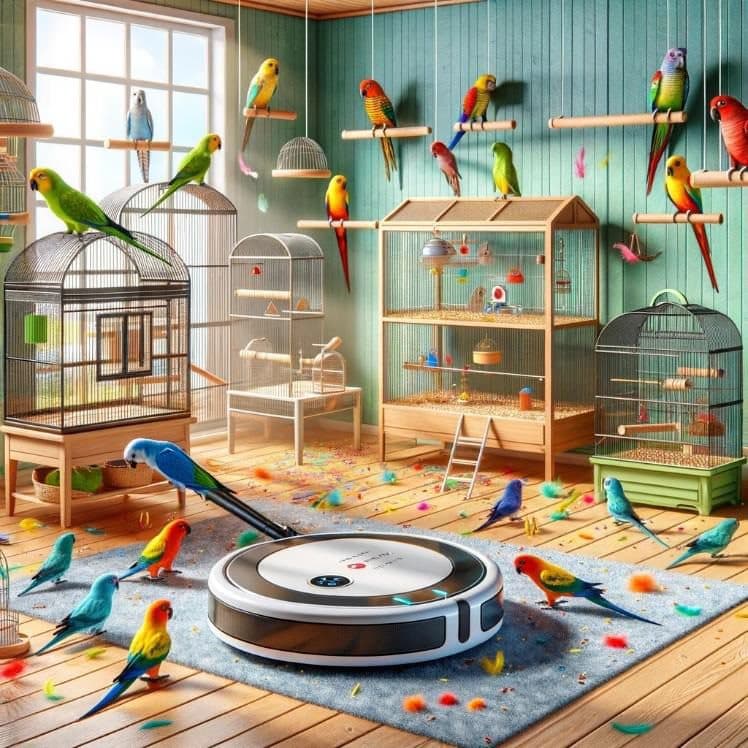
In the wild, birds choose where to perch, sleep, and forage based on safety and comfort. As natural prey animals, they are always on high alert for danger. In captivity, however, pet birds rely on us to create a secure and enriching environment. Since they can't fly away from threats while confined to a cage, where you place that cage is one of the most important welfare decisions you'll make — it shapes your bird's sense of safety, its sleep, and its bond with your family. Thoughtful placement supports your parrot's mental and emotional well-being every hour of the day.
At Bird Sitting Toronto, where we board hundreds of birds every year, we see the difference immediately: a bird placed in a calm, socially connected spot settles in far faster than one tucked in an isolated back room or perched in front of a busy window. Here is how to get it right at home.
Keep Your Bird Connected to the Flock
Parrots are intensely social creatures. In a household, their "flock" is you and your family. A bird kept in a spare bedroom or basement, out of sight and earshot for most of the day, can become anxious, lonely, and prone to problem behaviours like screaming or feather-destructive behaviour.
The best default location is a main living area — a living room, family room, or open dining space where people naturally gather in the daytime. Your bird should be able to watch the household's comings and goings, hear voices, and be part of ordinary life without being crowded or handled non-stop. The goal is inclusion, not the centre of a spotlight.
Give the Cage a "Safe Back": Corners and Walls
Because parrots instinctively watch for predators, an exposed, free-standing cage in the middle of a room can keep a bird in a low-grade state of vigilance. Position the cage so at least one side — ideally the back — is against a solid wall, and a corner is better still, giving your bird a protected zone to retreat to for a sense of security.
A wall or corner at the back means your bird only has to monitor the open sides, which lowers baseline stress. Pair this with a partial cover or a cluster of higher perches on the sheltered side so there's always somewhere to feel tucked away. Avoid busy hallways and doorways where people appear suddenly from behind — startle-from-behind is a common trigger for panicked, thrashing "night frights" and daytime flightiness.
Height Matters: Keep Perches Around Chest to Eye Level
The height of the main perch changes how safe your bird feels. Cages set too low, near the floor, can leave a bird feeling exposed and vulnerable, as if threats loom above. Cages perched very high above your head can make a bird harder to interact with and slower to step up calmly.
A practical middle ground is to arrange the cage so your bird's favourite perch sits somewhere between your chest and your eye level when you're standing nearby. From there your parrot can survey the room comfortably and still engage with you face to face.
Tip: If your bird seems edgy in a new spot, try raising the main perch a few centimetres so it can look slightly down on the room rather than up at it. A small height change is often enough to shift a bird from watchful to relaxed.
Windows, Light, and the Overheating Trap
Natural light is genuinely good for birds — it supports normal daily rhythms and gives them changing scenery to watch. But a cage pressed directly against a window is a mixed blessing. Sudden movements outside (a hawk gliding past, a dog, a garbage truck) can terrify a bird that has nowhere to flee, and a bird in an unshaded window can also overheat quickly.
The fix is a partial or side view rather than a full-frontal one. Set the cage a little back from the glass, or offset it so your bird gets a slice of the outdoors and plenty of natural light without being fully exposed. Make sure at least part of the cage is always in shade so your bird can move out of direct sun at will.
Warning: Birds have no efficient way to sweat and can suffer heat stress fast. A cage in unbroken direct sun — especially behind glass, which traps heat like a greenhouse — can push temperatures to dangerous levels within an hour. Signs of overheating include panting, holding the wings out from the body, and lethargy. Always provide shade and never trap a bird in a sunny window.
Temperature, Drafts, and Escape Risks
Most companion parrots are comfortable in the same range people are — roughly 18-29 °C (65-85 °F) — and, more importantly, they tolerate stability far better than sudden swings. The problem spots in a home are usually drafty windows, exterior doors, heating and air-conditioning vents, and fireplaces, all of which create rapid temperature changes and chilling drafts.
This matters especially through a Toronto winter. Keep the cage well away from exterior doors that open to freezing air, from radiators or space heaters that create hot spots, and from forced-air vents that blow a steady draft across the perches. Aim for a spot with a steady, moderate temperature and gentle airflow rather than a stagnant corner or a wind tunnel.
Exterior doors carry a second risk: escape. A cage beside a door that opens to the outside means every entry and exit is a chance for a flighted bird to bolt outdoors — often with no way back. Place cages away from the paths people use to come and go, and treat any door to the outside as a boundary the cage should never sit near.
Protect the Sleep Zone
Here is the tension at the heart of cage placement: the lively, social daytime spot that's best for your bird's mind is often the worst spot for sleep. Birds need roughly 10-12 hours of uninterrupted, quiet, dark rest each night, and a cage in the family room is exactly where the TV, lamps, and late-night conversation live. Chronic sleep disruption is linked to irritability, hormonal behaviour, and a weakened immune response, so honouring your parrot's sleep needs is not optional.
The cleanest solution is a second, smaller "sleep cage" in a quiet, dark bedroom or den. At bedtime you move your bird to its sleep cage, and it gets true darkness and silence; in the morning it returns to the social main cage. If a second cage isn't practical, a heavy, breathable cage cover plus a consistent lights-out routine in the main room can work — but only if the household genuinely goes quiet and dark for those hours.
Never Place a Cage in the Kitchen
The kitchen deserves its own rule: keep birds out of it entirely. Overheated non-stick (PTFE, commonly branded Teflon) cookware, drip pans, and some self-cleaning ovens can release fumes that are rapidly, silently fatal to birds — a well-documented danger in avian veterinary consensus. Add smoke, aerosols, steam, and sharp temperature swings, and the kitchen is one of the most hazardous rooms in the house for a parrot. Review the full list of household hazards for parrots and site the cage well away from cooking areas.
Quick-Reference Placement Checklist
| Factor | Ideal | Avoid |
|---|---|---|
| Room | Main living area used in the daytime | Isolated spare room, basement, or the kitchen |
| Walls | Back and ideally one side against a wall or corner | Free-standing in the middle of an open room |
| Height | Main perch around chest to eye level | On the floor, or high above everyone's head |
| Window | Partial or side view, with shade available | Cage pressed to unshaded glass in direct sun |
| Temperature | Steady 18-29 °C (65-85 °F), gentle airflow | Drafts, vents, radiators, fireplaces, hot spots |
| Doors | Away from exterior doors and busy paths | Beside a door to the outside (escape and cold) |
| Sleep | Dark, quiet sleep cage or covered nights | A room active and lit late into the evening |
Proper cage placement ensures your parrot feels safe, engaged, and like a true part of the family. Get the daytime spot social and secure, protect the nights with real darkness, and steer clear of the kitchen, windows in full sun, and drafty doors. With this thoughtful setup, you create a stress-free home that nurtures your bird's well-being and deepens the trust between you.
Explore related topics
Related Articles
Best Cage Liners and Substrates: What to Put on the Bottom of Your Bird's Cage
The cage floor matters more than you think. The right liner makes cleaning easy and health monitoring possible.

Setting Up the Perfect Bird Cage: Size, Placement, and Accessories
The cage is your bird's home base. Getting it right affects their health, happiness, and behavior.
Choosing the Best Perch Material for Your Bird: A Complete Comparison Guide
The right perch is as important as the right cage. Compare natural wood, rope, cement, PVC, leather, dowels, and rubber, learn how to size perch diameter in cm and inches, and set up a varied environment that protects your bird's feet.