Meeting the Instinctual Needs of Parrots
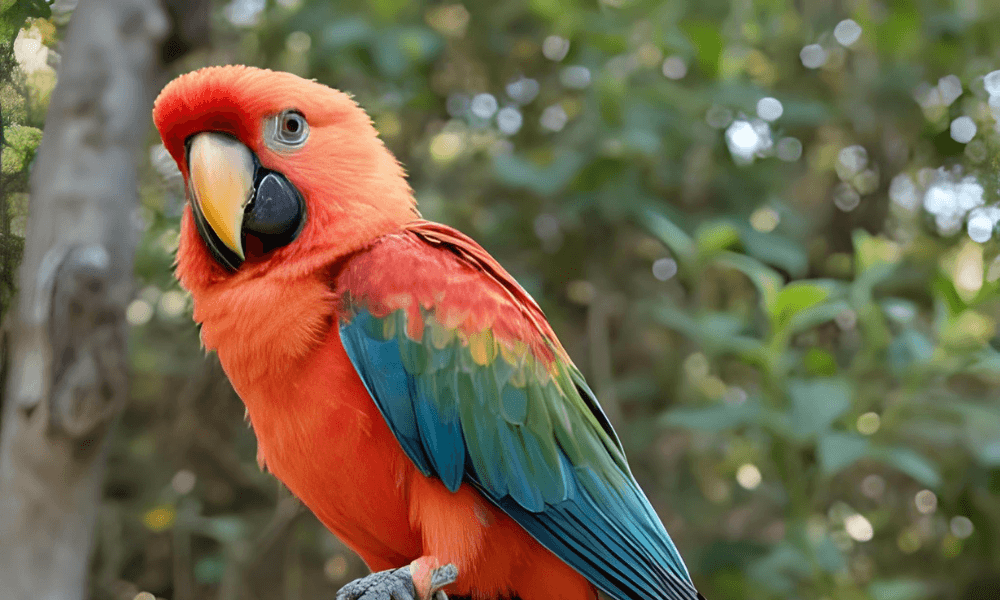
Regardless of whether your parrot hatched in a breeder's nursery or the canopy of a rainforest, the bird on your shoulder is, at heart, still a wild animal. Dogs and cats have been shaped by thousands of years of selective breeding; parrots have shared our homes for only a handful of generations. Physically and psychologically, your companion is very nearly identical to its wild cousins, and that single fact explains almost everything it does.
At Bird Sitting Toronto, where we board hundreds of birds every year, the parrots that settle in fastest are almost always the ones whose owners have learned to read behaviour as instinct rather than misbehaviour. Once you understand the drives underneath, the "problems" stop looking like defiance and start looking like a bird doing exactly what evolution built it to do.
What "Instinct" Really Means
Instinct is the innate disposition to perform a behaviour in response to a specific stimulus. It is inherited rather than learned: preprogrammed wiring that promotes the survival of the individual and the species, and it fires whether or not the bird has ever met the situation before.
Here is the encouraging part. The more intelligent the animal, the more flexible its instinctive behaviour becomes, and parrots are among the most cognitively sophisticated animals kept as companions. The cognition researcher Dr. Irene Pepperberg spent decades working with Alex, an African grey who learned to label objects, colours, and shapes and to grasp concepts such as same, different, and quantity. So while your parrot's drives are hardwired, its responses to them are remarkably teachable. That intelligence is exactly what lets an essentially wild animal learn to live gracefully in a Toronto living room, given guidance, socialization, and enrichment.
Why Your Parrot Isn't Being "Difficult"
Most friction in the home traces back to a single misunderstanding: we expect a wild creature to honour human social norms, and when it doesn't, we take it personally. But parrots don't think or act the way we do. They aren't being spiteful, and they aren't plotting. They're being birds.
| What you see | The instinct behind it | What it actually means |
|---|---|---|
| Chewing your furniture, books, and trim | Nest excavation and beak maintenance | "I am doing my most important seasonal job." |
| Screaming at dawn and dusk | Flock contact calling | "Where is everyone? Is the flock safe?" |
| Flinging food across the room | Natural foraging and food selection | "This is how a bird sorts and processes food." |
| Lunging when you reach into the bowl | Resource guarding | "This food and this space are mine." |
| Guarding one person from everyone else | Pair bonding | "You are my mate; the others are rivals." |
| Panicking at balloons, hats, or new objects | Predator vigilance | "That shape could kill me. Flee first, ask later." |
Interpreting these actions as if your bird were a small, moody human is the fastest route to frustration for both of you. The behaviours aren't personal. They're ancient.
The Core Drives Underneath
Nearly every behaviour in that table traces back to a short list of survival drives:
- Build a nest — the urge behind relentless chewing and shredding.
- Find food — the foraging drive that makes a bird ignore a full bowl to dig for a hidden treat.
- Reproduce — the hormonal pull behind pair bonding, territoriality, and amorous displays toward toys or favourite people.
- Escape threats — the split-second flight response to anything overhead, sudden, or unfamiliar (a floating balloon reads a lot like an aerial predator).
- Stay with the flock — the deep need for social contact and the safety of the group.
Tip: When a behaviour puzzles you, ask "which of these drives is this serving?" before you ask "how do I stop it?" You'll almost always find both the answer and a humane way to redirect it inside the drive itself.
Working With the Instinct, Not Against It
You cannot switch an instinct off, and trying to punish one out of your bird only layers fear on top of the drive. The real skill is redirection: give the drive an acceptable outlet.
Give the beak a job
Chewing isn't optional for a parrot. The beak is a working tool that needs constant use, and the drive to chew is tied to nest building. Offer a rotating supply of destructible toys: soft pine, untreated leather, plain paper, palm leaf, and cardboard. When that urge has somewhere legitimate to land, your baseboards stop being the target.
Make them work for their food
In the wild a parrot may spend much of its waking day searching for food, so a bird that receives its entire ration in a single bowl has nothing to do with all that hardwired energy. Hide portions of the daily diet, both pellets and chopped vegetables, inside foraging toys, wrap them in paper, or tuck them around the cage so your bird has to hunt. Foraging enrichment is one of the most reliable tools we have for easing screaming, feather-damaging behaviour, and boredom.
Honour the flock
Your parrot considers you part of its flock, and contact calling is how flock members reassure one another across distance. Answer a reasonable call with a quiet word or whistle rather than silence, which reads as "the flock has vanished," or shouting back, which reads as an exciting group scream worth repeating. Predictable together-time and predictable alone-time both matter.
Warning: A sudden shift in an otherwise settled bird, such as new aggression, relentless screaming, or feather plucking, is not always "just instinct." Pain and illness drive behaviour too, and parrots hide sickness remarkably well. The Association of Avian Veterinarians advises ruling out a medical cause with an avian vet before treating a sharp behaviour change as purely behavioural.
The Payoff
Seeing the world through your parrot's eyes, rather than expecting it to see the world through yours, changes the entire relationship. The chewing, the calling, and the food-flinging stop feeling like a battle and start reading like a language. Meet the instinct instead of fighting it and you trade daily frustration for a bond built on mutual respect and trust. In our experience, that is the difference between a bird that merely tolerates its home and one that genuinely thrives in it.
Explore related topics
Related Articles
Building Natural Branch Perches: A Step-by-Step Guide
Natural branches are the best perches — varied diameter, texture, and chewing opportunity. Here's how to prepare them safely.
Creating a Parrot-Safe Outdoor Space: Aviaries and Screen Porches
Fresh air and sunshine are incredible for parrots. Here's how to give outdoor time safely.
15 DIY Bird Toys from Dollar Store Items
You don't need expensive pet store toys. These 15 DIY toys cost under $2 each and your bird will love them.