Safe Toys for Happy, Healthy Parrots
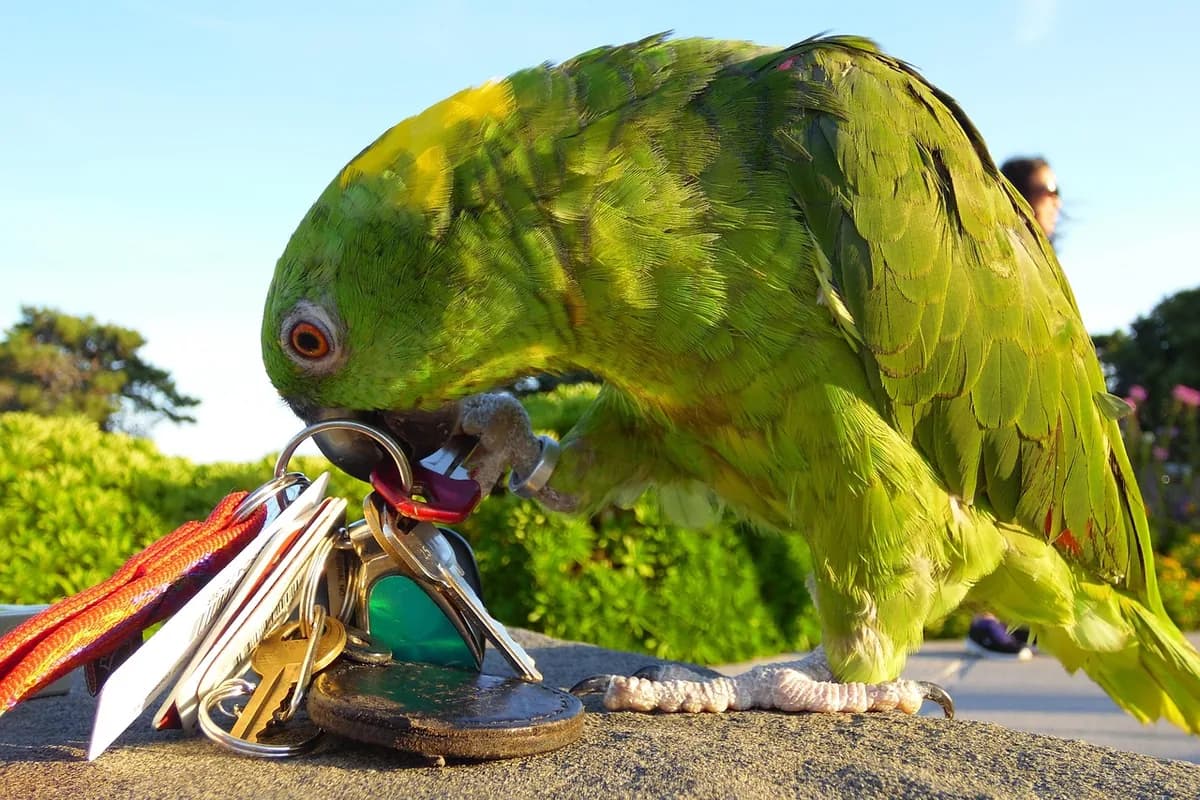
A parrot in the wild is busy from sunrise to sunset. Wild flocks spend the bulk of their waking hours chewing wood, prying open seed pods, climbing through branches, and working for nearly every mouthful of food. A bird in your living room has the same drive and the same clever brain, but far fewer things to do with them. Toys are how you close that gap. Good toys give your parrot a job, keep its body strong and its beak worn down, and head off the boredom that so often turns into feather-destructive behaviour or screaming.
But a toy is only enrichment if it is safe. The wrong toy can choke a bird, trap a toe, or slowly poison it with the metal in a cheap clip. At Bird Sitting Toronto, where we board hundreds of birds a year, the toys that come through the door range from beautifully made to genuinely dangerous. This guide walks you through choosing toys that earn their place in the cage.
Why Safe Toys Matter
Toys are not a luxury. They do real physical and psychological work:
- Beak and jaw health. A parrot's beak grows continuously. Chewing on wood and other destructible materials keeps it worn to a healthy shape and length.
- Exercise. Climbing, hanging, and swinging build the muscle and coordination a caged bird would otherwise lose.
- Mental stimulation. Parrots are among the most intelligent animals kept as pets. Dr. Irene Pepperberg's decades of work with Alex the African grey showed cognition on par with a young child. A bird that smart gets bored fast, and boredom drives feather-plucking, self-mutilation, and chronic screaming.
- Natural behaviour. Shredding, foraging, and manipulating objects let a bird express instincts it cannot otherwise use indoors.
Tip: Rotate a small collection rather than crowding the cage. Four or five toys swapped in and out each week feels new every time; twenty toys left up permanently become invisible furniture your bird stops noticing.
What Makes a Toy Bird-Safe
Parrots explore with their beaks, so every material in a toy will end up in a mouth. Stick to genuinely bird-safe, non-toxic components:
- Untreated natural wood — pine, balsa, birch, and manzanita, free of pesticides, stains, and varnish.
- Bird-safe fibres — sisal, hemp, jute, and untreated cotton rope, kept trimmed so there are no long loose strands.
- Stainless steel hardware — quick links, chains, and bells. Stainless is the gold standard because it will not shed toxic metal.
- Food-grade paper and cardboard — plain, ink-free, and perfect for shredding and foraging.
- Vegetable-tanned leather — undyed strips make excellent knot-and-chew toys.
Avoid anything with brittle plastic that snaps into sharp shards, jingle-type bells with narrow slots that catch toes and beaks, cotton rope left long enough to wrap a leg, and dog or cat toys, which are not built with a bird's mouth in mind.
Warning: Frayed rope and cotton fibre are a real strangulation and crop-impaction risk. If a rope perch or toy is shredded down to loose threads, trim it or replace it. Birds can wrap a strand around a toe or swallow long fibres that ball up in the digestive tract.
Heavy Metals: The Hidden Hazard
The most dangerous thing about a toy is often the part you cannot see: the metal. Zinc and lead poisoning are among the more common toxicoses avian vets treat, and the source is frequently cage hardware or cheap toy components. This is well documented in the Merck Veterinary Manual and echoed across Association of Avian Veterinarians guidance.
- Zinc hides in galvanized (zinc-coated) wire, cheap clips and chains, and some powder-coated hardware. That shiny "new galvanized" look on discount clips is the warning sign.
- Lead turns up in curtain and fishing weights, stained-glass solder, old painted items, and some imported metal trinkets and costume jewellery repurposed as toys.
Signs of heavy-metal poisoning include vomiting or regurgitation, weakness, unusually thirsty birds passing lots of urine, greenish droppings, and neurological signs such as seizures. It is a medical emergency.
Warning: Use only stainless steel, nickel-plated, or clearly labelled lead-free and zinc-free hardware. When in doubt about a metal part, remove it. If you suspect your bird has swallowed metal or is showing any of the signs above, see an avian vet the same day — heavy-metal toxicity is treatable but progresses quickly.
Matching Toy Size to Your Bird
Size is a safety issue, not just a preference. A toy built for a macaw has links a budgie can catch a whole foot in; a budgie toy gives a cockatoo a choking hazard the moment it cracks a piece off. Match the components to the bird.
| Bird size | Examples | What works | What to watch for |
|---|---|---|---|
| Small | Budgie, lovebird, parrotlet, cockatiel | Light balsa, small shredders, paper, thin sisal, small stainless bells | Link and bell slots wide enough to trap a toe; parts they can swallow whole |
| Medium | Conure, quaker, senegal, ringneck | Medium hardwood chunks, palm and yucca, knotted leather, foraging boxes | Undersized parts they crush and swallow; flimsy clips |
| Large | African grey, amazon, cockatoo, macaw | Thick hardwood blocks, heavy stainless chain, large foraging puzzles | Toys too small or fragile — a big beak destroys them into swallowable shards fast |
Finches and canaries are a different story. These are hands-off passerines, not hookbill parrots. They do not chew and manipulate toys the way parrots do; enrich their aviary instead with a swing, fresh millet spray, safe natural branches to hop between, and a shallow dish for bathing.
Foraging: Turning Food Into Play
The single best enrichment you can offer costs almost nothing, because you are already buying it: food. In the wild, a parrot works for every bite. At home, a full bowl handed over each morning removes hours of natural behaviour. Foraging puts that work back.
For most parrots the diet itself should be built on a formulated pellet base — roughly 75 to 80 percent — with about 20 to 25 percent fresh, vegetable-forward foods and only around 5 percent seeds and nuts saved as treats. That treat fraction is your foraging currency. Tuck a single sunflower seed or almond sliver inside a folded paper packet, a cardboard tube, or a purpose-made foraging toy and let your bird problem-solve its way in.
Simple ways to start:
- Wrap a favourite piece of veg in plain paper and weave it through the cage bars.
- Hide pellets in a muffin tin under crumpled paper.
- Skewer chunks of bird-safe vegetables on a stainless foraging spike.
- Graduate to puzzle toys with sliding lids and compartments once your bird gets the idea.
Warning: Never bait a foraging toy with anything toxic. Keep avocado (persin), chocolate (theobromine), caffeine, alcohol, onion and garlic, fruit pits and apple seeds (cyanogenic compounds), salt, uncooked beans, and mushrooms entirely out of reach. And skip grit — hookbill parrots do not need it, and eating it can cause crop or gut impaction.
A Simple Safety Routine
Toys wear out, and worn toys are where injuries happen. Build two quick habits:
- Daily: Glance over every toy as you change food and water. Look for cracked plastic, exposed sharp edges, chewed-through rope, and any loose or corroding metal. Pull anything questionable.
- Weekly: Rotate the collection to keep play fresh, and wash hard toys with hot water (and a bird-safe cleaner if needed), rinsing thoroughly before they go back.
Introducing New Toys
Many parrots are naturally wary of anything new — a survival instinct called neophobia. If your bird flees from a fresh toy, do not force it. Set the toy near the cage where it can be seen but not touched for a few days, then move it just outside the bars, and only then hang it inside. Letting your bird watch you handle and "enjoy" the toy first often speeds acceptance.
Safe, well-matched toys are one of the highest-value investments you can make in your parrot's health. Give your bird real materials to destroy, real food to work for, and a steady rotation of new challenges, and you will have a calmer, brighter, and far happier companion.
Explore related topics
Related Articles
Creating Safe Play Spaces for Your Parrot
A well-planned out-of-cage play area lets your parrot climb, forage, and join the family safely. Here is how to choose the right play stand, pick non-toxic woods and metals, bird-proof the room against fans, glass, open water, and kitchen fumes, and supervise the way a pro would.
Encouraging Play: A Key to a Happy, Healthy Parrot
Play is not a luxury for parrots—it is preventive medicine. Learn why enrichment protects against plucking, screaming, and biting, how to teach even a wary rescue bird to play, which toy types deliver which benefits, and how to keep every toy safe.
Fun and Interactive Games to Play with Your Parrot
Play is how parrots bond, burn energy, and stay mentally sharp. Here are the interactive games we love most, plus how to read your bird's body language before you start, foraging and trick-training ideas, and the safety rules that keep playtime fun.