Foot Health Matters: Choosing the Right Perches for Your Parrot
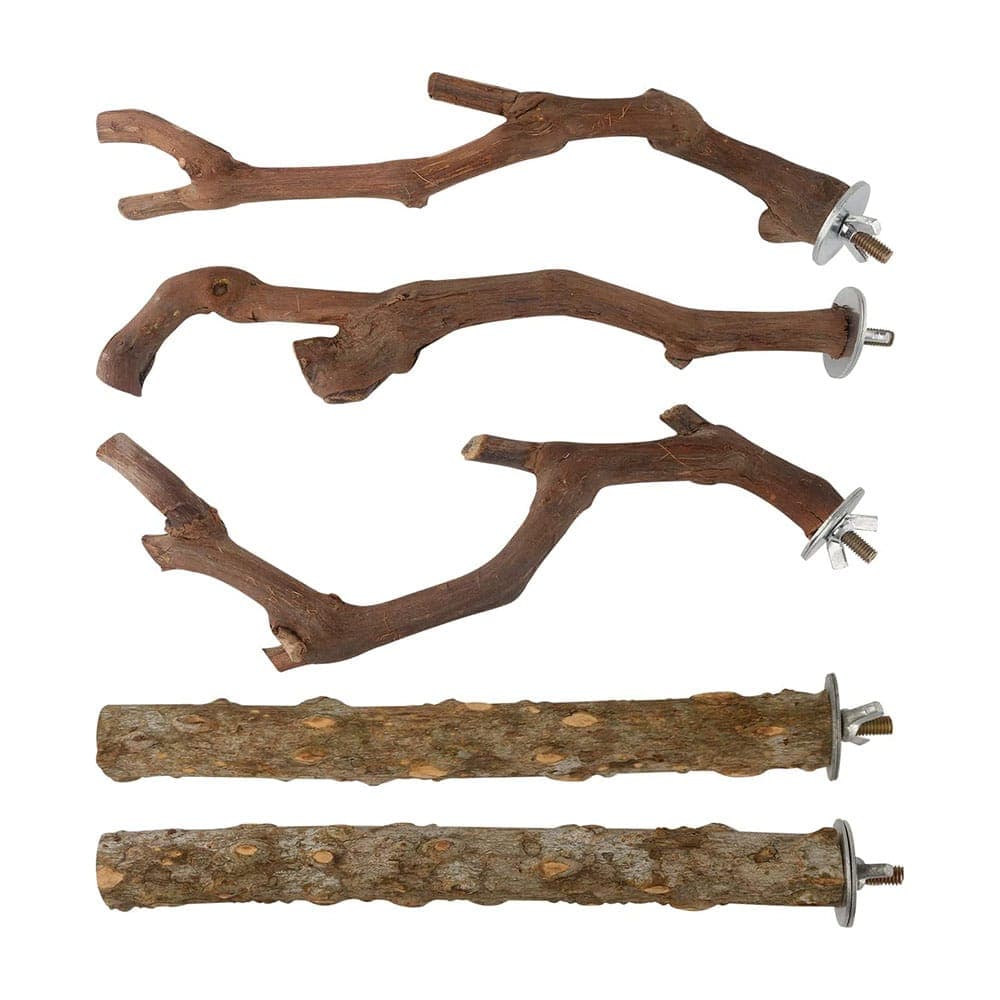
Your parrot spends nearly every waking and sleeping hour of its life standing on its feet. In the wild, a parrot moves constantly between branches of different widths, textures, and angles, so its feet are exercised, stretched, and rested in dozens of positions every day. A cage full of identical dowel perches asks a bird to stand the same way, on the same spot, for years. Over time that takes a toll. The good news is that fixing it is inexpensive and straightforward once you understand what a healthy foot actually needs.
At Bird Sitting Toronto, where we board hundreds of birds every year, foot problems are one of the most common preventable issues we see in otherwise well-loved parrots. Almost always the cause traces back to perches that are the wrong size, the wrong material, or all the same.
Why Perch Variety Matters
When a bird is confined to uniform, flat, or poorly sized perches, the same tendons, joints, and patches of skin bear its weight around the clock. That constant, unvaried load contributes to a range of foot and leg problems, including:
- Arthritis and stiff, sore joints
- Tendon strain
- Muscle wasting from lack of gripping variety
- Pressure sores on the soles, which can progress to bumblefoot (pododermatitis)
Offering several perch types lets your bird shift its grip and posture throughout the day, exactly as it would in the wild. It also gives your parrot a choice: a wide, flat surface for napping, a springy branch for playing, and a firmer perch for preening. That freedom to choose is what keeps feet strong and comfortable over a lifetime that, for many parrots, spans decades.
Getting the Diameter Right
Diameter is the single most important perch specification, and it is the one most often gotten wrong. A perch is correctly sized when your bird grips it and its toes wrap roughly two-thirds to three-quarters of the way around, without the toenails meeting or the foot lying flat. If the perch is too thin, the nails dig into the sole; too thick, and the foot can never close enough to grip securely.
The table below gives sensible starting diameters for common companion species. Treat these as a range to build variety around, not a single "correct" number.
| Bird (examples) | Body size | Main perch diameter |
|---|---|---|
| Finch, budgie, parrotlet, lovebird | Small | ~1 to 1.3 cm (3/8 to 1/2 in) |
| Cockatiel, small conure, quaker | Small to medium | ~1.3 to 1.9 cm (1/2 to 3/4 in) |
| Green-cheek/sun conure, caique, Senegal | Medium | ~1.9 to 2.5 cm (3/4 to 1 in) |
| African grey, Amazon, small cockatoo | Large | ~2.5 to 3.8 cm (1 to 1.5 in) |
| Large cockatoo, macaw | Extra large | ~3.8 to 6 cm+ (1.5 to 2.5 in+) |
Tip: A natural branch that tapers along its length is better than a machine-perfect dowel, because it presents several diameters in one perch. Your bird will naturally shift to the section that feels best, which is exactly the kind of variety a healthy foot needs.
Aim for at least three perches of differing diameters spread across the cage so the feet are never held in one fixed position for long.
Choosing Materials, Best to Worst
Not all perches are equal. Rank your choices roughly like this.
Natural wood branches — the everyday staple
Untreated hardwood branches are the closest thing to a wild perch: irregular diameters, bark texture that gently files nails, and surfaces your bird can chew. Woods that are widely considered safe for parrots include manzanita, apple, pear, willow, elm, ash, birch, maple, poplar, and grapevine, all of which are easy to source in the Toronto area from your own untreated apple, maple, willow, or birch.
Avoid cherry, plum, peach, and apricot (Prunus species, which carry cyanogenic compounds), oak (high tannins), and aromatic conifers such as cedar and fresh pine. Never use pressure-treated, painted, or varnished lumber, and never collect wood from a roadside or a yard that may have been sprayed.
Tip: To reuse a foraged branch safely, scrub off dirt, let it dry, then bake it at about 120 degrees C (250 degrees F) for 30 to 45 minutes to kill mites, eggs, and fungal spores before it goes in the cage.
Rope perches — comfortable, with one caveat
Cotton or sisal rope perches flex under the foot and are gentle on older or arthritic birds. Their weakness is wear.
Warning: Frayed rope is a genuine hazard. Loose threads can wrap around a toe like a tourniquet and cut off circulation, and swallowed fibres can cause crop or gut impaction. Trim stray threads as soon as they appear and replace a rope perch once it is visibly worn.
Platform and flat perches — for the birds that need them
Flat wooden platforms or wide, saddle-shaped perches let a bird stand flat-footed and spread its weight. They are especially valuable for arthritic seniors, overweight birds, and those recovering from foot injuries. Many larger parrots also simply enjoy the option to rest flat.
Concrete and grooming perches — a tool, not a home
Cement, pumice, and "grooming" perches keep nails and beak trim through abrasion, and used correctly they can reduce how often nails need clipping.
Warning: A concrete or grooming perch must never be your bird's main perch or its highest (sleeping) perch. Standing on an abrasive surface all night grinds the same patch of sole raw, and that is a leading cause of pressure sores and bumblefoot. Merck Veterinary Manual and the Association of Avian Veterinarians identify hard, uniform, and abrasive perching as a key contributor to pododermatitis. Offer one such perch, placed low and off to the side, and let your bird use it briefly by choice.
Sandpaper perch covers are best skipped entirely; they abrade constantly without meaningfully trimming nails.
Placement Inside the Cage
Where you put a perch matters as much as what it is made of.
- Make the highest perch the most comfortable one. Birds instinctively sleep at the top of the cage, so the sleeping perch should be a wider, softer natural branch, never the concrete or grooming perch.
- Keep perches from sitting directly above food and water bowls, so droppings do not foul them.
- Vary the heights and spread perches out to encourage climbing and short hops rather than a static perch-to-perch shuffle.
- Leave open space. Cramming in perches robs your bird of room to stretch, flap, and move, which is itself part of foot and leg health.
- Position perches so a long-tailed bird's tail and wingtips clear the bars.
A Weekly Foot Check
Because foot problems build slowly, a quick weekly look does more good than an occasional deep worry. During out-of-cage time, glance at the soles and toes for early warning signs of bumblefoot and other trouble:
- Smooth, shiny, or flattened areas where the sole's normal pebbled texture has worn away
- Redness, swelling, scabs, or flaking skin on the bottom of the foot
- Favouring one foot, shifting weight, or reluctance to grip
- Overgrown, curling, or unevenly worn nails
Foot skin health also depends on diet. Avian veterinary consensus links long-term vitamin A deficiency, common in seed-heavy diets, to poor skin quality and a higher risk of bumblefoot, which is one more reason to keep your parrot on a pellet-based, vegetable-forward diet rather than a seed bowl. You can read more in our guide to balanced bird nutrition.
Warning: Any sore, swelling, limp, or open lesion on a foot warrants a call to an avian veterinarian. Bumblefoot is far easier to treat when caught early, and an established infection can reach the bone.
The Association of Avian Veterinarians recommends an annual wellness exam for companion birds; ask your vet to check foot condition and nail wear at each visit.
The Bottom Line
Healthy feet come down to a few simple habits: get the diameters right, offer at least three perches of different sizes and materials, lead with natural wood, use concrete perches sparingly and never as the sleeping perch, place everything thoughtfully, and take a weekly look. Done consistently, these small choices protect the joints and skin your bird relies on every hour of its life. For more on keeping your parrot active and comfortable, explore our related articles on enrichment and reading your bird's body language.
Explore related topics
Related Articles
Best Cage Liners and Substrates: What to Put on the Bottom of Your Bird's Cage
The cage floor matters more than you think. The right liner makes cleaning easy and health monitoring possible.
Setting Up the Perfect Bird Cage: Size, Placement, and Accessories
The cage is your bird's home base. Getting it right affects their health, happiness, and behavior.

Best Practices for Parrot Cage Placement at Home
Where you put the cage matters as much as the cage itself. A room-by-room guide to placing your parrot for safety and social connection: the safe-back corner rule, perch height, windows and overheating, Canadian-winter temperatures and drafts, escape risks, and a dark sleep zone — plus a quick-reference checklist.