Why Birds Need to Play

In the wild, a parrot's day is organized almost entirely around survival—above all, the constant search for food. A flock may cover kilometres and spend the majority of its waking hours foraging, travelling, and negotiating its social world. In a Toronto living room, that workload evaporates. Food arrives in a bowl, the flight is a few metres of cage, and the flock is you. What replaces all that effort is empty time, and an intelligent, high-energy animal with nothing to do does not simply relax. It looks for something to do with its body and its mind.
When it can't find that something, the results show up as behaviour problems: screaming, feather-destructive behaviour, aggression, and the slow erosion of physical and mental health. This is why enrichment and play are not extras layered on top of good husbandry. According to avian veterinary consensus—echoed by the Association of Avian Veterinarians and resources such as the Merck Veterinary Manual—environmental enrichment is a core welfare need for captive parrots, on the same footing as diet and cage size.
Play Is Natural, Not a Luxury
It is tempting to assume a well-fed bird has everything it needs. But even in the wild, where survival pressures are real, parrots make deliberate time for play. Behavioural observers have long noted that play sits near the top of a parrot's priorities, second only to gathering food. Wild parrots strip bark, fling leaves, dangle upside down from branches, chase flockmates, and chatter constantly—much of it serving no immediate survival purpose beyond the exercise of a capable body and brain.
The ornithologist Millicent Ficken, who studied play in birds, framed the chicken-and-egg question directly: does intelligence lead to play, or does play build intelligence? Her answer was that "the answer is probably both." Because parrots are intelligent, they can engage in complex, inventive play. And through that play they develop the flexible problem-solving that makes them so adaptable. Dr. Irene Pepperberg's decades of work with Alex, an African grey parrot who learned to label objects, colours, and quantities, underscored just how much cognitive machinery sits behind that beak—machinery that, like any capacity, needs to be used.
The Five Kinds of Play (and How to Support Them at Home)
Avian behaviourists generally describe parrot play in a handful of overlapping categories. Recognizing them helps you provide the right outlet rather than a shelf of toys your bird ignores.
| Type of play | What it looks like in the wild | How you support it at home |
|---|---|---|
| Object play | Beak-and-foot manipulation—shredding bark, twirling seed pods, dropping things | Destructible foraging toys, palm-leaf shredders, softwood blocks, paper to tear |
| Balancing play | Hanging, swinging, and clambering in precarious spots | Boings, swings, rope perches of varied diameter, ladders |
| Locomotory play | Flying, hopping, flapping, energetic movement | Daily out-of-cage flight or flap time; a wide cage and open landing spots |
| Acoustic play | Making noise, mimicking, "practising" sounds | Talk and whistle back; bell-free noisemakers; music during the day |
| Social play | Beak fencing, foot pushing, gentle chase and mock spar | Interactive games, trick training, supervised time with you as flockmate |
Social play in particular can look surprisingly rough—playful beak fencing, foot pushing, gentle nipping, and games of chase. Far from aggression, these are the ways birds test their reflexes and stay ready to defend themselves. When you become your bird's play partner through reward-based training and gentle games, you are filling the role a flockmate would.
Learning Through Play
For young parrots especially, play is the developmental scaffolding for everything that follows. It lets a growing bird:
- Explore its environment safely and build a mental map of what is normal
- Learn about textures, shapes, weights, and colours through the beak and feet
- Sharpen coordination and dexterity
- Develop confidence and resilience, which lowers fearfulness and neophobia later in life
A bird that learned as a fledgling that new objects are interesting rather than frightening is far easier to live with as an adult—calmer at the vet, more accepting of new toys, and better able to settle when routines change.
Tip: Make your bird work for its food. Wild parrots spend hours foraging, so hiding pellets and chopped vegetables inside foraging toys, crumpled paper, or a cardboard box turns a thirty-second meal into an hour of satisfying, mind-engaging effort. Foraging enrichment is one of the most effective, evidence-backed tools avian vets recommend for boredom-driven screaming and plucking.
Building a Play Routine
A pile of toys is not enrichment on its own—variety and novelty are what keep a clever brain interested.
- Rotate the toys. Keep several sets and swap them every few days. A toy that was ignored last week is fascinating again once it disappears and comes back.
- Lead with foraging. Aim to make at least part of every meal something your bird has to find, unwrap, or dismantle.
- Protect out-of-cage time. Supervised time outside the cage—climbing, flapping, and interacting with you—gives locomotory and social play the room a cage can't. Even a busy household can build in a predictable daily block.
- Match the bird. A cockatiel, a caique, and an umbrella cockatoo have very different energy levels and beak strength; scale toy size and destructibility accordingly.
Warning: Not every toy is a safe toy. Avoid hardware made from zinc or lead, which cause heavy-metal toxicosis when a bird chews the metal. Skip long frayed rope or fabric strands, which trap toes and can be swallowed, and open jingle-type or "bell clapper" bells, which can catch a beak, tongue, or toe. Inspect toys regularly and retire anything with worn clips, exposed sharp wire, or loose small parts.
The Bottom Line
Play is not a way to spoil a parrot; it is how a parrot stays sane. An enriched bird sleeps better, screams less, plucks less, and greets change with curiosity instead of fear. At Bird Sitting Toronto, where we care for hundreds of birds every year, the ones who arrive with a foraging habit and a rotation of favourite toys settle into a boarding stay far more easily than those who have only ever eaten from a bowl. Building play into your bird's day at home is one of the most impactful things you can do to raise a well-adjusted, mentally healthy companion—and it pays off every time their routine has to change.
Explore related topics
Related Articles
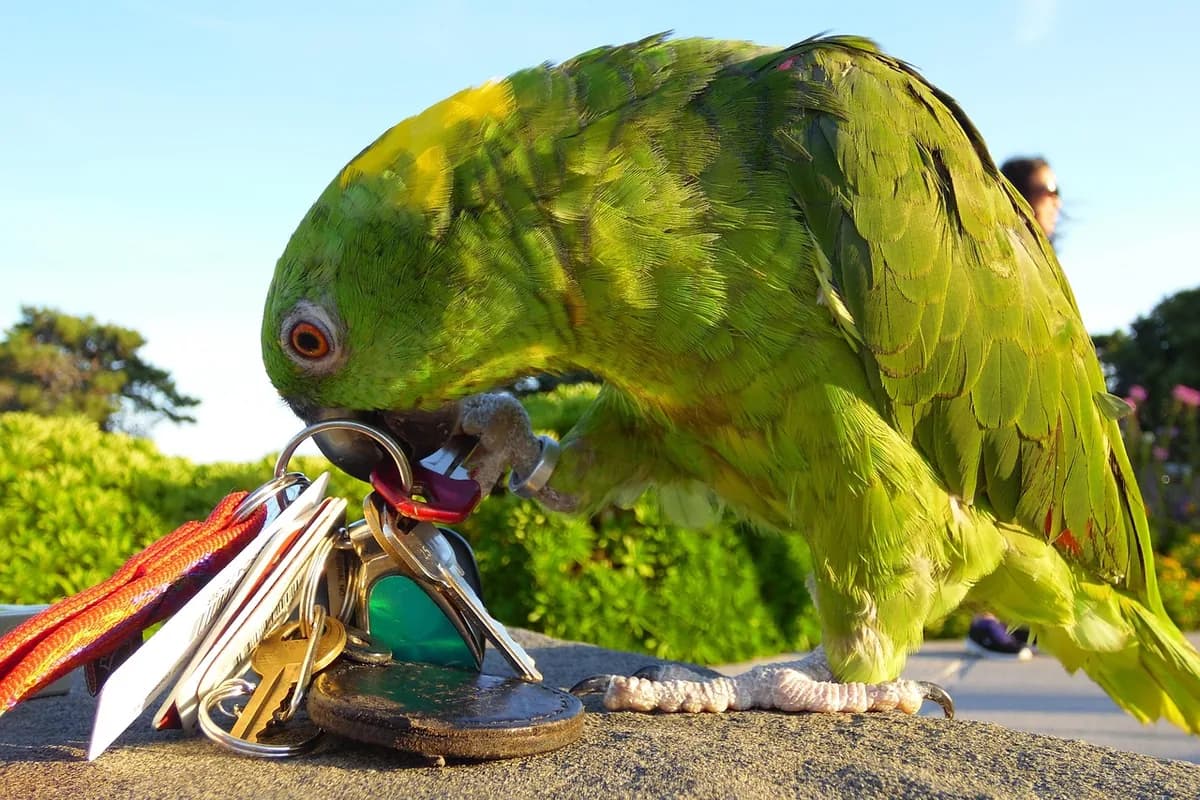
Safe Toys for Happy, Healthy Parrots
The right toys keep a parrot's beak, feet, and mind healthy — the wrong ones cause choking, foot injuries, or heavy-metal poisoning. Here is how to choose bird-safe materials, match toy size to your species, build foraging into daily play, and run a simple safety routine.
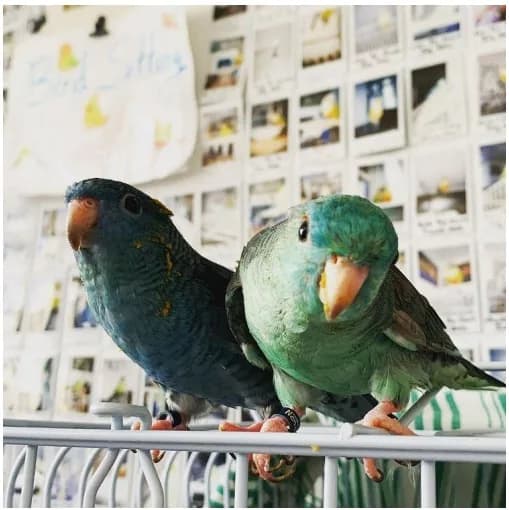
Creating Safe Play Spaces for Your Parrot
A well-planned out-of-cage play area lets your parrot climb, forage, and join the family safely. Here is how to choose the right play stand, pick non-toxic woods and metals, bird-proof the room against fans, glass, open water, and kitchen fumes, and supervise the way a pro would.
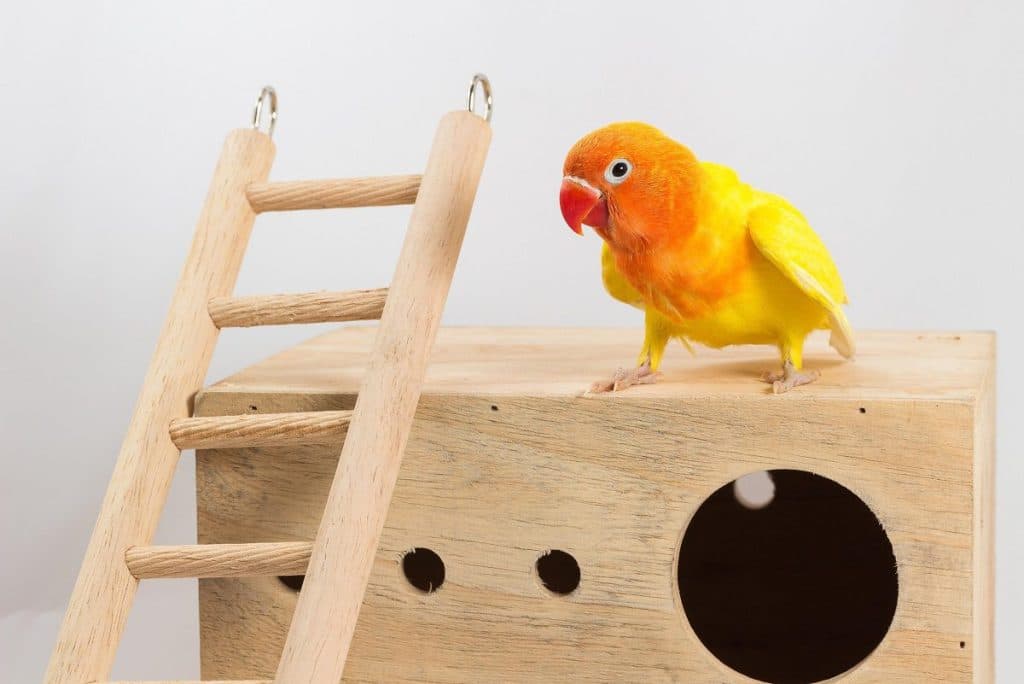
Encouraging Play: A Key to a Happy, Healthy Parrot
Play is not a luxury for parrots—it is preventive medicine. Learn why enrichment protects against plucking, screaming, and biting, how to teach even a wary rescue bird to play, which toy types deliver which benefits, and how to keep every toy safe.