Why (and How) Parrots Talk: The Science Behind Their Speech
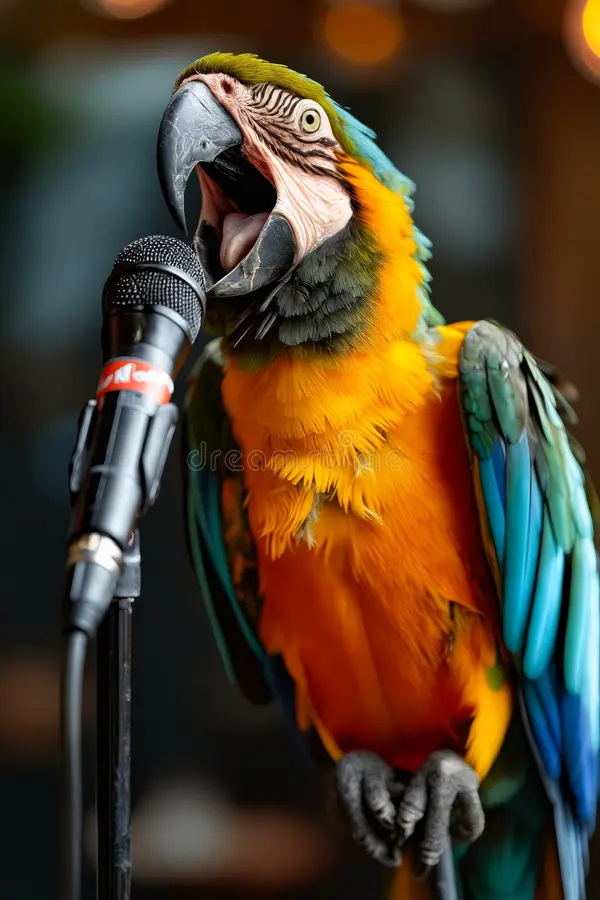
Your Parrot Isn't Just Copying You
There are few things more delightful than a parrot who greets you by name, mutters "uh oh" when a toy hits the floor, or laughs in your exact voice. It feels like magic. But behind that talent is a genuinely astonishing piece of biology paired with a deep social drive to connect. In our experience boarding over 1,000 birds at Bird Sitting Toronto, we have heard African greys hold near-conversations and budgies rattle off vocabularies their owners never expected. Understanding why and how your bird talks makes those moments even more rewarding, and it helps you nurture the ability the right way.
The short version: parrots talk because they are social flock animals wired to learn the sounds of their group, and in your home, you are the flock. The longer version is where it gets fascinating.
Vocal Learners: A Rare Club in the Animal Kingdom
Most animals are born already "knowing" the sounds they will make. A dog barks, a cat meows, and neither had to learn how from listening. Parrots are different. They belong to a small and exclusive group called vocal learners — animals that acquire new sounds by hearing and imitating them.
Among birds, only three groups are true vocal learners: parrots, songbirds, and hummingbirds. Among mammals, the club is tiny too, including humans, dolphins and whales, elephants, and a handful of others. This shared ability is one reason researchers study parrots so intensely: they offer a window into how brains, including our own, learn to produce speech.
In the wild, this skill has a clear purpose. Young parrots learn the "contact calls" and local dialect of their flock after they fledge, and flock members use these shared sounds to stay in touch across the canopy, coordinate, and recognize one another. A companion parrot applies that same instinct to you. When your bird learns your words, whistles for you across the house, or copies the microwave beep, it is doing exactly what it would do in the wild: adopting the sounds of its flock to belong.
How a Bird Talks Without Vocal Cords
Here is the part that surprises most people. Birds have no vocal cords. The organ humans use to make voice, the larynx, is present in your parrot but silent — it has no vocal folds and does not produce speech. So how does a small parrot produce a crisp "hello" that can fool you from another room?
The answer is a uniquely avian organ called the syrinx. It sits deep in the chest, right where the windpipe (trachea) branches toward the lungs. As your bird pushes air past thin membranes in the syrinx, those membranes vibrate and create sound. Because the syrinx sits at that branch point, some birds can even control the two sides independently.
Making sound is only half the trick. Turning that sound into recognizable words comes from articulation — and parrots are masters of it. By reshaping the airway and precisely moving the thick, muscular tongue and the beak, a parrot sculpts raw sound into vowels and consonants. That fine tongue control is a big reason parrot speech can be so startlingly clear compared with other talking animals.
Tip: Because clear speech depends on that muscular tongue and a healthy airway, birds tend to imitate voices they hear often at a calm, close range. One-on-one talking beats background TV chatter every time.
Do They Understand, or Just Mimic?
This is the question every owner eventually asks, and the honest answer is: it depends on the bird and the phrase. A lot of parrot speech is contextual association — "cracker" said near the kitchen, "bye" said as you reach for your keys. That is impressive on its own, but it is not the whole story.
The most famous evidence comes from Dr. Irene Pepperberg's decades of work with Alex, an African grey who did far more than repeat words. Alex could label colors, shapes, and materials, grasp concepts like same and different, and count small numbers of objects — combining ideas to describe things he had never been trained on. That is not rote mimicry; it is genuine referential understanding.
Not every parrot is an Alex, and comprehension varies widely by individual and species. But the research is a good reminder to speak to your bird with intention. For a deeper dive, see Do Parrots Understand What They Say?.
Which Parrots Are Most Likely to Talk
Talking ability varies enormously, both between species and between individuals of the same species. The table below is a quick orientation; for the full tier-by-tier breakdown, see Best Talking Parrot Species Ranked.
| Species | Talking likelihood | Typical clarity | First words around |
|---|---|---|---|
| African grey | Very high | Exceptional | 6-12 months |
| Amazon | High | Excellent, expressive | 8-18 months |
| Indian ringneck / Quaker | High | Good | 6-12 months |
| Budgie | Moderate (often underrated) | Small but clear | 3-8 months |
| Cockatiel | Low to moderate (whistles over words) | Fair | 6-12 months |
| Cockatoo / macaw | Variable, emotion-driven | Loud, less precise | 12-36 months |
| Finches & canaries | Not talkers (they sing) | Not applicable | Not applicable |
Important: A bird that never speaks is not less intelligent or less loving. Many quiet birds are wonderfully communicative through body language, whistles, and song. Talking is a bonus, not a measure of your bird's worth. If speech is a must-have for you, choose a species realistically rather than hoping a naturally quiet bird will change.
How to Encourage Your Bird to Talk
You cannot force a parrot to speak, but you can create the conditions that make it likely. This taps directly into the social learning instinct we described above.
- Talk to your bird every day, in context. Say "up" as you lift them, "water" as you refill the bowl. Meaning sticks better than random repetition.
- Pick a few short, high-energy phrases and use them consistently — a name, a greeting, a favorite food. Enthusiasm and clarity get imitated first.
- Reward every attempt with attention. Praise, a scratch, or a tiny food reward for any vocal try tells your bird that "talking" earns connection.
- Keep training treats small and healthy. A sliver of nut or a single seed is perfect. Seeds and nuts should stay in the roughly 5% treat slice of the diet — the everyday menu for most parrots is about 75 to 80% pellets with 20 to 25% fresh vegetable-forward foods.
- Be patient and calm. Some birds speak within weeks; others stay quiet for years and then surprise everyone. Never punish or "correct" a bird for the sounds it makes — fear shuts down learning fast.
For the science of shaping behavior with rewards, see Positive Reinforcement Training for Parrots. To understand the flock-contact drive that powers all of this, see Flock Calling and Vocalization Instincts.
When a Change in Voice Is a Warning Sign
Because the syrinx sits inside the airway, a sudden change in your bird's voice can be an early health flag, not just a mood. Avian veterinary consensus is clear that respiratory issues often show up first as vocal changes.
Warning: A voice that turns raspy, hoarse, wheezy, or unusually quiet — especially alongside tail-bobbing with each breath, open-mouth breathing, a clicking sound, or nasal discharge — can signal a respiratory infection or airway problem. Birds hide illness until it is advanced, so treat these signs as urgent and contact an avian veterinarian promptly. See Respiratory Infections in Birds for what to watch for.
The Bottom Line
Your parrot's "hello" is the product of a rare vocal-learning brain, a one-of-a-kind organ called the syrinx, and a deep, ancient drive to belong to a flock. When your bird chooses to learn your words, it is quite literally trying to talk to you as one of its own. Encourage it with patience, context, and warmth, keep an ear out for changes that could signal a health problem, and remember that the real conversation is the bond underneath the words. For more on that bond, see How Parrots Bond With Humans.
Explore related topics
Related Articles
Do Parrots Understand What They Say? The Science Is Surprising
Is your parrot just mimicking or do they actually understand? The research says it's more complex than simple mimicry.
How to Stop My Parrot from Screaming: A Step-by-Step Plan
Your parrot's screaming is driving you crazy. This structured plan addresses the root cause, not just the symptom.
Teaching Your Parrot to Whistle Tunes: A Fun Training Guide
Cockatiels are famous for it, but many species can learn tunes. Here's how to teach your bird to whistle your favorite song.