Safe and Effective Nail Trimming Tips for Your Parrot
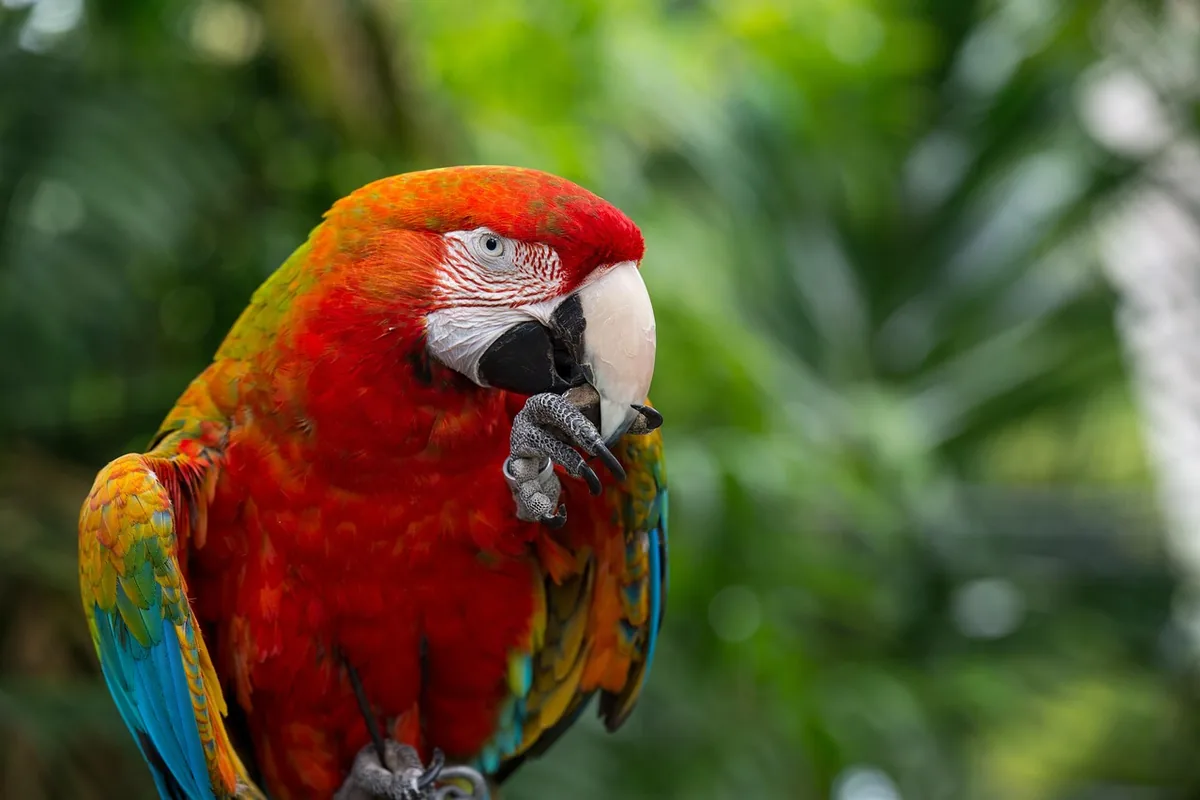
Knowing when your parrot's nails need trimming is usually easy once you know what to watch for. The first clue is often scratches or small puncture wounds on your hands and shoulders—ouch! Another sign is when your bird starts snagging on fabric, curtains, or the cage bars, or you notice them nibbling and chewing at their own nails. For an objective check, place your bird on a flat surface. If a nail is so long that it lifts the toe pad off the surface, or the tip curves back on itself, it's time for a trim.
Overgrown nails are not just a nuisance. When nails get too long they force the toes into poor alignment, which affects your bird's ability to grip perches securely and hold food properly. Left unchecked, excessively long nails can snag and tear, cause chronic pain, and in severe cases contribute to lameness—an outcome the Merck Veterinary Manual and avian veterinary consensus both flag as preventable with routine grooming.
How to Tell the Nails Are Too Long
Watch for these everyday signs before they escalate:
- Fresh scratches or pinprick wounds on your hands, arms, or shoulders
- Nails catching on clothing, upholstery, or between cage bars
- Your bird slipping on perches or perching awkwardly
- Nails that curl in a tight hook rather than a gentle curve
- The flat-surface test: a toe pad that no longer sits flush on a table
At Bird Sitting Toronto, where we board hundreds of birds every year, the birds that almost never need a trim are the ones with well-designed perching—so prevention is genuinely half the job.
Choosing the Right Tool
A few tools can keep your bird's nails in check, and the best choice depends largely on your bird's size and your own confidence.
| Tool | Best for | Strengths | Watch-outs |
|---|---|---|---|
| Nail clippers (human or cat-style for small birds; heavy dog-style for large parrots) | Quick tip trims, budgies through macaws with the correctly sized blade | Fast, inexpensive, precise on the sharp tip | A dull blade can crush a thick nail; no bleeding control, so keep styptic ready |
| Rotary grinder (Dremel-style) | Shaping and smoothing medium to large parrots | Smooth finish, removes a little at a time, heat can seal small nicks | Noise and vibration can frighten birds; work in short bursts so the nail doesn't overheat; keep loose feathers clear of the bit |
| Cautery / electric trimmer | Experienced handlers and veterinarians, usually larger parrots | Cuts and seals the vein in one pass, least bleeding | Uses heat—burn risk with poor technique; learn it from a vet first |
Both grinders and cautery tools have the added benefit of reducing bleeding by sealing the vein inside the nail if it's nicked. That advantage only holds with proper technique and calm, correct restraint.
Tip: The easiest trim is the one you rarely need. Offering perches of varying diameter and texture—natural, untreated branches like manzanita, plus a single rough-surfaced "pedicure" perch—lets your bird file its own nails through normal daily movement. Place any cement or grooming perch low in the cage, never as the main sleeping perch, and never wrap every perch in sandpaper: constant abrasion on the same spot can wear a foot raw and invite sores.
Before You Begin: Get the Basics Right
Improper trimming can injure your bird, so if you're new to grooming, have your avian vet walk you through it first. A professional can teach you how to:
- Safely restrain your bird
- Use your chosen grooming tool correctly
- Identify the proper angle and how much of the tip to remove
Warning: Birds have no diaphragm—they breathe by expanding the chest, so any pressure across the keel (breastbone) can suffocate them. When you towel or hand-hold your parrot, gently control the head from behind the jaw and keep your grip on the shoulders and back, never squeezing the chest. If your bird is panting, breathing open-mouthed, or going limp, stop immediately and let it rest before continuing.
Step-by-Step: A Safe Trim
Once you're confident and set up, work calmly and methodically:
- Assemble everything first—clippers or grinder, a towel, and a clotting agent (styptic powder; cornstarch or flour works in a pinch) within arm's reach.
- Have a helper gently restrain your bird, or towel it yourself following the keel-pressure warning above.
- Inspect each nail before cutting. In light-colored nails the vein, or quick, shows as a pink line—stop well short of it. Dark nails hide the quick, so remove only the sharp tip.
- Take small amounts at a time. Several tiny passes are far safer than one big cut into the quick, which is painful and bleeds.
- Smooth any rough or uneven edges afterward with a file or the grinder on light contact.
- If a nail bleeds, apply the clotting agent with gentle pressure until it stops. Never twist or bend the leg or toe to get a better angle—reposition your bird instead.
- Watch for several minutes afterward to be sure no delayed bleeding starts.
A note on chronically overgrown nails: the quick grows out along with the nail, so you can't safely shorten a very long nail all at once. Trim a small amount every couple of weeks and the quick will gradually recede, letting you reach a healthy length over time.
When to Hand It Off
There's no shame in outsourcing this one. Book an avian veterinarian or an experienced groomer if the nails are dark and you can't locate the quick, if your bird panics or struggles hard, if you're facing a large parrot or a first-timer, or if the nails have been overgrown long enough that the quick needs to recede. If you board with us at Bird Sitting Toronto, a quick nail check is part of routine care, and our team can flag when a trim is due.
Proper nail maintenance protects your parrot's grip, mobility, and comfort for years. When in doubt, trim less and call your avian vet—small, steady maintenance beats one risky cut every time.
Explore related topics
Related Articles
Bathing Methods for Parrots: Finding What Your Bird Loves
Every parrot has a bathing preference. Misting, dish, shower, wet leaves — here's how to find your bird's favorite.
Beak Care for Parrots: When Is a Beak Problem Serious?
A healthy beak should maintain itself through natural chewing. Here's when beak issues need attention.
Nail Trimming for Parrots: How to Do It Safely at Home
Long nails can injure your bird and damage your skin. Here's how to trim safely — or know when to let a pro handle it.