Decoding Your Parrot’s Vocalizations: What Your Bird Is Really Saying
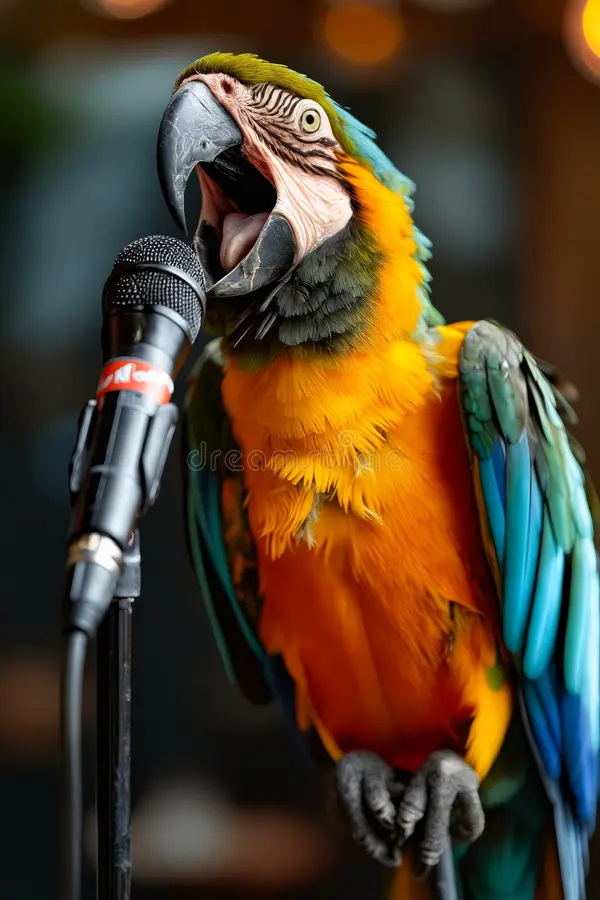
Vocal communication is central to a parrot's life. In the wild, birds use a wide range of sounds to stay woven into their flock: sharing the location of food, warning of danger, courting a mate, and simply keeping track of one another across the canopy. Your companion parrot brings that same instinct indoors. When your bird calls out, chatters, or shrieks, it is not making random noise. It is talking, and it expects you to answer.
At Bird Sitting Toronto, where we board hundreds of birds every year, the single most useful skill an owner can develop is learning to listen in context. A parrot's sounds only make sense against the backdrop of the moment: the time of day, who just left the room, what changed. Once you can read that context, most "problem" noise stops being a mystery and starts being a conversation.
Two windows are naturally the loudest. The dawn and dusk chorus — the flock roll call at sunrise and sunset — is hardwired behaviour, not misbehaviour. Expect it, and plan around it rather than fighting it.
The Six Core Types of Parrot Vocalization
Most of the sounds you hear fall into a handful of categories. Learning to sort them is the fastest way to know whether your bird needs food, reassurance, or nothing at all.
| Call type | What it sounds like | What your bird means |
|---|---|---|
| Contact call | Short, repeated, "where are you?" | Checking in with the flock — you |
| Alarm call | Sharp, loud, sudden | Something startled me; be on guard |
| Territorial call | Harsh, loud, directed | This is my space; back off |
| Distress call | Urgent, frantic, escalating | I am frightened, stuck, or hurt |
| Chatter and song | Soft, rhythmic, musical | I feel safe, social, and content |
| Begging | High-pitched, insistent, repetitive | Feed me (typical of young birds) |
Contact Calls
This is the sound you will hear most, and the one owners most often misread as "demanding." A contact call is your parrot playing Marco Polo with you. You leave the room, your bird calls to locate you, and it wants a simple reply confirming the flock is intact. Ignore it and many birds escalate — the volume climbs because, as far as your parrot knows, a missing flockmate is a life-or-death problem.
Tip: Answer contact calls with a calm, consistent word or whistle — a cheerful "I'm here!" or a short two-note whistle works well. Teaching your bird a soft "contact whistle" gives it a quiet way to check in, so it does not have to scream across the house to feel connected.
Alarm and Warning Calls
Alarm calls are sharp, loud, and abrupt, meant to snap the whole flock to attention. In your home the trigger might be a hawk shadow past the window, a dropped pan, or the vacuum coming out of the closet. Take these seriously without overreacting: scan for what set your bird off, remove or explain the trigger where you can, and stay calm yourself. Birds read your body language, and a relaxed owner is powerful reassurance.
Territorial Calls
Harsh, repetitive shouting aimed at a person, another pet, or even a spot on the wall usually means your parrot feels its space is being invaded. This is common around the cage, a favourite perch, or a bonded person. It is normal communication, not aggression for its own sake — the goal is to give the bird predictable space and avoid reinforcing the shouting with a big reaction.
Distress Calls
A true distress call — frantic, escalating, unlike your bird's everyday noise — always deserves an immediate look. Fear, a trapped toe or leg band, a night fright, or pain can all trigger it. If distress calling becomes frequent or is paired with fluffed feathers, tail-bobbing, appetite loss, or a change in droppings, treat it as a health flag. The Merck Veterinary Manual notes that a change in a bird's normal behaviour, including its vocal patterns, is often one of the earliest visible signs of illness, and birds are experts at hiding sickness until it is advanced.
Chatter and Song
Soft, rambling chatter and gentle singing are the sounds of a comfortable, well-socialized bird. You will often hear them when your parrot is relaxed near its flock, drifting toward sleep, or quietly amusing itself. This is exactly the tone you want to notice and encourage — it is the vocal equivalent of a contented sigh.
Begging Calls
High-pitched, insistent begging is normal in young, hand-fed birds and usually fades with maturity. In an adult bird, persistent food-begging directed at a bonded person is often less about hunger and more about attention and bonding — worth understanding so you do not accidentally reward the pattern with treats.
What Your Parrot Might Be Saying at Home
Your bird almost certainly views you and your household as its flock, and most of its calls are aimed at maintaining that bond. A few everyday translations:
- "Where's dinner?" — a request for food, often on a predictable schedule.
- "Where is everybody?" — a contact call for reassurance when left alone.
- "Help!" — startled by a loud noise or sudden movement.
- "Stay away!" — a territorial warning.
- "Good morning!" — the dawn wake-up call.
- "You're home!" — a greeting when you return.
- "Winding down." — softer sounds as your bird heads toward roost.
Why Parrots Also Make Noise for Its Own Sake
Not every sound is a message about a need. Parrots are intelligent, playful, and intensely social, and they vocalize simply because it feels good and keeps them engaged. Expect your bird to:
- Sing, whistle, and practise — often working on the same sound over and over.
- Play out loud — chirps and squawks during toy games and foraging.
- Talk over background noise — competing with the TV, running water, or excited kids.
- Mimic the household — phones, microwave beeps, doorbells, and your own words.
That mimicry is not mere party-trick imitation. Lafeber, a long-established authority in avian nutrition and care, describes talking and mimicry as an extension of natural flock behaviour: your parrot copies the "calls" of its flock — you — to strengthen the social bond. When your bird learns your ringtone or your greeting, it is trying to sound like part of the family.
Responding to Your Bird — and Handling Screaming
The foundation is simple: listen in context, then answer the underlying need. Reply to genuine contact calls, meet real requests, and give your bird a predictable daily rhythm. Reliable meals, out-of-cage time, foraging and enrichment, and enough uninterrupted rest do more to keep the volume down than any correction ever will.
Warning: Learn to separate natural calling from learned, attention-driven screaming. Loud dawn and dusk calling is normal. But if a bird discovers that a piercing shriek is what brings you running, the screaming becomes a trained habit rooted in boredom, loneliness, or accidental reinforcement — and avian veterinary consensus holds that this kind of excessive screaming is one of the leading behavioural reasons parrots are surrendered or rehomed.
If screaming has taken hold, resist the instinct to shout back or rush over — a dramatic response, even a negative one, is still the attention your bird was after. Instead, reward the quieter sound: acknowledge the soft contact whistle and the gentle chatter, and give attention when your bird is calm rather than when it is loudest. Address the root cause as well, since most chronic screaming traces back to unmet needs. A parrot with adequate enrichment, daily social interaction, and roughly 10 to 12 hours of dark, undisturbed sleep each night has far less reason to scream in the first place.
Read your parrot's voice the way you would read a friend's tone, and the noise becomes information. Answer the contact call, calm the alarm, celebrate the song — and your bird learns that in this flock, it is always heard.
Explore related topics
Related Articles
Do Parrots Understand What They Say? The Science Is Surprising
Is your parrot just mimicking or do they actually understand? The research says it's more complex than simple mimicry.
How to Stop My Parrot from Screaming: A Step-by-Step Plan
Your parrot's screaming is driving you crazy. This structured plan addresses the root cause, not just the symptom.
Teaching Your Parrot to Whistle Tunes: A Fun Training Guide
Cockatiels are famous for it, but many species can learn tunes. Here's how to teach your bird to whistle your favorite song.