Managing Feather Dust in Your Home
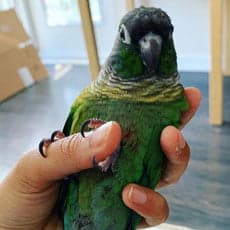
If you share your home with a bird, feather dust is one of the first things you notice and the last thing you can ever fully banish. You wipe a shelf, catch the light an hour later, and there it is again: that soft, powdery film settling on picture frames, the top of the fridge, and the black screen of your TV. At Bird Sitting Toronto, where we board hundreds of birds every year, dust management is simply part of the daily rhythm of good care. The good news is that a little understanding and a consistent routine keep it entirely manageable.
What Is Feather Dust?
Feather dust is a natural byproduct of how feathers grow. A new feather pushes out of the skin as a sharp, blood-fed shaft, wrapped in a protective keratin sheath. This is the "pin feather" or "blood feather" stage. Once the feather is fully developed and its blood supply recedes, that sheath dries out and flakes apart.
When your bird preens, it runs each feather through its beak to zip the barbs back into alignment and to crack off the spent keratin sheaths on any new feathers. Preening is usually followed by a vigorous fluff-and-shake, which launches all those tiny flakes into the air and, eventually, onto every flat surface in the room. Add a normal molt a couple of times a year, when feathers are replaced wholesale, and the dust load climbs noticeably.
Powder-Down Birds Make the Most Dust
Some species carry a second, far more prolific source of dust: specialized feathers called powder down. Rather than shedding, these feathers continuously disintegrate at their tips into an ultra-fine keratin powder. Your bird spreads it through the plumage while preening, where it works as a natural conditioner and waterproofing agent, giving cockatoos in particular their signature soft, matte bloom.
How much powder a bird makes depends heavily on the species. Cockatoos, cockatiels, and African greys are the classic heavy producers, which is why a grey's cage or a cockatoo's perch seems to generate a fresh coating of dust overnight.
| Species | Powder-down output |
|---|---|
| Cockatoos | High |
| African greys | High |
| Cockatiels | High |
| Amazons | Low to moderate |
| Macaws | Low to moderate |
| Conures | Low to moderate |
Tip: Placing an air purifier a foot or two from a heavy-dust bird such as a cockatoo or grey does far more good than one parked across the room. Capture the powder near the source before it disperses.
Why Feather Dust Matters for Your Health, and Your Bird's
Feather dust is not just a housekeeping nuisance. The particles are fine enough to stay airborne and be inhaled, and avian veterinary consensus holds that prolonged exposure can trigger or worsen respiratory symptoms in sensitive people. If anyone in your household has asthma, allergies, or another respiratory condition, dust control moves from cosmetic to genuinely important.
Birds are affected too. Their respiratory systems are exquisitely efficient and correspondingly delicate, and heavy ambient dust is hard on them over time.
Warning: If you keep a heavy powder producer such as a cockatoo in the same room as a species with sensitive airways, like macaws, watch closely for wheezing, tail-bobbing, or a change in voice. Where possible, house heavy-dust and dust-sensitive birds in separate, well-ventilated rooms rather than sharing one airspace.
A Three-Front Plan to Control It
You cannot eliminate feather dust, but you can knock it down dramatically by working three fronts at once: the bird, the cage, and the air.
Bathe the Bird
Regular bathing is your single most effective tool, because it rinses powder and loose sheath flakes away before they ever become airborne. Mist your bird with lukewarm water using a clean spray bottle roughly two to three times a week, or offer a shallow bath dish and let them splash. This matters even more in a Toronto winter, when forced-air heating can drop indoor humidity to 20 to 30 percent and dry skin sheds more freely. A room humidifier holding humidity around 40 to 50 percent keeps skin and feathers in better condition and settles some dust as a bonus. Use plain water; skip soaps and only use grooming sprays that are explicitly labelled bird-safe.
Clean the Cage
The cage is dust ground zero. Change the bottom liner every day, and lightly mist the used liner before you lift it out so the accumulated powder stays put instead of billowing up into your face. Wipe cage bars, perches, and nearby surfaces with a damp cloth daily, then vacuum or mop the floor around the cage immediately afterward while the dust is still weighed down and settled.
Filter the Air
Run a true-HEPA air purifier in the bird's room. By definition, a genuine HEPA filter captures 99.97 percent of particles at 0.3 microns, which is exactly the size range feather dust occupies, so look for that label rather than a vague "HEPA-type" claim. Choose a vacuum with HEPA or water filtration so cleaning does not simply recirculate what you pick up. Finally, replace your furnace and HVAC filters at least monthly during heavy shedding; a pleated furnace filter in the MERV 11 to 13 range traps far more fine dust than the cheapest fibreglass panels.
When Less Dust Is a Warning Sign
Here is the counterintuitive part worth remembering. A little more dust than usual is normal, especially during a molt, but a sudden, sustained drop in a powder-down bird's dust can be a genuine red flag. Because that powder is produced by healthy, normally growing feathers, a bird that abruptly stops looking dusty may have a feather-quality problem such as psittacine beak and feather disease (PBFD). If your cockatoo, cockatiel, or grey loses its powdery bloom along with any change in feather appearance, book an avian veterinary exam rather than celebrating the cleaner shelves.
Manage the dust with a steady routine and you protect two things at once: a cleaner, more breathable home, and a bird whose changing dust levels you can actually read as the early health signal they are.
Explore related topics
Related Articles
Bathing Methods for Parrots: Finding What Your Bird Loves
Every parrot has a bathing preference. Misting, dish, shower, wet leaves — here's how to find your bird's favorite.
Beak Care for Parrots: When Is a Beak Problem Serious?
A healthy beak should maintain itself through natural chewing. Here's when beak issues need attention.
Nail Trimming for Parrots: How to Do It Safely at Home
Long nails can injure your bird and damage your skin. Here's how to trim safely — or know when to let a pro handle it.