How to Choose the Right Perch Size for Your Bird
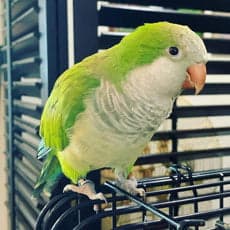
Perches play a vital role in your bird's foot health, comfort, and long-term well-being. Unlike furniture for people, perches are not "one size fits all." Give your bird the wrong diameter, or fill the cage with identical dowels, and you invite joint stress, pain, pressure sores, and, over months, foot problems like pododermatitis (bumblefoot) or arthritis.
At Bird Sitting Toronto, where we board hundreds of birds every year, a bird's perches are one of the first things we look at when it settles in. The good news is that getting this right is simple and inexpensive once you understand what your bird's feet actually need.
Why Perch Diameter Matters
In the wild, your bird would rarely stand on the same surface twice in a row. It moves across branches of every width, texture, and springiness, and its feet are constantly adjusting to grip each new perch. That variety keeps the muscles and tendons in the legs and feet working through their full range and prevents any single spot on the sole from bearing the load all day.
In captivity, the options are whatever you provide. A single, improperly sized perch, especially a smooth, uniform one, concentrates pressure on the same points of the foot around the clock. The Merck Veterinary Manual and the Association of Avian Veterinarians both link pododermatitis (bumblefoot) to perches that are too uniform, too smooth, or too abrasive. It is avian veterinary consensus that repetitive, unrelieved pressure is the underlying problem, which is why the fix is almost always the same: offer several perches of different diameters and textures rather than one "perfect" perch.
The 2/3 to 3/4 Rule
There is a quick way to judge whether a perch fits. When your bird stands naturally, its toes should wrap around roughly two-thirds to three-quarters of the perch's circumference. The toes should not meet or overlap all the way underneath (the perch is too thin), and they should not stretch flat across the top with barely any curl (the perch is too wide). That relaxed, partial grip is what keeps joints and tendons in a healthy, neutral position.
Tip: Because a wild bird's foot is built for variety, you do not need to find one exact number. Aim for a range around the correct size and let your bird choose. If it strongly favours one perch and ignores the rest, that preference is telling you which diameter feels best.
Perch Size Guide by Bird Type
Use the chart below to pick a suitable range of perch diameters for your species. Measurements are given in inches (as most perches are sold in North America) alongside centimetres.
| Perch diameter | Recommended for |
|---|---|
| 3/8″ – 7/8″ (1 – 2.2 cm) | Finch, canary |
| 1/2″ – 1″ (1.3 – 2.5 cm) | Parrotlet, lovebird, budgie/parakeet, cockatiel |
| 3/4″ – 1 1/4″ (1.9 – 3.2 cm) | Conure, caique, Meyer's, Quaker, Pionus, Senegal, Timneh grey |
| 1″ – 2″ (2.5 – 5 cm) | Eclectus, Congo African grey, small cockatoo, small macaw, Amazon |
| 2″ – 3 1/2″ (5 – 9 cm) | Large cockatoo, large macaw |
Tip: Variety matters even within a single row. A budgie does best with a mix that spans its whole range, not four perches all cut to the same 3/4″. Different diameters exercise the foot in different positions and spread the load across the day.
Building a Healthy Perch Setup
A good cage layout gives your bird choices at different heights and textures. Aim for at least three or four distinct perches and rotate or reposition them every few weeks so no single spot on the foot is ever overworked.
- Lead with natural, bird-safe wood. Branches vary in diameter along their length, which is exactly the variety a foot wants. Safe, non-toxic choices include manzanita, java wood, dragonwood, and pesticide-free apple, pear, or willow. Avoid treated lumber and known toxic woods.
- Add different materials for enrichment. A rope perch or textured perch gives the feet a change of surface. Keep rope trimmed and free of loose strands, which can wrap around toes.
- Use one cement or "grooming" perch sparingly, if at all. These can help keep nails and beak in trim, but they are abrasive, so make them the exception and never the main perch a bird stands on all day.
- Reserve the highest, most comfortable spot for sleeping. Birds prefer to roost at the top of the cage. A slightly softer or well-fitted natural perch there encourages restful sleep.
- Do not forget out-of-cage perches for play gyms, training areas, and window stands, so your bird gets the same variety when it is out with you.
Warning: Never use sandpaper covers or a sandpaper-surfaced perch as your bird's only option. They do little to trim nails and constantly abrade the sole, which is a direct path to sore, cracked feet and bumblefoot.
Signs a Perch Is Not Working
Check your bird's feet and posture regularly. Red or shiny patches on the soles, swelling, flaking skin, favouring one foot, or reluctance to grip can all signal that a perch is the wrong size or texture. A healthy, comfortable bird will often sleep perched on one foot with the other tucked up into its belly feathers, a good sign the grip feels secure. If you see foot changes that do not resolve after you improve the perches, have an avian veterinarian take a look.
Final Thoughts
Your bird's feet are in use 24 hours a day. Supporting them with well-sized, varied, high-quality perches does more than prevent injuries; it keeps your bird moving comfortably and behaving naturally. A little attention to perch diameter and variety today pays off in healthier, happier feet for years to come.
Explore related topics
Related Articles
Best Cage Liners and Substrates: What to Put on the Bottom of Your Bird's Cage
The cage floor matters more than you think. The right liner makes cleaning easy and health monitoring possible.
Setting Up the Perfect Bird Cage: Size, Placement, and Accessories
The cage is your bird's home base. Getting it right affects their health, happiness, and behavior.

Best Practices for Parrot Cage Placement at Home
Where you put the cage matters as much as the cage itself. A room-by-room guide to placing your parrot for safety and social connection: the safe-back corner rule, perch height, windows and overheating, Canadian-winter temperatures and drafts, escape risks, and a dark sleep zone — plus a quick-reference checklist.