Why Is My Parrot Screaming? Understanding and Managing Excessive Noise
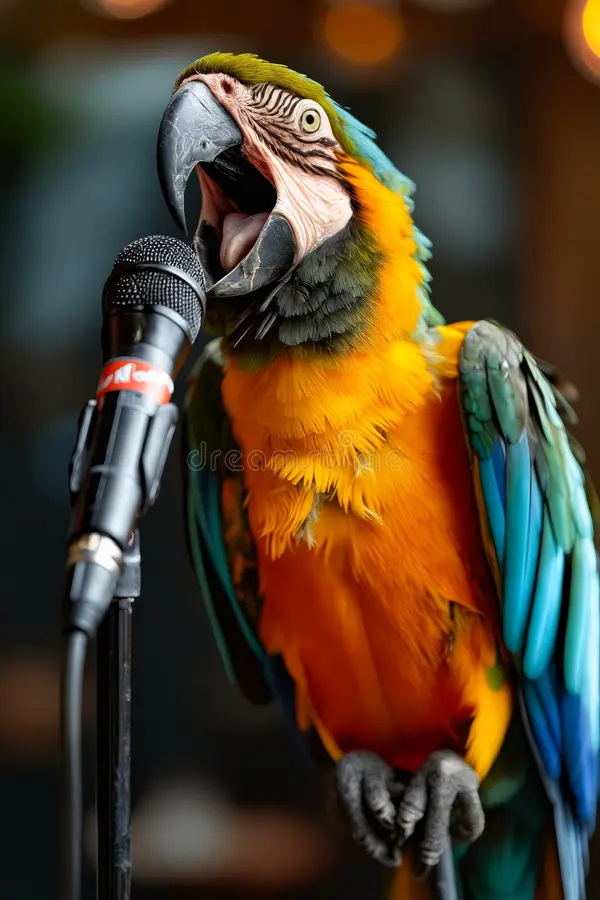
Parrots are loud on purpose. In the wild, their calls do real work: contact calls keep the flock together, alarm calls warn of danger, and exuberant dawn and dusk choruses are simply the sound of a healthy bird greeting the day. So if your parrot lets out a round of morning screams or calls to you from another room, that is not a behaviour problem. That is a flock animal being a flock animal.
The trouble starts when normal vocalizing tips over into relentless, demanding noise that does not settle. At Bird Sitting Toronto, where we board hundreds of birds every year, the most common complaint we hear from new owners is not biting or feather issues—it is screaming that has taken over the household. The good news is that excessive screaming is almost always a learned, changeable behaviour, and understanding why it happens is more than half the battle.
Normal Vocalizing Versus Problem Screaming
Before you try to "fix" anything, work out which kind of noise you are actually dealing with. A calm, well-adjusted parrot is never silent, and expecting silence sets both you and your bird up to fail.
| Normal vocalizing | Problem screaming |
|---|---|
| Contact calls when you leave the room | Non-stop shrieking that never resolves |
| Chatter, whistling, singing, "talking" | Screaming that starts the instant you are out of sight |
| Loud sessions at dawn and dusk | Escalating volume aimed at getting a reaction |
| Alarm calls at a real startle | Screaming for hours with no clear trigger |
| Quiets down once reassured | Nothing you do seems to settle it |
The pattern on the right is what avian behaviour specialists call learned screaming, and it responds to a very different approach than a bird simply being vocal.
What Is Learned Screaming?
A bird develops learned screaming when it discovers that screaming produces a reward—and for a social parrot, the biggest reward of all is your attention. The behaviour usually starts by accident. The bird screams, you react, and even a frustrated "Stop it!" reads to your parrot as the flock calling back. From the bird's point of view, the strategy worked. You came, you made noise, the flock reconnected. Naturally, it tries again tomorrow, a little louder.
According to the Association of Avian Veterinarians and avian care resources such as Lafeber, undesirable vocal behaviour in companion parrots is overwhelmingly driven by boredom, isolation, and inadvertent reinforcement rather than by a "bad" temperament. In other words, screaming is rarely the bird's fault—it is a communication strategy we taught without meaning to.
Common Reasons for Excessive Screaming
Your parrot may be screaming beyond normal flock chatter if it is:
- Poorly socialized and unable to entertain itself
- Overstimulated, overtired, or short on sleep
- Not getting enough physical exercise or out-of-cage time
- Bored or lonely, with too little to do during the day
- Frightened by something new in its environment
- Learning that noise reliably brings a human running
Warning: If a bird that was previously quiet suddenly begins screaming, or the quality of its calls changes, do not assume it is purely behavioural. Pain, illness, and hormonal changes can all show up as increased vocalization. Sudden-onset screaming warrants a check-up with an avian veterinarian before you treat it as a training problem.
What to Do in the Moment
Managing learned screaming is really an exercise in managing your own reactions. The core principle from avian veterinary consensus is simple: do not let screaming be the thing that summons you, and make sure quiet is.
| Do | Do not |
|---|---|
| Stay neutral and calm when the noise starts | Scold, shout, or make eye contact |
| Calmly leave the room until it settles | Rush over, which rewards the scream |
| Wait for a genuine pause, even a few seconds | Cover the cage or offer treats to hush |
| Return and warmly praise the quiet | React dramatically ("flock drama" is fun) |
The timing is everything. Walk back in and give attention during the calm, not during the noise. Over days and weeks, your parrot learns that a quiet chirp brings you close while a scream makes you disappear.
Tip: Birds do not understand punishment the way people do. Yelling, cage-banging, or physical discipline will not teach your parrot to be quiet—it will only erode your bond and can create fear and aggression that make the screaming worse.
Preventing Screaming Before It Starts
The most reliable way to quiet a screaming parrot is to build a life so full and predictable that screaming has no job to do. A busy, secure bird has little reason to call for help.
- Provide plenty of destructible and foraging toys, and rotate them so they stay novel.
- Make foraging part of daily life—hiding food and making your bird work for it engages a wild instinct and eats up hours.
- Give attention generously, but on your terms and while your bird is calm, so calm becomes the winning strategy.
- Ensure real exercise: supervised out-of-cage time, climbing, and wing-flapping every day.
- Keep a predictable routine. Parrots find security in knowing roughly when the lights, meals, and social time arrive.
- Protect sleep. Most parrots need roughly 10 to 12 hours of dark, quiet, uninterrupted sleep, and an overtired bird is a loud, irritable one.
A stimulating diet supports a calmer, more engaged bird, too. For most parrots the avian veterinary standard is a base of roughly 75 to 80 percent quality pellets, about 20 to 25 percent fresh vegetable-forward foods with some fruit, and only around 5 percent seeds and nuts reserved as treats. Serving part of that fresh portion as a foraging puzzle turns mealtime into enrichment rather than a two-minute event.
Building a Happier, Quieter Home
Excessive screaming does not mean your bird is difficult or that you have failed. It means your parrot is communicating a need—for company, for stimulation, for rest, or occasionally for a vet—and has landed on the loudest tool it has. Meet the underlying need, stop rewarding the noise, and consistently reward the calm, and the vast majority of parrots learn to express themselves in ways the whole household can live with.
Change rarely happens overnight. Give it patience and, above all, consistency, because a parrot that is loved, busy, well-rested, and understood is a far quieter companion than one left to shout into an empty room.
Explore related topics
Related Articles
Do Parrots Understand What They Say? The Science Is Surprising
Is your parrot just mimicking or do they actually understand? The research says it's more complex than simple mimicry.
How to Stop My Parrot from Screaming: A Step-by-Step Plan
Your parrot's screaming is driving you crazy. This structured plan addresses the root cause, not just the symptom.
Teaching Your Parrot to Whistle Tunes: A Fun Training Guide
Cockatiels are famous for it, but many species can learn tunes. Here's how to teach your bird to whistle your favorite song.