Beak Care and Functionality in Parrots: What You Need to Know
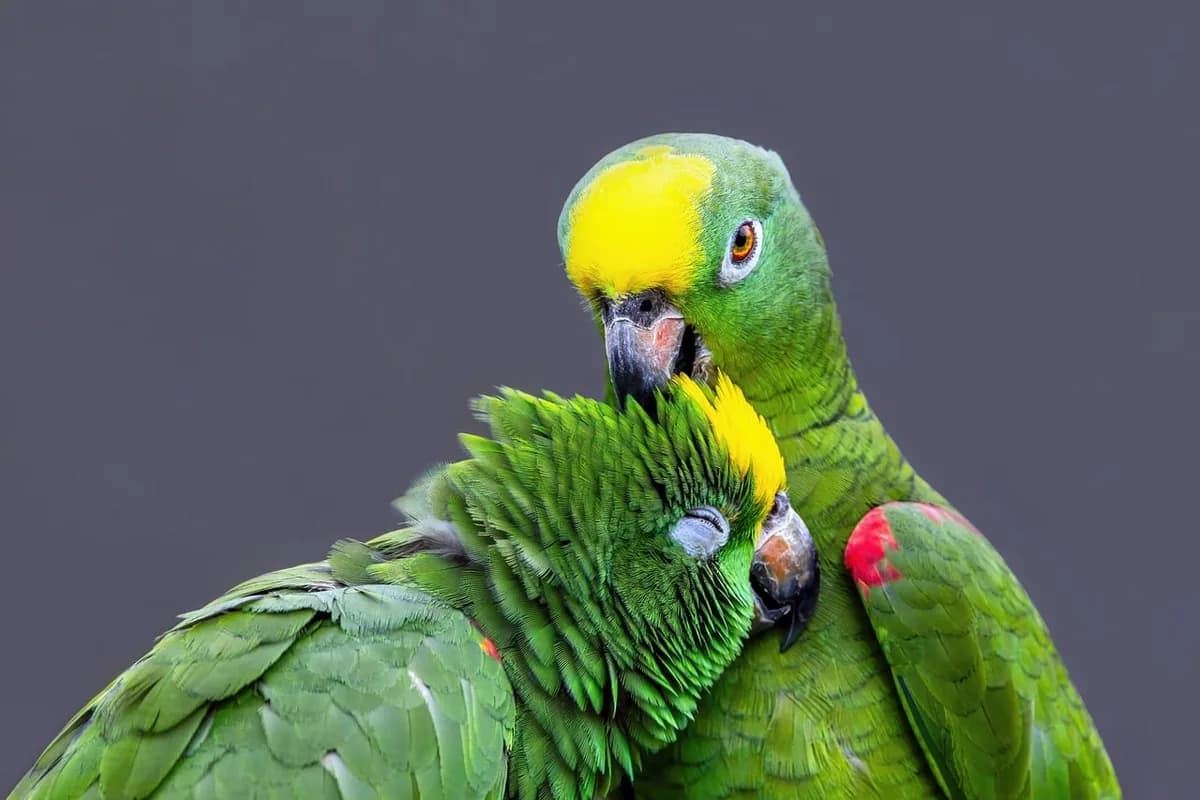
Parrots are classified as hookbills because of their curved, hook-like beaks, in contrast to finches and canaries, which are often grouped as softbills for their short, straight beaks. The shape of a bird's beak tells you a great deal about how it eats and how it explores the world, and among companion birds the parrot's beak is one of the most sophisticated tools in the animal kingdom.
A parrot's beak is at once incredibly strong and remarkably precise. The same organ that cracks a macadamia shell can turn a single seed to slip the husk off with surgical care, or run through every barb of a feather during preening. It is no accident that keepers call the beak a parrot's "third hand." At Bird Sitting Toronto, where we board hundreds of birds every year, a healthy, well-worn beak is one of the first things our team looks for when a guest arrives.
What a Parrot's Beak Actually Is
The beak is not a solid horn. It is a bony core covered by a tough sheath of keratin called the rhamphotheca, the same protein family that makes up your fingernails and your bird's feathers. That sheath grows continuously from the base toward the tip, which is why a beak that never gets used can overgrow.
At the base of the upper beak sits the cere, the fleshy area that houses the nostrils (nares). The cutting edges, called the tomia, are what let a parrot shear and slice with precision. Crucially, the beak is living tissue: beneath the keratin lies a rich supply of blood vessels and nerve endings, and the tip is genuinely sensitive. Your parrot can feel texture, temperature and pressure through its beak, which is exactly why it uses it to investigate almost everything.
Tip: The keratin sheath grows on the order of several centimetres a year in most parrots, according to avian veterinary consensus. Healthy birds file this growth down naturally through daily chewing, climbing and eating, so a beak that is suddenly getting longer is a signal, not a cosmetic issue.
What the Beak Is For
Parrots depend on their beaks for a wide range of daily tasks:
- Eating, shelling seeds and manipulating food
- Gripping and climbing (a true third limb)
- Preening and feather maintenance
- Self-defense
- Courtship, play and bonding
- Feeding young
- Chewing out nest cavities and other "renovation" work
Because the beak does so many jobs, changes in how your bird uses it, reluctance to chew, dropping food, or favouring one side, are often the earliest hint that something is wrong.
Diet: The Foundation of a Healthy Beak
You cannot file a healthy beak onto a sick bird. Beak quality is built from the inside out, and diet is where it starts. For most companion parrots, avian veterinarians recommend a diet of roughly 75 to 80 percent formulated pellets, 20 to 25 percent fresh vegetable-forward foods, and only about 5 percent seeds and nuts offered as treats.
The single most common diet-related cause of poor beak keratin is hypovitaminosis A, vitamin A deficiency, which is typical of all-seed diets. The Merck Veterinary Manual and the Association of Avian Veterinarians link low vitamin A to abnormal keratin, flaky or misshapen beak tissue, and problems in the mouth and sinuses. A pellet-based diet supplemented with vitamin-A-rich vegetables such as sweet potato, carrot, dark leafy greens and red peppers directly supports the tissue your bird's beak is made of.
Warning: Hookbill parrots do not need grit. Unlike some seed-eating birds, parrots shell their seeds before swallowing, so digestive grit serves no purpose and can cause dangerous crop or gizzard impaction. Offer calcium through cuttlebone or a calcium block instead, never grit.
A few species are exceptions to the standard pellet plan. Lorikeets require a specialized nectar diet rather than pellets. Eclectus parrots are sensitive to additives and do best on a whole-food, vegetable-forward diet. Finches and canaries can keep a quality seed mix as a staple alongside greens and egg food. For the full breakdown, see our complete nutritional guide for feeding your pet bird.
How to Support Beak Health at Home
Beyond diet, the goal is simple: give your bird reasons to use its beak every day. Provide a rotating variety of enrichment that invites chewing, shredding and problem-solving:
- Destructible chew toys (soft wood, palm, cardboard, paper)
- Foraging toys that make your bird work for food
- In-shell nuts for larger species
- Natural, varied-diameter wood perches
- A lava rock or mineral perch for passive filing
- Calcium blocks or cuttlebone
- Climbing toys, ladders and swings
Abrasive grooming surfaces let a bird rub and file its own beak, and they work best positioned near feeding stations or other frequently used spots in the cage where your bird already spends time.
Tip: Rotate toys weekly rather than filling the cage all at once. A parrot that is bored ignores its enrichment; a parrot that keeps finding "new" things to destroy keeps its beak worn down for you.
Warning Signs and What They Might Mean
A beak that changes shape, colour, texture or length is one of the clearest windows into a parrot's overall health. Use the table below as a guide to what a vet will investigate, not as a diagnosis, since several of these conditions look similar and only an avian veterinarian can tell them apart.
| Warning sign | What a vet may look for |
|---|---|
| Overgrown upper beak, sometimes with abnormal colour | Liver disease (common in budgies on fatty, all-seed diets) |
| Flaky, dull or poorly formed keratin | Hypovitaminosis A; other nutritional deficiencies |
| Honeycomb-like crusts on the cere and beak | Knemidokoptes ("scaly face") mites, especially in budgies |
| Soft, rubbery beak or one that bends | Calcium or vitamin D3 deficiency / metabolic bone disease |
| Lesions, peeling layers or necrotic patches | Psittacine Beak and Feather Disease (PBFD) |
| Cracks, chips, misalignment or bleeding | Trauma, night frights, or a malocclusion (bite misalignment) |
When to See an Avian Vet
If your bird's beak looks seriously overgrown, deformed or damaged, it can interfere with eating, drinking and preening, and it needs professional attention promptly. Because the beak carries its own blood and nerve supply and its tip is sensitive, grinding or reshaping it is a veterinary procedure. An avian vet uses a rotary tool to carefully reduce and reshape the beak while dulling the tip, controlling any bleeding as they go.
Warning: Never attempt to trim or file your bird's beak at home. Cutting into the living tissue can cause serious bleeding, pain and permanent deformity. A DIY trim can also mask, rather than fix, an underlying disease that caused the overgrowth in the first place.
If you are in the Toronto area and notice a sudden change in your bird's beak, book with a certified avian veterinarian rather than a general-practice clinic, and treat any bleeding, refusal to eat, or rapid overgrowth as urgent. A parrot's beak is remarkably resilient, but it is also honest: keep the diet right, keep the chewing steady, and let a professional handle anything that looks off, and it will serve your bird faithfully for a lifetime.
Explore related topics
Related Articles
Bathing Methods for Parrots: Finding What Your Bird Loves
Every parrot has a bathing preference. Misting, dish, shower, wet leaves — here's how to find your bird's favorite.
Beak Care for Parrots: When Is a Beak Problem Serious?
A healthy beak should maintain itself through natural chewing. Here's when beak issues need attention.
Nail Trimming for Parrots: How to Do It Safely at Home
Long nails can injure your bird and damage your skin. Here's how to trim safely — or know when to let a pro handle it.