Why Does My Bird Waste So Much Food? Understanding Natural Behavior & Minimizing the Mess
Your Bird Isn't Being Rude — It's Being a Bird
If you have ever set down a carefully chopped bowl of veggies only to watch half of it land on the floor, take a breath: your bird is not critiquing your cooking. Food tossing is one of the most normal, deeply wired behaviours a parrot can show, and understanding why it happens makes the mess far easier to live with. It even ties directly into your bird's overall health.
At Bird Sitting Toronto, where we board hundreds of birds every year, the food-flinger is the rule, not the exception. A bird that scatters food is usually a bird that feels safe enough to be picky — and that is a good sign.
The Wild Instinct Behind the Mess
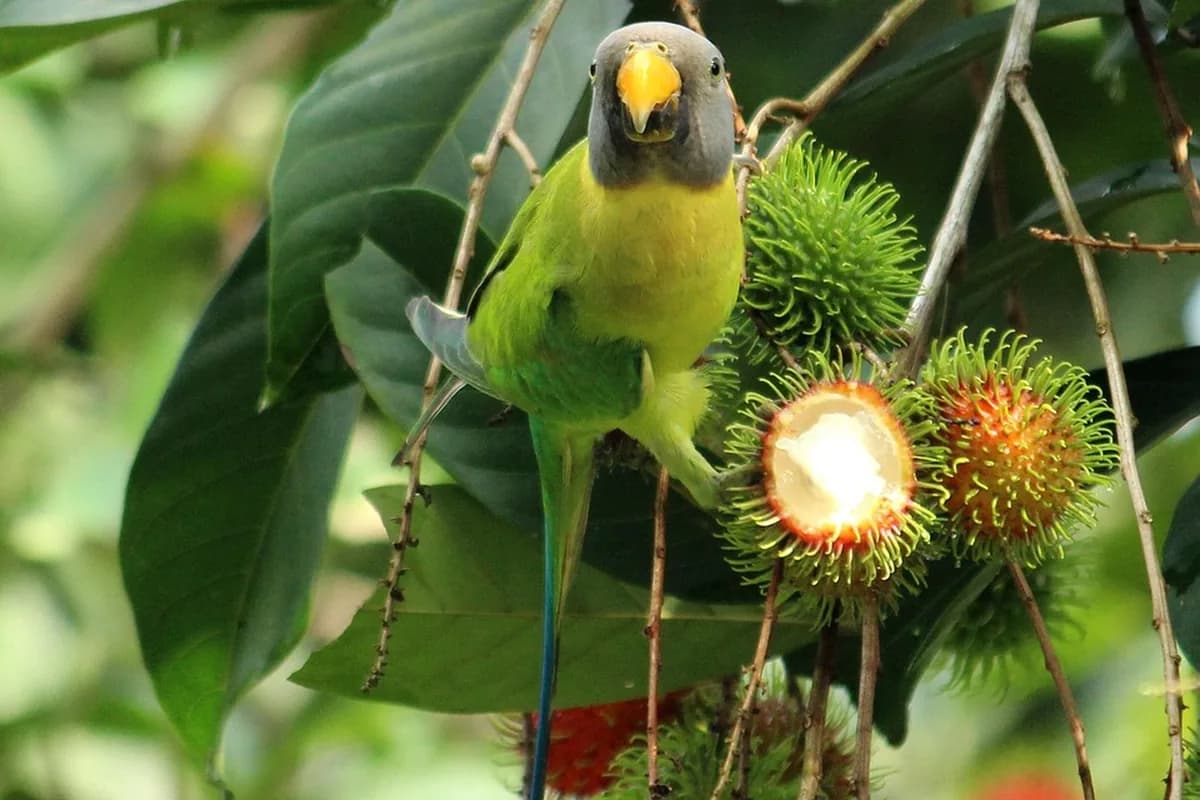
In the wild, foraging is a parrot's full-time job. According to Lafeber and broader avian veterinary consensus, wild parrots spend much of their waking day searching for, manipulating, cracking, sampling, and rejecting food. They are built to be selective: when food is abundant, a bird will take a bite of one fruit, decide it prefers another, and drop the rest without a second thought.
That "wasted" food is not wasted at all in nature. It serves a real ecological purpose:
- Seed dispersal. Dropped fruit and seeds regenerate plant life across the forest floor, often far from the parent tree.
- Feeding the food web. Scraps that fall become meals for ground-dwelling mammals, insects, and other birds.
Your living room is not a rainforest, but your bird's brain has not received that memo. When it shreds a carrot and drops most of it, it is running the same ancient program its wild cousins do. Working with that instinct — rather than fighting it — is the whole game.
Tossing vs. a Real Diet Problem
Here is where it pays to look closely. Normal foraging looks like an actively engaged bird that samples widely. A genuine problem looks like a bird that avoids whole categories of food or is quietly losing condition. Use this to tell them apart:
| Signal | Normal tossing | Worth a closer look |
|---|---|---|
| Pattern | Samples many foods, drops some | Refuses whole food groups (won't touch pellets or veg at all) |
| Body condition | Stable weight, bright and active | Trending weight loss, fluffed, quiet |
| Droppings | Consistent, well-formed | Sudden change in colour, volume, or consistency |
| Appetite | Eager at mealtimes | Sitting at the bowl but not eating |
The single best way to stay ahead of trouble is a gram scale. Weigh your bird at the same time each day — first thing in the morning, before the first meal, gives the most consistent reading. Avian veterinary consensus treats a sustained loss of roughly 5–10% of body weight as a red flag worth a vet visit, and a scale catches that long before your eye ever could.
Warning: Birds instinctively hide illness, so a "picky" bird that is genuinely off its food can look normal until it crashes. If weight is dropping, droppings change, or your bird stops eating for more than a day, contact an avian vet promptly rather than waiting it out.
Make Sure the Diet Is Worth Eating
Sometimes what looks like wasteful tossing is really a bird sorting a bowl for the few things it likes. The fix is a balanced base diet that gives fewer things to reject. For most parrots, the house standard we follow is:
- Pellets: about 75–80% of the daily diet as the nutritional foundation.
- Fresh, veg-forward foods: about 20–25% — leafy greens, squash, peppers, and other vegetables, with fruit as a smaller accent.
- Seeds and nuts: around 5%, used as high-value treats and foraging rewards, not the main meal.
A few birds play by different rules: lorikeets need a specialized nectar diet rather than pellets, eclectus do best on a veg-forward menu because they are sensitive to additives, and budgies and cockatiels should still be mostly pellets but convert slowly, so lean hard on sprouts and veg while you transition. Whatever the species, the goal is the same — a bowl full of foods your bird actually wants.
Tip: If your bird "wastes" everything except seeds, it may simply be selecting the fattiest, tastiest bits first. Offer chopped veg finely mixed so no single favourite can be picked out and flung, and serve fresh food in the morning when appetite is highest.
Redirect the Behaviour With Foraging
You cannot switch off the foraging drive — and you should not want to. The Association of Avian Veterinarians promotes foraging enrichment precisely because it channels this natural behaviour into something productive. Instead of shredding a bowl over your floor, let your bird work for its food:
- Weave veg through the cage bars so it has to pull each piece free.
- Hide pellets inside foraging toys, paper cups, or crumpled bird-safe paper.
- Skewer chunks of vegetable on a stainless kabob so they can't be flicked out in one motion.
A bird busy solving a foraging puzzle is a calmer, more satisfied bird — and one whose "mess" is at least concentrated where you want it. This dovetails with broader stress-reduction strategies for a happier companion.
Practical Ways to Contain the Mess at Home
Even a well-fed, well-enriched bird will throw food — expect a 60–90 cm (24–36 in) splat zone around the cage. Plan for it instead of fighting it:
Protect Your Walls and Floors
- Hang a shower curtain, clear plastic sheeting, or old bed linens on the walls beside the cage.
- Put down a washable floor mat or tray you can wipe or shake out daily.
Choose the Right Cage Accessories
- Look for a cage with a built-in seed skirt to catch falling food.
- Add seed catchers or a mesh barrier around the cage base.
- Use deep, covered crocks that make it harder to fling food out.
Keep Cleanup Quick
- Stock a couple of bird-safe cage cleaners and a dedicated scrub brush so daily tidying is a two-minute job.
The Bottom Line
Food tossing is normal, healthy, and here to stay — a sign of a bird that feels secure enough to forage and choose. You can't eliminate it, but you can channel it with enrichment, feed a balanced diet that gives less to reject, and set up your space so cleanup is painless. Keep an eye on the scale and the droppings so you can tell ordinary flinging from a bird that needs a vet, and lean on our first-aid guidance if anything ever seems off. Accept what you can't change, adapt where you can, and let your bird be gloriously, messily itself.
Explore related topics
Related Articles
Can Parrots Eat Human Food? A Complete Guide to Sharing Meals
Your parrot wants to eat off your plate. Which human foods are safe to share and which are dangerous?
The Complete Guide to Parrot Pellets: Brands, Conversion, and Myths
Pellets should be 50-70% of your parrot's diet, but not all pellets are equal. Here's everything you need to know.
Cooking for Your Parrot: 15 Recipes and Meal Ideas They'll Love
Variety is the spice of your parrot's diet. These easy recipes make feeding time exciting and nutritious.