Why Does My Bird Bite? Understanding Parrot Aggression and How to Stop It
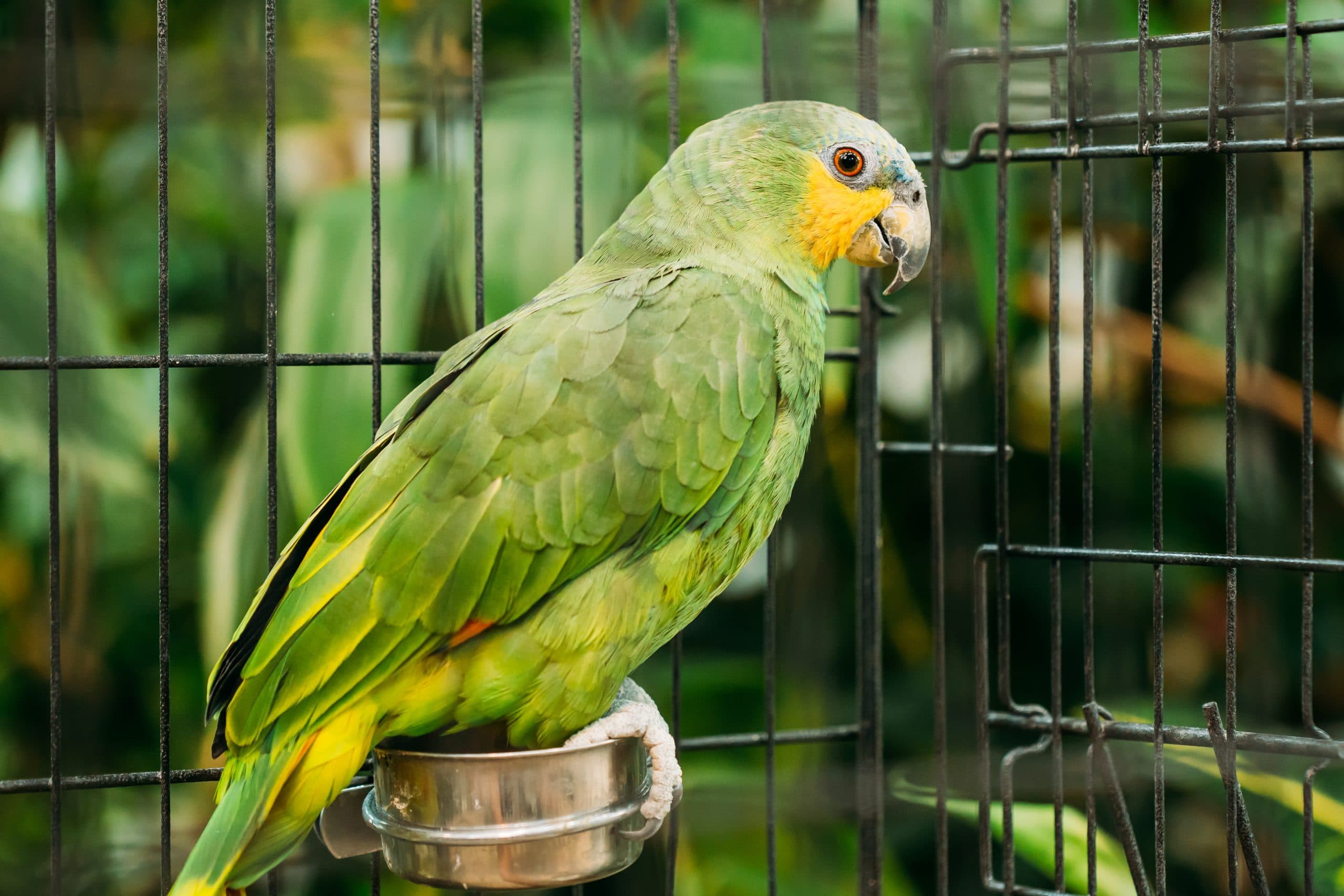
If you share your home with a parrot, sooner or later you are going to get bitten. Maybe it is a playful nip that startles you; maybe it is a full chomp that draws blood and leaves you second-guessing the whole relationship. Either way it hurts, physically and emotionally, and it is easy to take it personally.
Here is the truth we come back to again and again: birds almost never bite "for no reason." In the wild, parrots rarely bite one another. A bite is expensive and risky for a flock animal, so it tends to be a last resort, used only when every quieter signal has already failed. Your parrot is not being spiteful. It is telling you something you missed.
Parrots communicate almost entirely through body language and vocalizations. In your living room, they are trying to speak that language to a species that does not naturally read it. When their earlier signals, such as a pinned eye, a raised foot, or a lean-away, go unnoticed, a bite becomes the one message they are certain you will understand.
At Bird Sitting Toronto, where we board hundreds of birds every year, the single biggest reduction in biting almost always comes from the same skill: learning to read the warning that came before the beak. This guide will help you do exactly that.
Read the Warning Before the Beak
Before we get to the reasons behind biting, learn to spot the signals that usually precede one. Most parrots give you several seconds of warning; the bite is simply what happens when that warning is ignored.
Tip: Watch the eyes and the feathers. Eye pinning (the pupils rapidly flashing large and small), flared or fanned tail feathers, feathers held tight or puffed on the neck, a hard stare, or a slow lean toward your hand are all "back off" signals. When you see them, stop, give space, and reassess rather than pushing forward.
Why Do Birds Bite?
To reduce biting, you first have to understand what is driving it. In our experience most bites fall into one of the categories below, and the fix is different for each one.
| Type of bite | What is really going on | First thing to try |
|---|---|---|
| Exploratory / play | Beaking to explore the world | Redirect to a chew toy |
| Territorial | Defending cage or perch | Handle away from the cage |
| Hormonal | Breeding-season surge | Cut back cuddling and nest cues |
| Stress / overstimulation | Too much, too loud, too fast | Lower the noise, respect limits |
| Fear | Feels cornered or trapped | Never force interaction |
| Displacement / warning | Reacting to a perceived threat | Keep the bird off your shoulder |
| Learned ("I don't wanna") | Behavior that gets results | Stay calm, do not reward it |
Exploratory or Play Biting
Young parrots explore with their beaks the way puppies explore with their mouths. Fingers, ears, jewelry, and faces all get investigated, and a beak that means no harm can still pinch. This is not aggression, but it is worth shaping early so it does not harden into a habit.
- Calmly say "no" and pause the interaction for a moment.
- Offer a chew toy or a safe object to redirect the beak onto something appropriate.
- Reward soft, gentle behavior with praise and attention.
Territorial Biting
Parrots are naturally territorial, and that instinct peaks around the cage or a favorite perch, which they treat as a nest. A bird who is sweet on your shoulder can turn defensive the moment your hand enters that space.
- Ask your bird to step up and move it away from the cage before you feed, clean, or rearrange.
- Use stick or perch training to guide a defensive bird to neutral ground without a hand-to-beak standoff.
- Provide several play areas around your home so no single spot becomes a fortress.
Hormonal Biting
During breeding season, hormones can turn an easygoing bird moody and reactive. Cockatoos and Amazons are especially well known for this seasonal shift, and even a long-bonded companion may lunge or nip through it. The Merck Veterinary Manual notes that hormonally driven aggression and related behaviors are common in companion parrots and are managed largely by adjusting the environment and daily routine.
- Avoid petting the back, tail base, or under the wings; stick to the head and neck. Full-body stroking is a strong mating cue.
- Limit nesting triggers such as dark enclosed spaces, shredded paper hoards, and tenting under blankets.
- Watch for the warning cluster of flared tail, pinned eyes, and lunging, and give extra space when you see it.
Tip: Long, consistent nighttime rest (roughly 10 to 12 hours of quiet darkness) and cutting back rich, warm "comfort" foods can help settle hormonal behavior. If aggression is severe or comes on suddenly, avian veterinary consensus is to rule out pain or illness with an avian vet first.
Stress and Overstimulation Biting
A stressed or overstimulated bird has a very short fuse. Loud noises, an abrupt change in routine, a chaotic room, or even your own tension can push a bird past its threshold, and a bite is how it says "enough."
- Identify the specific stressors and reduce them one at a time.
- Respect your bird's boundaries and skip forced interaction on a bad day.
- Learn your bird's daily rhythm and do your handling and training during its calm, sociable "happy hours."
Fear Biting
A frightened parrot that feels cornered has two options, flee or fight, and if it cannot flee, it will bite to defend itself. Common triggers include unfamiliar people, sudden movements, hands coming from above, and stressful outings such as vet visits.
- Socialize your bird gradually and early to a variety of people, toys, and situations.
- Move slowly and predictably; approach from the side rather than looming from above.
- Never force interaction with a bird that is clearly afraid. Let it choose to come to you.
Displacement or Warning Biting
Sometimes a bird bites the person it is closest to as a reaction to something else it perceives as a threat, such as a hawk outside the window or a stranger at the door. The bite is not aimed at you so much as triggered near you, almost a misfired alarm.
Warning: Never let a bird prone to this behavior ride on your shoulder. You cannot see the warning signals when the beak is next to your face, and a bite to the eye, lip, or ear can cause serious injury. Keep an unpredictable biter at hand or chest height where you can read it.
"I Don't Wanna" Biting (Learned Behavior)
Parrots are highly intelligent and quick to learn what works. If biting reliably ends an unwanted interaction or produces attention, food, or freedom, the bird will keep doing it. This one is usually a habit we accidentally trained, because our big reaction is the reward.
- Avoid dramatic reactions such as yelling, flinching, or shrieking; to a parrot, a loud response can be an exciting payoff.
- Teach and reward simple cues like step-up so there is a calm, rewarded alternative to biting.
- Stay calm and consistent so the bite stops producing the result the bird is chasing.
What to Do the Moment You Get Bitten
In the heat of a bite it is hard to think clearly, so have a plan ready. The goal is to stay neutral and avoid accidentally rewarding the behavior with a big reaction.
- Stay calm. Do not yell, shake your hand, or react dramatically.
- Set the bird down quietly on a perch or return it to its cage.
- Withdraw your attention for a few minutes so the bite earns nothing.
- Replay what led up to it. What signal did you miss? What was your bird trying to say?
- Try again later. Do not give up, and do not hold a grudge. Your bird will not.
Warning: Never hit, shake, flick, or throw your bird, and never "beak-block" aggressively as punishment. It is not only cruel, it shatters the trust you are trying to build and reliably makes biting worse. Force teaches a parrot that hands are dangerous.
Build Trust, Not Fear
Good relationships with parrots are built on mutual respect, patience, and trust, never on dominance. Your job is not to win a battle of wills but to learn your bird's language, read the signals that come before the beak, and guide behavior with calm, predictable consistency.
With time, observation, and positive reinforcement, biting can be dramatically reduced and often nearly eliminated. So the next time your parrot lashes out, take a breath and remember: it is communication, not cruelty. Do not take it personally, and do not blame the bird.
If your bird's biting is sudden, escalating, or paired with other changes such as fluffed feathers or reduced appetite, book a check-up with an avian veterinarian to rule out pain or illness before assuming the cause is purely behavioral.
Explore related topics
Related Articles
The 20 Biggest Mistakes New Bird Owners Make
We all make mistakes as new bird owners. Here are the 20 most common — and how to avoid them.
Do Parrots Feel Jealousy? Understanding Possessive Behavior
Your parrot lunges at your partner when they sit near you. Is it jealousy? The science says yes — here's what to do.
Fireworks and Loud Noises: Protecting Your Parrot from Sound Stress
Canada Day, New Year's, thunderstorms — loud events can traumatize your bird. Here's how to protect them.