Maintaining Healthy Beaks and Nails in Pet Birds
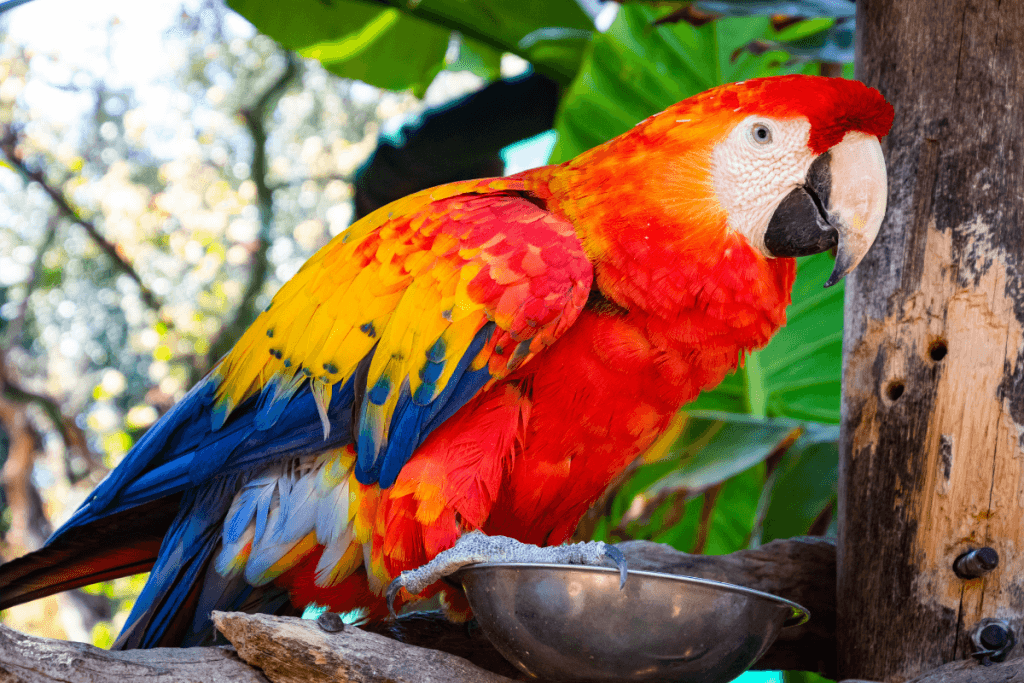
In the wild, a parrot's beak and nails are maintained naturally through everyday activities: chewing, cracking nuts, building nests, climbing, tearing apart fruits and vegetables, landing and walking on rough branches, and swiping their beaks on hard surfaces. All of this "parrot work" keeps the beak and nails filed down to a healthy shape without anyone ever picking up a clipper.
Domestic parrots live in a far less varied environment and are generally less active. Smooth dowel perches, soft foods, and long quiet hours all mean the beak and nails simply do not get the same wear they would on a wild branch. As a result, some level of thoughtful human intervention is often needed to accomplish what wild birds do on their own. At Bird Sitting Toronto, where we care for hundreds of birds every year, overgrown nails and dull, flaky beaks are among the most common grooming issues we see in otherwise healthy companion birds, and nearly all of them trace back to environment and diet.
The Beak and Nail Are Living Tissue, Not Toenail Clippings
It helps to understand what you are actually looking at. A parrot's beak is not solid horn. It is bone at the core, covered by a hard sheath of keratin called the rhamphotheca, and that sheath grows continuously throughout the bird's life, much like your own fingernails. Just beneath the keratin lies a rich supply of blood vessels and nerves. According to VCA Animal Hospitals and the Merck Veterinary Manual, this means the beak is a sensitive, well-supplied structure, and cutting into it carelessly causes real pain and bleeding.
Nails work the same way. Each nail contains a "quick," the living core of blood vessel and nerve that runs partway down toward the tip. In pale nails you can often see the quick as a pink line; in dark nails it is hidden, which makes home trimming trickier.
Tip: Because both the beak and nails are living, growing tissue with a blood and nerve supply, the goal is never to "cut them back" on a schedule. The goal is to keep them naturally worn to a healthy length so that aggressive trimming is rarely needed.
Signs of Beak and Nail Problems
Beyond a lack of physical activity, poor nutrition or an underlying illness can drive beak and nail issues. Check your bird regularly and watch for:
- Overgrowth (an unusually long, pointed, or hooked beak, or nails that catch on fabric)
- Brittleness
- Softness or a rubbery texture
- Cracking, peeling, or flaking layers
- Lesions, unusual smoothness, or changes in color
A healthy beak is well aligned, with the tip of the upper beak meeting the lower cleanly, and it is uniform in shape, color, and texture. A little light flaking as the surface renews itself is normal; a persistently overgrown, misshapen, or discolored beak is not.
Warning: A suddenly overgrown or abnormal beak is often a symptom, not just a grooming lapse. The Merck Veterinary Manual links beak and nail overgrowth to liver disease (a frequent culprit in budgerigars on all-seed diets), to nutritional deficiency, and, in budgies especially, to scaly-face mites (Knemidokoptes), which produce a crusty, honeycombed look around the beak and cere. If the change is rapid or the shape is distorted, book an avian veterinary exam rather than reaching for a file.
Diet: The Foundation of Strong Keratin
Beak and nail quality is built from the inside out. Keratin needs good protein, vitamin A, calcium, and vitamin D3 to form properly, and the single most common cause of poor beak texture in companion birds is a seed-only diet, which is deficient in exactly these nutrients. Chronic vitamin A deficiency in particular is well documented by the Association of Avian Veterinarians as a driver of poor skin, beak, and feather quality.
For most parrots, the avian veterinary consensus diet looks like this:
- Pellets: roughly 75 to 80 percent of daily intake, as the nutritionally complete base.
- Fresh, vegetable-forward foods: about 20 to 25 percent — leafy greens, orange and dark vegetables (a good vitamin A source), and modest fruit.
- Seeds and nuts: around 5 percent, as treats for training and enrichment, not as a staple.
There are exceptions worth knowing if you keep something other than a typical hookbill: lorikeets need a specialized nectar diet rather than pellets; eclectus parrots are sensitive to additives and do best on a whole-food, veg-forward diet; and finches and canaries can keep a quality seed mix as a staple alongside greens and egg food.
A cuttlebone or mineral block clipped to the cage gives your bird both a calcium source and a satisfying surface to work the beak against, which is a genuine grooming aid as well as nutrition.
Warning: Hookbill parrots do not need grit and should not be offered it. Unlike some seed-eating softbills, parrots shell their seeds and do not use grit to grind food, and offering it can lead to dangerous crop impaction. Cuttlebone and mineral blocks are the right choice for minerals and beak conditioning.
How to Promote Natural Grooming
The best way to keep your bird's beak and nails in shape is to rebuild the "work" of the wild inside the cage. Provide:
- A rotating variety of destructible chewing toys — soft wood, palm, cardboard, and vegetable-tanned leather — that give the beak something to shred and wear against.
- Grooming perches with a naturally abrasive surface, such as cement or textured mineral perches, to file the nails during ordinary standing and walking.
- Climbing toys, ladders, and natural branches to encourage the movement and gripping that wears nails down.
Safe, untreated branches from Toronto-area trees such as maple, birch, apple, and willow make excellent natural perches once they have been scrubbed and baked to sterilize them. These accessories support beak and nail health while also improving your bird's physical and mental well-being.
Proper Placement of Grooming Perches
An abrasive perch only helps if it is positioned well, and placed poorly it can do harm:
- Do not make it the highest perch. Birds prefer to sleep on the topmost perch, and standing all night on a rough surface can irritate or abrade the sensitive skin of the foot, contributing to pressure sores (pododermatitis, or "bumblefoot").
- Do place it near the food and water dishes. Your bird naturally lingers there and will scrape and wipe its beak on the perch after eating, which is exactly the kind of light, frequent wear you want.
One or two grooming perches in the cage is plenty. The rest should be varied-diameter natural wood, which exercises the foot and prevents pressure points.
Trimming: What You Can Do at Home, and What Belongs to Your Vet
Even with a well-stocked cage, some birds will still need the occasional trim. Knowing where the line falls keeps your bird safe.
Nails can often be maintained at home if you are careful and calm. Trim only the sharp tip, staying well clear of the quick, and keep styptic powder (never flour) on hand to stop bleeding if you nick it. A gentle two-person approach with a towel restraint is far less stressful than a struggle. If your bird has dark nails where the quick is invisible, or if it panics during handling, let a professional do it.
Beaks are different. A healthy beak should essentially never be clipped at home. Because of the blood and nerve supply and the risk of cracking or misaligning the beak, trimming and shaping is a veterinary procedure, done with a rotary tool (a Dremel) by an avian vet or trained technician. Just as importantly, a beak that keeps overgrowing is telling you something, and the vet visit is where the underlying cause gets diagnosed and fixed, not just filed away.
Warning: Never use household nail clippers, scissors, or a file on your bird's beak, and never cut a nail short enough to bleed on purpose. If a beak looks overgrown, the answer is an avian vet exam, not a home trim.
Quick Reference
| Task | Safe at home? | Tool | Watch out for |
|---|---|---|---|
| Nail tips | Often, with care | Small trimmer or file + styptic powder | The quick; dark nails; a stressed bird |
| Beak shaping | No | Vet with a rotary tool | Blood/nerve supply; underlying disease |
| Daily wear | Yes (best option) | Chew toys, abrasive perch, branches, cuttlebone | Boredom; smooth dowel-only perching |
| Overgrowth | No — investigate | Avian veterinary exam | Liver disease, deficiency, scaly-face mites |
The Bottom Line
Toys and perches will not eliminate every future trim, but they dramatically reduce how often one is needed and keep the whole process low-stress. Feed a complete, vegetable-forward diet, fill the cage with things worth chewing and climbing, offer a cuttlebone, and check the beak and nails during your regular cuddle or health-check sessions. Do that consistently, and let your avian veterinarian handle any beak work and anything that looks abnormal, and your bird will stay comfortable, well-groomed, and healthy for years to come.
Explore related topics
Related Articles
Aspergillosis in Birds: The Invisible Fungal Killer
Aspergillosis is one of the most common and deadly avian diseases. It's caused by a fungus that's everywhere in our environment.
The Avian First Aid Kit: 25 Essential Supplies Every Bird Owner Needs
When an emergency happens, you need supplies ready NOW. Here's what every bird owner should have on hand.
Bird Insurance: Is It Worth It? A Complete Guide to Avian Pet Insurance
A single emergency vet visit can cost $2000+. Pet insurance for birds exists — here's whether it's worth the premium.