Seeds vs. Formulated Diets: What’s Best for Your Bird?
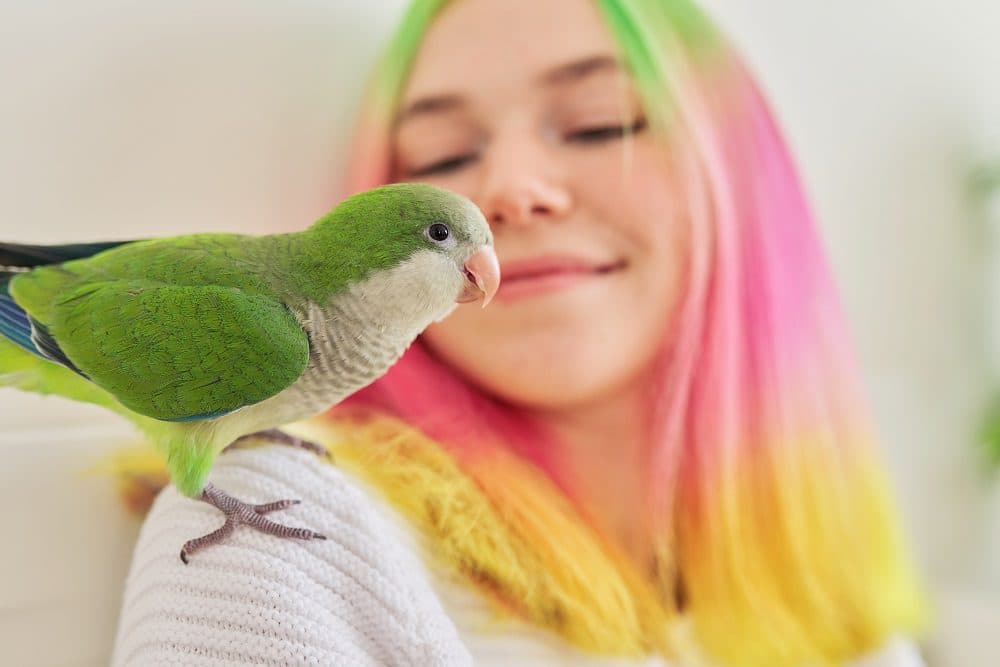
For decades, a bag of seed was the only thing you could buy for a pet bird, so seed became "what birds eat." It turns out that was one of the most expensive assumptions in aviculture. At Bird Sitting Toronto, where we board hundreds of birds every year, the single biggest diet problem we see is not exotic — it is a healthy-looking parrot living on an all-seed bowl, already quietly deficient in the nutrients it needs. This guide walks you through the real difference between seeds and formulated diets, the ratio to aim for, and how to move a stubborn seed lover across without a fight.
Why a Seed-Only Diet Falls Short
A seed-only diet is not evil — it is incomplete. Seeds are high in fat and low in the vitamins, minerals, and amino acids a bird needs to build feathers, bone, and a functioning liver. Worse, birds are selective feeders: given a mixed bowl, most parrots pick out the fatty favourites (sunflower, safflower, peanuts) and leave the rest. Sunflower kernels alone run close to 50% fat by weight, so a bird eating "a whole bowl of seed" may really be eating one or two fatty items on repeat.
Over months and years, avian veterinary consensus (echoed by the Association of Avian Veterinarians and the Merck Veterinary Manual) links all-seed diets to a familiar cluster of problems:
- Vitamin A deficiency (hypovitaminosis A) — blunted immunity, sinus and respiratory infections, and changes to the mouth, skin, and feathers.
- Calcium and vitamin D3 deficiency — brittle bones, seizures, and egg-binding in hens.
- Hepatic lipidosis (fatty liver) — an overloaded, fat-infiltrated liver, especially common in budgies, cockatiels, and Amazons.
- Obesity, fatty tumours (lipomas), and atherosclerosis — a heavy, fatty diet hardens and clogs the arteries much as it does in people.
- Poor feather quality and shorter lifespan — the visible tip of a much deeper deficiency.
Warning: A bird can look bright and active while it is malnourished. Nutritional disease is slow and hidden, and by the time feathers or breathing are visibly affected, the deficiency is usually well advanced. Do not wait for symptoms — fix the bowl first.
What "Formulated Diet" Actually Means
A formulated diet — pellets or extruded nuggets — grinds grains, vegetables, vitamins, and minerals into a single blended food, then bakes or extrudes it into uniform pieces. The point is simple: your bird cannot pick out the fatty part and skip the vitamins, because every bite is the same balanced bite.
| Formulated pellets | Seed mix | |
|---|---|---|
| Nutrition per bite | Complete and consistent | Uneven; bird self-selects |
| Fat content | Moderate, controlled | Often very high |
| Selective feeding | Not possible | The core problem |
| Supplements needed | Rarely, if any | Frequently |
| Mess / waste | Low (no hulls) | High (hulls, discarded pieces) |
| Foraging enrichment | Lower on its own | Higher (cracking, hulling) |
Trusted pelleted lines used across avian medicine — such as Harrison's, Roudybush, TOPs, Lafeber, and Zupreem — are formulated for exactly this reason. Where possible, choose a naturally coloured, minimally dyed pellet.
Tip: Pellets solve nutrition, not boredom. A bird still needs to work for food. Keep the enrichment that seeds provided by scattering a few pellets into foraging toys, or by offering the small seed and nut ration inside a puzzle rather than in the bowl.
The Ratio to Aim For
Here is the house standard for most companion parrots — greys, Amazons, macaws, conures, cockatoos, ringnecks, quakers, and lovebirds:
| Diet component | Share of daily intake |
|---|---|
| High-quality formulated pellets | 75–80% |
| Fresh vegetables and leafy greens (veg-forward), some fruit | 20–25% |
| Seeds and nuts (as treats and training rewards) | ~5% |
Notice that seeds do not disappear — they change jobs. Instead of being the meal, a few seeds and a piece of nut become the treat, the training reward, and the foraging puzzle. That is where their real value lives: the cracking and hulling is genuine mental enrichment, and a sunflower seed is one of the most powerful "yes!" rewards you have for teaching a step-up or a recall.
Fresh food should lean savoury and veg-forward: dark leafy greens, squash, sweet potato, carrot, capsicum, broccoli, cooked legumes, and sprouts, with fruit as a smaller, sweeter accent. A cooked "birdie mash" or soak-and-cook mix is an easy way to deliver that fresh portion in Toronto winters when fresh produce feels expensive.
Species That Break the Rule
Not every bird belongs on a mostly-pellet plan. Match the diet to the bird:
- Lorikeets and lories run on a specialised nectar diet, not pellets. They also need low-iron foods — avoid iron-fortified products and go easy on high-vitamin-C fruits, because these birds are prone to iron-storage disease.
- Eclectus parrots are famously additive-sensitive and do best on a veg-forward, whole-food diet with a gentler hand on synthetic dyes and heavy fortification.
- Finches and canaries (passerines) are the exception that keeps seed as a staple: a quality seed mix plus greens, egg food, and some pellets suits them, and they are hands-off birds — enjoyed by watching, not handling.
- Budgies and cockatiels should still be mostly pellets, but they are notorious seed junkies who convert slowly. Take your time, and lean hard on sprouts, chop, and veg to bridge the gap.
How to Convert a Seed Junkie
Birds equate unfamiliar objects with danger, so a bird raised on seed may not even recognise pellets as food at first. Never simply pull the seed and hope hunger wins — a bird can starve beside a full bowl of something it does not trust. Go gradually instead:
- Get a baseline. Weigh your bird on a gram scale at the same time each day. A drop of more than about 5% of body weight means back off and slow down.
- Mix and shift. Start with mostly seed and a little pellet, then move the ratio toward pellets over one to several weeks. Grinding a few pellets over damp veg or into a mash helps birds accept the taste.
- Make pellets the "prize." Offer pellets first thing in the morning when appetite is highest, and reserve seed for later — birds work hardest for food when they are keen.
- Model the behaviour. Birds are social eaters. Let your bird see you (or a bonded cage-mate) "eating" pellets, and eat together at family mealtimes.
- Confirm it is working. Watch the droppings and the scale. Steady weight, normal droppings, and pellets actually eaten — not just crumbled and dropped — mean the switch is real.
Warning: Hookbill parrots do not need grit. Unlike some seed-eating doves and poultry that swallow whole seeds, parrots hull their seeds and grind food in the gizzard without stones. Offering grit to a parrot risks dangerous crop or gut impaction — skip it entirely.
Foods to Keep Out of the Bowl
Whatever diet you land on, some human foods are never safe for birds. Keep these out entirely:
- Avocado (persin) and chocolate (theobromine)
- Caffeine and alcohol
- Onion and garlic
- Fruit pits and apple seeds (release cyanide) — the flesh is fine, the pits and seeds are not
- Salt, salty snacks, and heavily processed human food
- Uncooked (dried) beans and mushrooms
The Bottom Line
For nearly every companion parrot, the answer to "seeds or pellets?" is both — in the right jobs. Make a quality formulated pellet the foundation at 75–80% of the diet, build in a generous 20–25% of fresh veg-forward food, and let seeds and nuts do what they do best: reward, enrich, and delight at around 5%. Match the plan to your species, convert slowly with a gram scale in hand, and loop in an avian vet if you are unsure. Your bird will not just live longer on this diet — it will look, feel, and behave like the vivid, healthy creature it is meant to be.
Explore related topics
Related Articles
Can Parrots Eat Human Food? A Complete Guide to Sharing Meals
Your parrot wants to eat off your plate. Which human foods are safe to share and which are dangerous?
The Complete Guide to Parrot Pellets: Brands, Conversion, and Myths
Pellets should be 50-70% of your parrot's diet, but not all pellets are equal. Here's everything you need to know.
Cooking for Your Parrot: 15 Recipes and Meal Ideas They'll Love
Variety is the spice of your parrot's diet. These easy recipes make feeding time exciting and nutritious.