How Birds Use Their Senses for Survival: A Parrot’s Sensory World
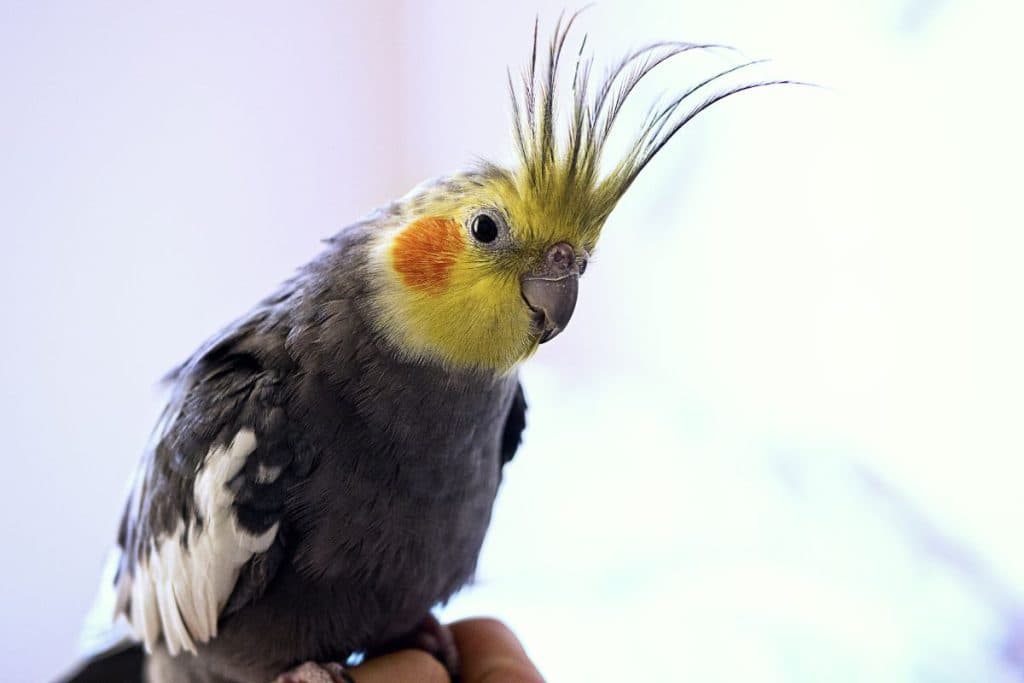
Your Parrot Lives in a Different Sensory World
Every choice your parrot makes, from what to eat to when to fly, who to trust, and when to scream a warning, begins with how it takes in the world around it. And a parrot's world is not our world. Its eyes catch colours you will never see, its ears parse sound faster than yours can, and its skin, tongue, and nose quietly fill in the rest.
At Bird Sitting Toronto, where we board hundreds of birds every year, understanding how a parrot perceives its surroundings is the difference between a cage that merely holds a bird and a home that genuinely suits one. For parrots, vision and hearing are the dominant senses, while smell, taste, and touch play supporting, but far from trivial, roles.
A Bird's-Eye View: How Parrots See
Vision is a parrot's most important sense, shaped over millions of years by the need to spot predators, judge a landing branch, and read the body language of the flock.
What Makes Parrot Eyesight Different
Because a parrot's eyes sit on the sides of its head rather than facing forward, it commands an enormous field of view, close to 300 degrees, letting it watch for danger in nearly every direction at once. The trade-off is a small zone of overlap in front of the beak, so binocular depth perception is limited compared with ours. That is why a curious or nervous bird will often cock its head to study something intently with one eye.
A few more quirks are worth knowing:
- Parrots change focus remarkably fast, snapping from a distant window to a seed in the food bowl in an instant.
- A third eyelid, the translucent nictitating membrane, sweeps sideways across each eye to clean and lubricate it without shutting out the light.
- Night vision is poor. Parrots are daytime animals, which is exactly why a startled bird can thrash in a dark room; it genuinely cannot see.
- Most striking of all, parrots are tetrachromats: they perceive a fourth band of colour, including ultraviolet (UV) light, that is completely invisible to us. As Lafeber and the Merck Veterinary Manual note, UV perception helps birds assess plumage, judge the ripeness of fruit, and even read a potential mate's condition. Feathers that look plain grey to you may blaze with UV signals to your bird.
Tip: Ordinary indoor light filters out most UV, so the colour world you provide is dimmer than the one your parrot evolved for. Full-spectrum avian lighting on a consistent day/night cycle, roughly 10 to 12 hours of light, supports natural behaviour, and a screened window or supervised outdoor time (never in a draft or direct summer heat) lets real sunlight through. Ordinary window glass blocks UV, so a closed window does not count.
Do They Hear What You Hear? Avian Hearing
Sound is survival for a flock animal. In the wild, hearing keeps a parrot woven into the constant chatter of its flock and tuned to the first alarm call that a hawk has appeared.
Birds actually hear across a narrower frequency range than we do, but within that range they run circles around us: parrots detect rapid changes in pitch and intensity far faster than the human ear can follow. That fine temporal resolution is part of how they mimic speech and pick individual voices out of a noisy room.
| Feature | Human ear | Parrot ear |
|---|---|---|
| External ear flap (pinna) | Present | Absent, just a feather-covered opening |
| Middle-ear bones | Three (malleus, incus, stapes) | One (the columella) |
| Frequency range | Wider (up to about 20 kHz) | Narrower |
| Discriminating rapid pitch/intensity change | Slower | Much faster |
Instead of external ears, parrots have ear openings on the sides of the head, protected by specialized auricular feathers that shield the canal from wind and debris without muffling sound.
Warning: Because parrots hear so acutely and rely on sound to feel safe, a chaotic soundscape is genuinely stressful. Keep cages away from blaring TVs, vacuums, and slamming doors, and give your bird predictable quiet hours. Two invisible dangers matter even more: overheated non-stick (PTFE) cookware and self-cleaning ovens release fumes that are rapidly fatal to birds, and aerosols, scented candles, and smoke can overwhelm a respiratory system built for clean air. Keep all of it well away from the bird room.
Can Parrots Smell? Avian Olfaction
Birds were long dismissed as having almost no sense of smell. Avian veterinary consensus has since shifted: many species clearly use olfaction to navigate, locate food, and even read social and breeding cues. Parrot-specific research is still thin, so the honest answer is that parrots probably smell more than we once assumed, even if scent guides them less than sight or sound. In practical terms, do not count on your bird ignoring a strong odour, which is one more reason to keep the air around it clean.
Taste: Fewer Buds, Strong Opinions
Anyone who has watched a parrot flick a disliked vegetable across the room knows these birds have preferences. They manage this with far fewer taste buds than we have, only a few hundred against roughly 10,000 in people, and those buds sit at the base of the tongue and in the throat rather than the tip. A parrot's tongue is thick, muscular, and stiffened by an internal bone, making it a precise tool for manipulating food and cracking seed.
Taste likely evolved in part to help birds avoid toxic or spoiled food, but captivity constantly overrides that instinct, which is why so many parrots would happily gorge on fatty seed and refuse everything green.
Tip: Lean on those strong preferences instead of fighting them. For most parrots, aim for a diet of about 75 to 80% high-quality pellets, 20 to 25% fresh vegetable-forward foods, and no more than 5% seeds or nuts as treats. Convert fussy budgies and cockatiels slowly: mix pellets into the old seed, offer chopped veg and sprouts at the times of day your bird is hungriest, and never let it "hold out" to the point of weight loss. Lorikeets are the exception, needing a specialized nectar diet, and eclectus do best on an especially veg-forward, additive-free menu. Steer clear of the true toxins entirely: avocado (persin), chocolate (theobromine), caffeine, alcohol, onion and garlic, salt, and fruit pits or apple seeds, which are cyanogenic.
Touch: The Overlooked Sense
A parrot's skin, feet, and the base of every feather are laced with sensory receptors that register temperature, pressure, and pain. Touch is how a bird judges whether a perch is comfortable, whether a mate's preening feels right, and whether the room has grown too cold. It is easy to overlook, but it shapes your parrot's comfort and its awareness of the world as surely as vision does. Feather condition matters here too; see our guide to managing feather dust in your home.
Seeing the World Through Your Parrot's Senses
From ultraviolet colour vision to lightning-fast hearing, your parrot experiences a richer and stranger world than we do. The more accurately you picture that world, the UV-lit feathers, the layered flock sounds, the need for clean air, the strong food opinions, the better you can build a home that feels safe, stimulating, and genuinely comfortable to the bird living in it.
Explore related topics
Related Articles
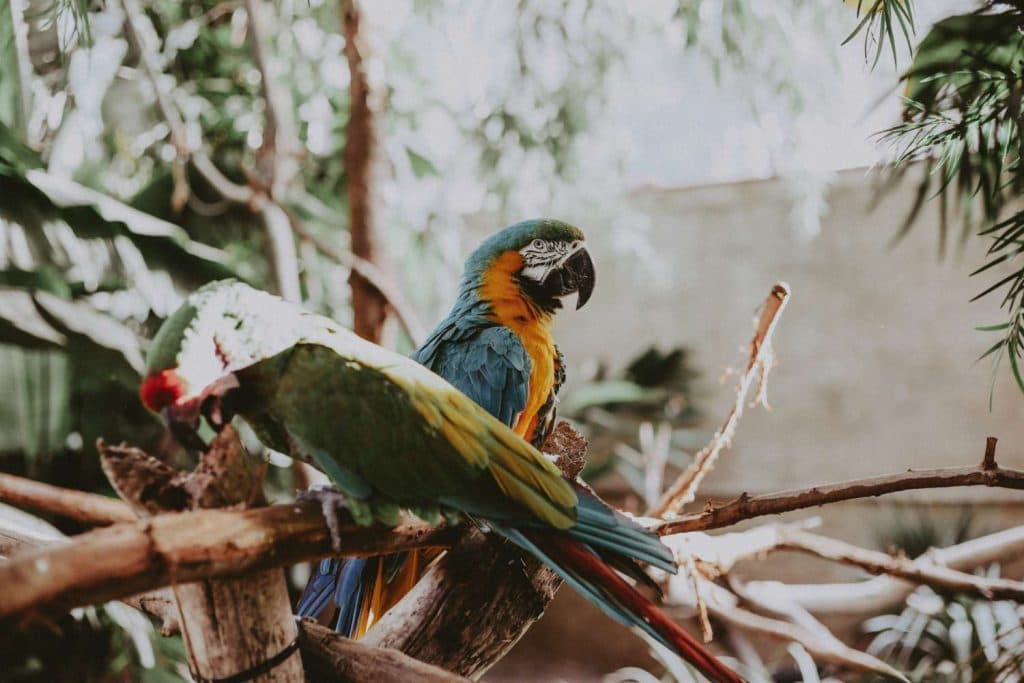
Avian Senses and Survival: How Parrots Experience the World
Your parrot lives in a richer sensory world than you do — one built on UV-tuned vision, split-second hearing, and instincts honed for survival. Understanding how your bird actually perceives its surroundings helps you build a calmer home and a stronger bond.
Aspergillosis in Birds: The Invisible Fungal Killer
Aspergillosis is one of the most common and deadly avian diseases. It's caused by a fungus that's everywhere in our environment.
The Avian First Aid Kit: 25 Essential Supplies Every Bird Owner Needs
When an emergency happens, you need supplies ready NOW. Here's what every bird owner should have on hand.