Eclectus Diet & Nutrition: The Parrot That Needs Real Food, Not a Vitamin
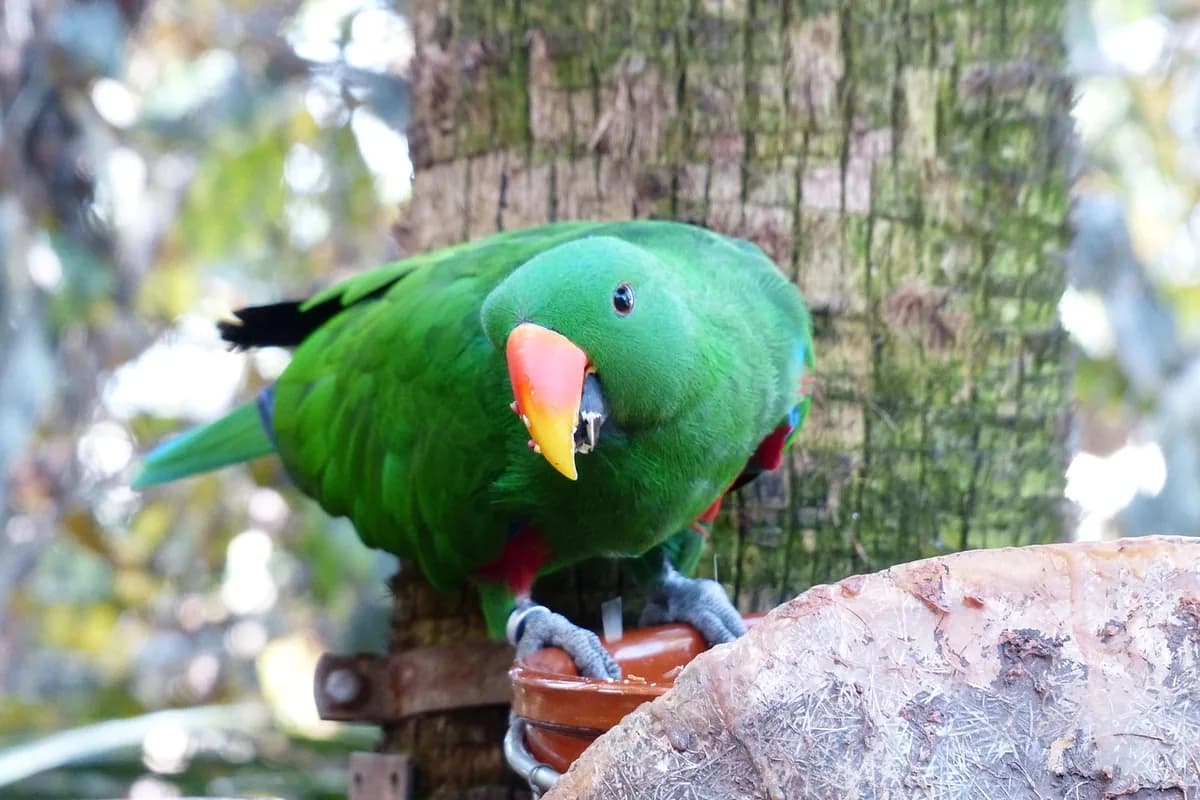
If you feed only one parrot on this site by the book, make it the Eclectus. This species breaks the usual rules, and getting its diet right is not a nicety — it's the single most important thing you'll do as an owner. At Bird Sitting Toronto, where we board hundreds of birds a year, the Eclectus is the one whose feeding notes we read most carefully, because a diet that keeps a macaw glossy can leave an Eclectus tapping its toes and flipping its wings.
Why the Eclectus Is Different
The Eclectus (Eclectus roratus) has an unusually long digestive tract compared with other parrots, giving it a slower, more thorough gut that extracts nutrients efficiently from high-fibre, fresh plant foods. The flip side of that efficiency is a famous sensitivity to synthetic additives — artificial vitamins, colourants, dyes, and chemical preservatives. Where another parrot shrugs these off, an Eclectus can react to them.
The tell-tale signs of an additive or over-supplementation problem are toe-tapping (rhythmic, involuntary clenching of the toes) and wing-flipping (a repetitive flick of the wings at rest). Avian veterinary consensus links these behaviours strongly to diet — often synthetic vitamin overload, artificial colours, or spirulina and other concentrated supplements. In many cases, simplifying the diet to fresh whole foods and plain, uncoloured pellets resolves the tapping within days to weeks.
Warning: More is not better with an Eclectus. Adding a multivitamin "just to be safe," feeding brightly dyed pellets, or piling on supplements is how owners accidentally cause hypervitaminosis and trigger toe-tapping. This bird thrives on real food, not fortification.
The Pellet House Standard — Adjusted for Eclectus
Most parrots on this site do best with pellets making up roughly 75 to 80% of the diet. The Eclectus is a documented exception. This is a veg- and fruit-forward species that relies less on pellets and is easily over-supplemented by them. Favour natural or plain, uncoloured, preservative-free pellets in moderation, and let fresh produce do the heavy lifting.
| Food Group | Share of Diet | Notes |
|---|---|---|
| Fresh vegetables | 45–55% | The core of the diet; wide variety daily |
| Fresh fruit | 15–25% | Higher fruit tolerance than most parrots; Eclectus are natural frugivores |
| Natural/plain pellets | 20–25% | Uncoloured, no synthetic dyes; a base, not the bulk |
| Cooked grains/legumes, sprouts | 5–10% | Whole grains, cooked pulses, sprouted seed |
| Seeds/nuts | ~5% treats | Low-fat priority; use sparingly as training rewards |
Choose pellets marketed as natural, organic, and colour-free (several major avian brands offer an uncoloured line). If your bird tolerates pellets poorly or shows tapping, lean further into fresh food and talk to your avian vet.
Safe, Everyday Foods
Vegetables (the foundation): dark leafy greens (kale, dandelion, endive, bok choy, chard), broccoli, carrot and carrot tops, sweet potato, squash, bell pepper, green beans, peas, zucchini, corn, sprouts. Deep-orange and dark-green vegetables supply natural beta-carotene and vitamin A precursors, which the Eclectus converts as needed — a far safer source than synthetic vitamin A.
Fruits: mango, papaya, banana, apple (no seeds), pomegranate, berries, melon (no seeds), figs, kiwi, grapes in moderation. Eclectus handle fruit better than most parrots because they are natural fruit-eaters.
Grains and legumes (cooked): brown rice, quinoa, whole-grain pasta, barley, cooked lentils and chickpeas, sprouted mung beans.
Tip: Colour your bird's day with the rainbow, not with dyes. A varied mix of orange, red, green, and yellow produce covers the vitamin bases naturally — exactly what an additive-sensitive Eclectus needs.
Toxic Foods — Never Feed These
Some foods are dangerous to any parrot, and the Eclectus is no exception.
- Avocado — contains persin, which causes heart failure and is frequently fatal to birds.
- Chocolate — theobromine (and caffeine) cause vomiting, seizures, and cardiac arrest.
- Caffeine — coffee, tea, cola, energy drinks; a cardiac stimulant birds cannot handle.
- Alcohol — depresses the nervous system; even small amounts can be fatal.
- Onion and garlic — cause oxidative damage to red blood cells, leading to anemia.
- Fruit pits and apple seeds — cherry, peach, apricot, plum pits and apple seeds are cyanogenic (release cyanide). Always core and pit fruit.
- Salt and salty snacks — birds are tiny; excess sodium disrupts fluid balance.
- Uncooked (dried) beans — contain hemagglutinin, a toxin destroyed only by thorough cooking.
- Mushrooms — several varieties are toxic; safest to avoid entirely.
Also skip anything high in fat, sugar, or salt, and never share food from your mouth — human oral bacteria can sicken birds.
Meal Prep: The "Chop" Method
Because fresh produce is the heart of an Eclectus diet, most owners batch-prepare "chop" — a finely diced mix of many vegetables (plus some grains and a little fruit) made in bulk and portioned into daily servings. Freeze portions flat and thaw one each day so fresh food is fast to serve. Warming the chop slightly to room temperature often boosts interest.
Serve produce in the morning and remove it after a few hours, especially in warm weather, before it spoils. A separate dish of plain pellets can stay in the cage.
Transitioning Off a Seed-Heavy Diet
Many Eclectus arrive addicted to seed. Convert them gradually and patiently:
- Offer fresh chop every morning in a separate dish alongside the current food, when the bird is hungriest.
- Add plain, uncoloured pellets in their own dish; try them ground and sprinkled over favourite foods.
- Reduce seed slowly over 4 to 8 weeks, never cutting it off all at once — a bird that refuses new food can starve.
- Model eating — Eclectus are social eaters and often try foods they see you enjoy.
- Weigh weekly on a gram scale throughout the transition; a drop of more than about 10% warrants a call to your avian vet.
Supplements and Hydration
For most Eclectus on a varied fresh diet, routine vitamin supplements are unnecessary and potentially harmful — this is the species most likely to be hurt by over-supplementation. Add supplements only on the specific advice of an avian vet who has examined your bird (for example, a calcium recommendation for a chronically egg-laying female). Skip products with artificial colours.
Provide fresh, clean water at all times, changed at least twice daily and immediately if soiled with food. Offer regular bathing — a shallow dish or a gentle misting — which supports feather and skin health in Toronto's dry indoor winters.
Get the food right and most of Eclectus ownership falls into place. Feed real, colourful, additive-free food; resist the urge to fortify; and let this remarkable bird's long, efficient gut do exactly what it evolved to do.
Explore related topics
Related Articles
Can Parrots Eat Human Food? A Complete Guide to Sharing Meals
Your parrot wants to eat off your plate. Which human foods are safe to share and which are dangerous?
The Complete Guide to Parrot Pellets: Brands, Conversion, and Myths
Pellets should be 50-70% of your parrot's diet, but not all pellets are equal. Here's everything you need to know.
Cooking for Your Parrot: 15 Recipes and Meal Ideas They'll Love
Variety is the spice of your parrot's diet. These easy recipes make feeding time exciting and nutritious.