Common Eclectus Health Issues: Toe-Tapping, Feather Plucking & Egg-Laying
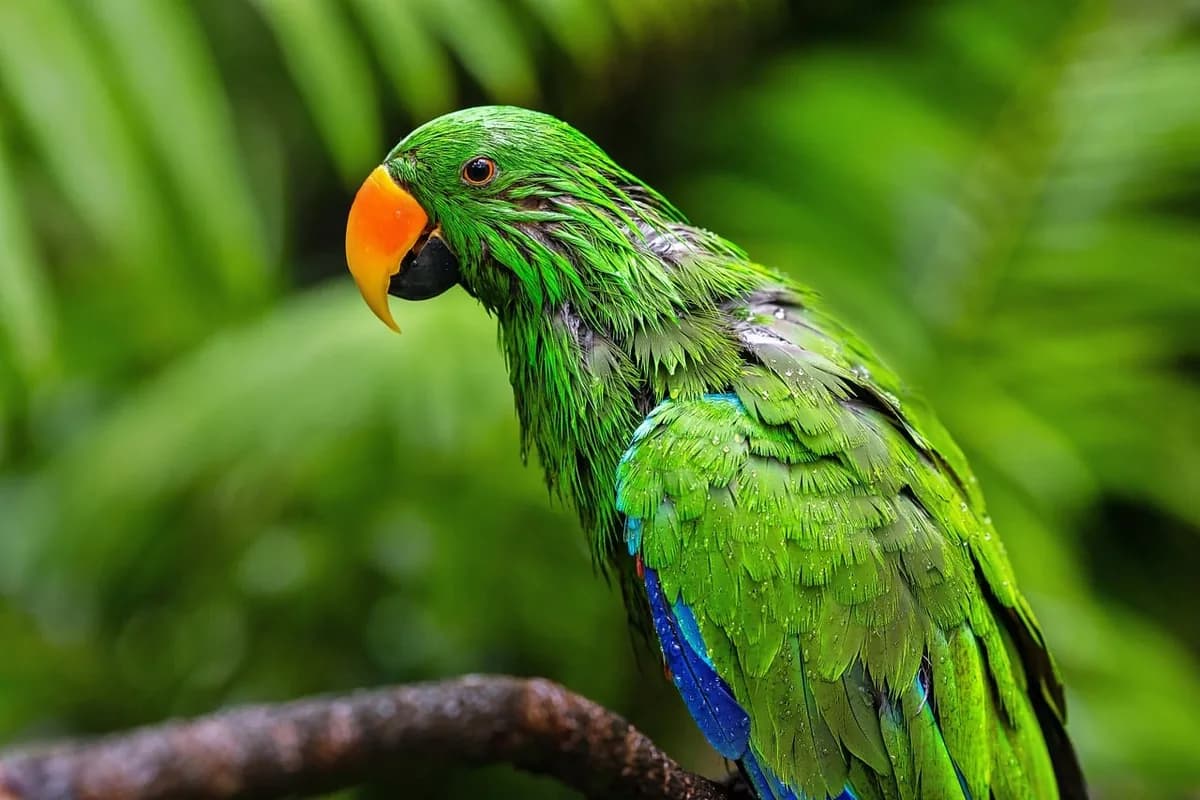
The Eclectus is a hardy, long-lived parrot — 30 to 50 years with good care — but it comes with a health profile unlike any other companion bird. Most of its signature problems trace back to one root cause: this species' extraordinary sensitivity to diet, additives, and hormones. At Bird Sitting Toronto, where we board hundreds of birds a year, an Eclectus that starts tapping its toes or flipping its wings gets our attention immediately, because those signs point straight at the diet. This guide covers the conditions this species actually faces, how to read a sick bird, and when a symptom becomes an emergency.
Warning: Nothing here replaces a certified avian veterinarian. Birds instinctively hide illness until they are seriously unwell, so by the time symptoms show, the problem is often advanced. When in doubt, call your avian vet the same day.
Toe-Tapping and Wing-Flipping
The most Eclectus-specific condition of all. Toe-tapping is a rhythmic, involuntary clenching and tapping of the toes; wing-flipping is a repetitive flick or twitch of the wings at rest. Avian veterinary consensus links both strongly to diet — most often an overload of synthetic vitamins, artificial colours and preservatives, or concentrated supplements. This species' long digestive tract and low tolerance for additives make it uniquely vulnerable.
The good news: these signs are often reversible. The usual first step is to simplify the diet to fresh whole foods and plain, uncoloured, preservative-free pellets in moderation, removing multivitamins, coloured pellets, and supplements. Many birds improve within days to weeks. Because the same signs can occasionally reflect a neurological or infectious problem, persistent tapping warrants a vet visit rather than guesswork. (See our diet and nutrition guide for the full feeding plan.)
Hypervitaminosis (Over-Supplementation)
Where many parrots suffer from vitamin deficiency, Eclectus owners more often cause harm through vitamin excess. Piling on multivitamins, dyed and heavily fortified pellets, or spirulina and other concentrates can lead to hypervitaminosis — a genuine toxicity — and is a common trigger for toe-tapping. The fix is prevention: feed a varied, colourful fresh diet that supplies natural vitamin precursors (beta-carotene from orange and dark-green vegetables), and add supplements only on the specific advice of an avian vet.
Feather-Destructive Behaviour
Feather plucking and chewing is more common in Eclectus than in many species, and it appears especially in hormonal females. It has both medical and behavioural roots, so work through the causes in order:
- Rule out medical causes first — skin infection, giardia or other parasites, allergies, nutritional imbalance, and pain all provoke plucking. A vet workup comes before any "behaviour" label.
- Address hormones — in hens, chronic hormonal drive is a frequent contributor (see egg-laying, below).
- Fix the environment — ensure enough enrichment and foraging, 10 to 12 hours of dark uninterrupted sleep, and humidity around 40 to 60% (dry Toronto winters dry out skin and worsen picking).
- Reduce household stress — the sensitive Eclectus plucks under tension; a calmer home genuinely helps.
Chronic Egg-Laying (Hens)
Eclectus hens have a powerful nesting instinct, and in captivity that can tip into chronic egg-laying — repeated clutches with no mate. Each egg drains calcium and protein; over time this risks osteoporosis, weakness, and life-threatening egg-binding (an egg stuck in the reproductive tract). Reduce the hormonal triggers: keep daylight short and sleep long and consistent, remove nest boxes and dark cavity-like hiding spots, take away shreddable "nesting" material, limit warm mushy foods, and avoid petting anywhere except the head and neck. A hen already laying heavily needs veterinary support, which may include calcium supplementation or hormone therapy.
Warning: A hen straining, sitting fluffed on the cage floor, or unable to pass an egg is a medical emergency — egg-binding can be fatal within hours. Get to an avian vet immediately.
Respiratory Disease and Psittacosis
Like all parrots, Eclectus have delicate air-sac lungs and are exquisitely sensitive to airborne toxins. Never heat non-stick (PTFE/Teflon) cookware, self-cleaning ovens, scented candles, air fresheners, or aerosols near your bird — the fumes can kill quickly. Watch for nasal discharge, sneezing, tail-bobbing with each breath, open-mouthed breathing, or voice changes.
Psittacosis (parrot fever), caused by Chlamydia psittaci, is a bacterial infection that spreads to other birds and to people. Signs include lethargy, ruffled feathers, lime-green droppings, eye and nasal discharge, and appetite loss. It is treatable but needs prompt diagnosis; quarantine any new bird for at least 30 days and see a vet if you suspect it.
Signs of a Sick Bird
Birds mask illness, so subtle changes matter. Call your avian vet if you notice:
- Sitting fluffed and lethargic, sleeping far more than usual
- Changes in droppings — colour, consistency, volume, or fewer of them
- Loss of appetite or drop in water intake
- Any change in breathing, or tail-bobbing at rest
- Weight loss on the gram scale (weigh weekly to catch it early)
- Discharge from eyes, nostrils, or mouth
- A change in voice, or new toe-tapping / wing-flipping
Preventive Care and Wellness Exams
- Annual avian vet exam — physical, weight, and baseline bloodwork; older birds may need twice-yearly checks.
- Certified avian vet — in the Greater Toronto Area, seek a vet with genuine avian credentials rather than a general small-animal clinic.
- Weekly gram-scale weight — the single best early-warning tool you have.
- Bird-safe air — no PTFE fumes, smoke, or aerosols; a HEPA purifier helps in closed winter homes.
- Humidity 40–60% and regular bathing for skin and feather health.
- Consistent 10–12 hours of dark sleep to control hormones.
- Quarantine any new bird for 30 days before introductions.
When It's an Emergency
Go to an avian or emergency vet immediately for:
- Laboured or open-mouthed breathing, tail-bobbing
- Bleeding that won't stop, or a broken blood feather
- Sitting on the cage floor, unable to perch
- Seizures, loss of balance, or collapse
- A hen straining or unable to pass an egg
- Ingestion of anything toxic (avocado, chocolate, heavy metals, houseplants)
- No food intake for more than 12 hours in this size of bird
A Brief Home First-Aid Note
Keep a simple avian kit: styptic powder or cornstarch for a bleeding nail or beak (never on skin), clean gauze, blunt tweezers, a towel for safe restraint, a heat source to keep a sick bird warm at around 29 to 32 C (85 to 90 F), and your avian vet's number plus the nearest 24-hour emergency clinic. For a broken blood feather that keeps bleeding, apply gentle pressure and get to a vet — feather bleeds can be deceptively serious in a bird this small.
First aid buys minutes, not a cure. With an Eclectus, your real medicine is prevention: the right fresh diet, additive-free food, clean air, controlled light, and a calm home spare this beautiful bird nearly all of its signature troubles.
Explore related topics
Related Articles
Aspergillosis in Birds: The Invisible Fungal Killer
Aspergillosis is one of the most common and deadly avian diseases. It's caused by a fungus that's everywhere in our environment.
The Avian First Aid Kit: 25 Essential Supplies Every Bird Owner Needs
When an emergency happens, you need supplies ready NOW. Here's what every bird owner should have on hand.
Bird Insurance: Is It Worth It? A Complete Guide to Avian Pet Insurance
A single emergency vet visit can cost $2000+. Pet insurance for birds exists — here's whether it's worth the premium.