Avian Nutrition: Bringing Nature Into Your Bird’s Bowl
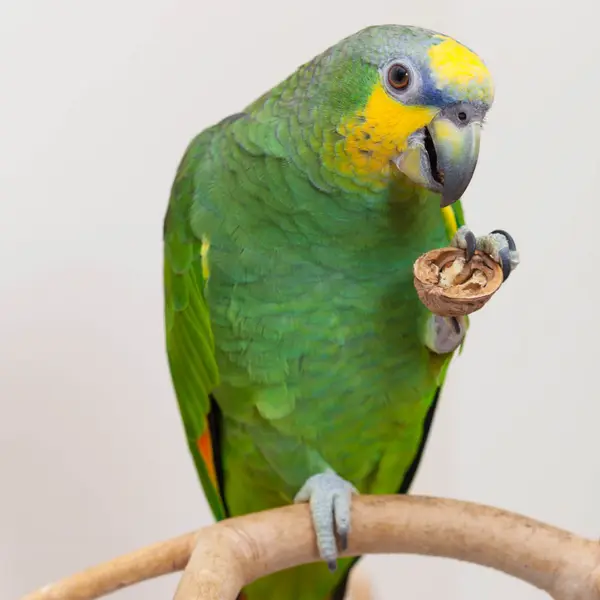
Few topics spark more debate among bird owners than what belongs in the bowl. Yet of everything you do for your bird, diet is the one lever with the longest reach. Avian veterinarians consistently name malnutrition as one of the most common — and most preventable — reasons companion parrots get sick, from fatty liver disease to vitamin A deficiency to dull, brittle feathers. At Bird Sitting Toronto, where we board hundreds of birds every year, the difference is easy to spot: a bird raised on a thoughtful diet arrives with tighter plumage, steadier energy, and a brighter mood than one raised on a seed cup.
The reassuring news is that you do not have to master avian science to feed your bird well. You only need to understand how birds are built to eat — and then bring a little of that wild rhythm into your own kitchen.
How Birds Eat in the Wild
In the wild, parrots are working birds. They spend much of the day foraging — flying long distances, climbing through branches, and using powerful beaks to crack tough shells, pods, and husks. Most wild parrots feed heavily in the early morning and again in the late afternoon, with quieter stretches between those peaks.
They are also opportunists. Depending on the species and the season, a wild diet spans fruits, vegetables, nuts, seeds, sprouts, grains, berries, flowers, pollen, and the occasional insect or larva. Some species deliberately seek out clay or mineral-rich soil to top up trace minerals and neutralize plant toxins. The lesson is not that you should copy any one wild menu — it is that variety and effort are built into how a bird's body expects to be fed.
Tip: Mirror that wild rhythm by serving fresh food twice a day — a morning portion and a late-afternoon portion — while keeping formulated pellets available in between. This tracks your bird's natural feeding peaks and keeps it both nourished and mentally engaged.
The Reality of the Domestic Bowl
Your bird, by contrast, never has to work for a meal. Food simply appears: no foraging, no challenge, and too often not enough variety. That convenience is precisely the problem. Left to choose, a companion parrot will happily eat the fattiest, tastiest items on offer — usually seeds — and ignore everything else, drifting quietly into deficiency while looking, to the untrained eye, perfectly content.
Commercial bird foods have improved enormously, but avian veterinary consensus holds that no single formula fully reproduces the nutritional complexity of a wild diet. A high-quality pellet is the best foundation the science has produced. It is a foundation, though — not the whole house.
The Foundation: Pellets, Vegetables, and a Little Restraint
For most companion parrots, a well-formulated pellet should make up roughly 75 to 80 percent of the daily diet. Pellets solve the single biggest weakness of a loose seed or "parrot mix" — selective eating — because your bird cannot pick around them to reach the junk. The remaining 20 to 25 percent should be fresh, vegetable-forward foods, with seeds and nuts held back to about 5 percent as treats. This is the balance recommended across the Association of Avian Veterinarians, the Merck Veterinary Manual, and VCA Animal Hospitals.
| Component | Share of diet | Notes |
|---|---|---|
| Formulated pellets | 75–80% | The nutritional base; converts picky eaters away from seed selection |
| Fresh vegetables & leafy greens | 20–25% | Dark leafy greens, squash, carrot, pepper — vitamin A powerhouses |
| Fruit | Small part of the fresh portion | Sugary; serve in moderation |
| Grains & legumes | Small part of the fresh portion | Cooked quinoa, brown rice, lentils, sprouted beans |
| Seeds & nuts | ~5% | Treats and training rewards — not a staple |
Warning: An all-seed diet is the leading dietary cause of illness in pet parrots. Seeds are high in fat and low in calcium, vitamin A, and other essentials. If your bird is currently seed-dependent, convert gradually rather than all at once — an abrupt change can make a bird refuse food entirely. Weigh your bird regularly through any transition and call an avian vet if it stops eating.
One more foundational point: hookbill parrots do not need grit. Unlike some seed-eating birds that grind whole seeds in a muscular gizzard, parrots shell their seeds with their beaks. Offered grit does nothing useful and can cause a dangerous crop or gizzard impaction.
Variety Is Enrichment, Not Just Nutrition
Because no single product does it all, variety is your most powerful tool — and it pulls double duty. A rotating mix of fresh foods delivers a broader nutrient profile and the mental stimulation your bird craves. Picture eating the identical meal every day for the rest of your life; birds feel that monotony too.
Feed their curiosity by offering foods in different textures, colours, and forms. Clip leafy greens to the cage bars, tuck vegetables inside a foraging toy, or scatter a portion across a foraging tray so your bird has to work a little for it. That small effort turns a meal into the physical and cognitive exercise a wild bird earns naturally — a form of enrichment Lafeber and other avian-care educators strongly encourage.
Foods to Keep Out of the Bowl
A handful of everyday human foods are genuinely dangerous to birds. Never offer:
- Avocado — contains persin, which is cardiotoxic to birds
- Chocolate — theobromine
- Caffeine and alcohol
- Onion and garlic
- Fruit pits and apple seeds — cyanogenic; remove them before serving the flesh
- Excess salt, uncooked (dried) beans, and mushrooms
Tailoring the Diet to Your Species
Every species carries its own dietary quirks. Once the pellet-and-vegetable foundation is in place, research your specific bird and lean on your avian vet for the fine tuning. A few well-established examples:
- Amazons are prone to obesity and generally do best on lower-fat diets.
- Macaws tolerate — and in some cases benefit from — a higher healthy-fat intake.
- Eclectus parrots are notably additive-sensitive and thrive on a whole-food, vegetable-forward diet rich in natural vitamin A; keep them off synthetic-heavy formulas where you can.
- Softbills such as toucans need a low-iron diet to avoid iron-storage disease.
- Lories and lorikeets are the true exception to the pellet rule: they are nectar and pollen feeders that require a specialized nectar diet, not standard parrot pellets, and should be kept away from high-iron foods.
The Bottom Line
Think of your bird's bowl as a small piece of the wild brought indoors: a solid pellet foundation, a colourful daily serving of vegetables and greens, the occasional seed or nut as a reward, and a bit of foraging effort built back in. Get that balance right and you have addressed the single most preventable threat to your bird's health. When you are unsure about your species' specifics or how to manage a diet transition, an avian veterinarian is always the best next call.
Explore related topics
Related Articles
Can Parrots Eat Human Food? A Complete Guide to Sharing Meals
Your parrot wants to eat off your plate. Which human foods are safe to share and which are dangerous?
The Complete Guide to Parrot Pellets: Brands, Conversion, and Myths
Pellets should be 50-70% of your parrot's diet, but not all pellets are equal. Here's everything you need to know.
Cooking for Your Parrot: 15 Recipes and Meal Ideas They'll Love
Variety is the spice of your parrot's diet. These easy recipes make feeding time exciting and nutritious.