Why Parrots Love to Chew
If you share your home with a parrot, you already know the sound: the steady, contented crunch-crunch-crunch of a bird reducing a perfectly good perch, a cardboard box, or the corner of your dining table into confetti. It is tempting to read that as bad behavior. It is the opposite. Chewing is one of the healthiest, most deeply instinctual things a parrot does, and a bird that has stopped chewing is often a bird in trouble.
At Bird Sitting Toronto, where we board hundreds of birds every year, the chewers are the easy guests. They arrive, find their shreddables, and settle in. The birds who worry us are the ones who sit still. Understanding why your parrot needs to chew is the key to keeping it healthy, occupied, and emotionally balanced, whether it lives with you or is staying with us.
Chewing Is Not Destruction, It's Instinct
Parrots are not domesticated the way dogs and cats are. The bird on your shoulder is, behaviorally, only a generation or two removed from its wild cousins, and in the wild a parrot's beak is its primary tool. Wild parrots spend a large share of their waking hours using it to crack seeds and nuts, strip bark, snap twigs, excavate nest cavities, and pry apart fruit and foliage in search of the good bits inside.
That drive does not switch off in a living room. When your bird demolishes a wooden toy, it is running the exact same behavioral program its ancestors used to survive. The Association of Avian Veterinarians and avian-behavior educators such as Lafeber consistently frame chewing and foraging as core needs, not vices, and recommend designing an enclosure and daily routine around them rather than trying to suppress them.
The Beak Is a Living Tool
A parrot's beak grows continuously throughout its life, much like your fingernails. Normal chewing, gnawing, and foraging keep it worn to the correct shape and length. Take that work away and the beak can overgrow, which in turn makes eating and preening difficult.
Tip: A healthy, well-used beak self-maintains, so a bird on a good chewing and foraging routine rarely needs a "beak trim." If you notice genuine overgrowth, flaking, or a change in beak shape or color, do not file it yourself. Have an avian veterinarian examine the bird, because beak abnormalities can also signal liver disease, nutritional deficiency, or parasites (per the Merck Veterinary Manual and VCA Animal Hospitals).
It's Also a Brain Workout
Parrots are extraordinarily intelligent. Dr. Irene Pepperberg's decades of cognition research with the African grey Alex demonstrated that these birds can grasp concepts like color, shape, quantity, and same-versus-different, giving us a working sense of just how much mental horsepower sits behind that beak. A mind like that needs a job.
Chewing and foraging are that job. Working apart a fresh piece of wood or digging a treat out of a shredded paper cup demands problem-solving, dexterity, and sustained focus. It is enrichment in the truest sense: it occupies the parts of a parrot's brain that would otherwise be spent scanning a wild canopy for food and danger.
Nesting and Hormones
There is a seasonal layer, too. In the wild, many parrots chew to excavate or line a nest cavity, and pet birds carry that instinct. When the days lengthen or a bird feels particularly bonded to a person or a cage corner, chewing can spike as part of a broader hormonal, nesting mood.
Warning: A sudden surge in shredding, especially of paper into strips, combined with tunneling into dark cage corners, cavity-seeking, regurgitating, or territorial biting, often signals hormonal nesting behavior rather than simple play. Give the bird safe things to shred, but also review light cycles (aim for 10 to 12 hours of uninterrupted dark), discourage access to enclosed "nest" spaces, and talk to your avian vet if the behavior becomes chronic. Persistent hormonal drive can lead to real health problems, including chronic egg-laying in hens.
What Happens When a Parrot Can't Chew
Take away the outlet and the instinct does not disappear, it redirects. A parrot deprived of safe, engaging things to destroy will almost always find its own targets, and the results range from annoying to dangerous:
- Your home becomes the toy. Furniture, baseboards, window frames, books, and, most dangerously, electrical cords all become fair game.
- Boredom turns into stress. Under-stimulated, intelligent animals develop coping behaviors. In parrots that can look like screaming, pacing, or repetitive movements.
- Feather-destructive behavior. Perhaps the most heartbreaking outcome. A bird with nothing to do may turn its beak on its own feathers, plucking, chewing, or over-preening until it is bald in patches. Avian veterinary consensus treats chronic boredom and lack of enrichment as a leading behavioral driver of feather-destructive behavior, alongside medical causes.
Warning: Feather plucking is never "just a habit" to wait out. It has many possible causes, including skin infection, allergy, pain, giardia and other parasites, and nutritional imbalance, as well as behavioral ones. A bird that has started plucking needs a full workup from an avian veterinarian before you assume it is behavioral.
Choosing Safe Things to Chew
Once you accept that your parrot will chew, your job is simple: make sure the things within reach are safe and appealing. Not all materials are created equal, and a few common ones are genuinely hazardous.
| Safe to Chew | Avoid |
|---|---|
| Untreated, kiln-dried softwoods (pine, poplar, balsa) | Cedar and redwood (aromatic oils/phenols irritate the airways) |
| Plain cardboard, paper, and paper cups | Cherry, apricot, peach, plum, and other stone-fruit woods |
| Apple, maple, birch, and manzanita branches | Pressure-treated, painted, stained, or varnished wood |
| Vegetable-tanned leather strips, natural cotton rope (supervised) | Anything with zinc- or lead-containing metal parts (galvanized hardware, cheap clips, some costume jewelry) |
| Bird-safe woven palm, seagrass, and yucca | Toxic houseplant cuttings, moldy or dirty wood, small parts a bird could swallow |
Warning: Heavy-metal poisoning is a real and serious risk. Zinc and lead can leach from galvanized quick-links, chain, cheap toy hardware, and some painted or antique items, and an ingested piece can make a bird acutely ill. Choose stainless-steel or nickel-plated hardware for toys, and if you suspect your bird has swallowed metal or is showing signs like vomiting, weakness, or seizures, treat it as an emergency (per the Merck Veterinary Manual and AAV guidance). Note also that hookbill parrots do not need grit; offering it can cause dangerous crop impaction.
Redirecting the Chewing You Don't Want
The goal is never to stop your bird chewing, it is to aim it. A few practical tactics:
- Match the toy to the bird. A budgie or cockatiel is delighted by soft balsa, paper, and small shreddables, while an amazon, cockatoo, or macaw needs chunky, hardwood, and thick-rope destructibles built to survive a serious beak. A macaw-sized bird will ignore a budgie toy and turn to your table instead.
- Build in foraging. Wrap a favorite treat in paper, hide it in a cardboard tube, or use a foraging toy so your bird has to chew through something to earn a reward. This is the single best way to burn hours of beak-time productively.
- Rotate, don't accumulate. Parrots crave novelty. Keeping three or four toys in rotation and swapping them weekly keeps interest far higher than leaving the same tired items in the cage for months.
- Supervise out-of-cage time. When your bird is loose, it will look for things to chew. Cover or block cords and off-limits woodwork, and keep an approved chew toy nearby to offer as a swap.
Fuel the Behavior With the Right Diet
Chewing is also tied to how your bird eats. A monotonous seed-only bowl gives a parrot little to do, whereas a proper foraging diet turns mealtime into work. For most parrots, avian veterinarians recommend a foundation of formulated pellets making up roughly 75 to 80 percent of the diet, around 20 to 25 percent fresh vegetable-forward foods and some fruit, and only about 5 percent seeds and nuts, best reserved as foraging treats you can make your bird work for.
A few species are exceptions to the pellet rule: lorikeets need a specialized nectar diet and should avoid high-iron foods; eclectus parrots are sensitive to additives and do best on a whole-food, veg-forward menu; and finches and canaries are seed-eating passerines that keep a quality seed mix as a staple alongside greens and egg food. When in doubt, confirm the right plan for your species with an avian vet.
The Bottom Line
Chewing is not a behavior to correct, it is a need to meet. It keeps the beak in shape, exercises a brilliant mind, satisfies deep instinct, and heads off the boredom that leads to plucking and destruction. Give your parrot a steady supply of safe, interesting things to demolish, aim that energy where you want it, and pair it with a foraging-friendly diet. Do that, and the crunch-crunch-crunch becomes exactly what it should be: the sound of a healthy, happy, thoroughly occupied bird.
Explore related topics
Related Articles
Natural Wood for Parrots: A Complete Safe Wood Guide
Natural wood is the best enrichment for a parrot's chewing instinct. But not all wood is safe. Here's your complete guide.
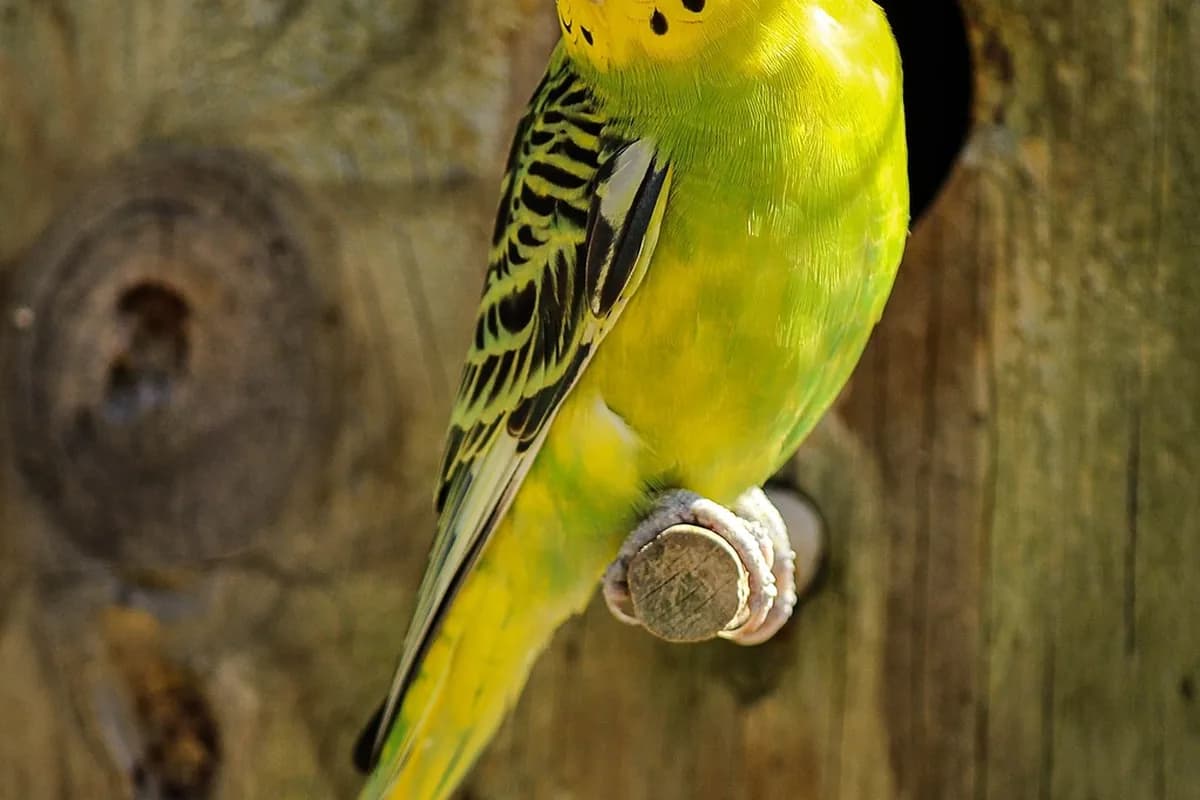
How to Encourage Healthy Chewing in Parrots
Chewing is not a bad habit in parrots — it is a biological need that maintains the beak, burns energy, and keeps the mind busy. Here is how to redirect it onto safe materials, start a reluctant chewer, and avoid the woods and hardware that can harm your bird.

Safe Chewing Materials for Parrots
Chewing is a hardwired parrot instinct, not a bad habit. This guide covers the safest woods, shreddables, ropes and leather to offer, the heavy metals and treated materials that can poison a bird, why hookbills should never be given grit, and how to rotate it all so your parrot stays busy and your furniture stays intact.