Common Health Issues in Senegal Parrots and How to Prevent Them
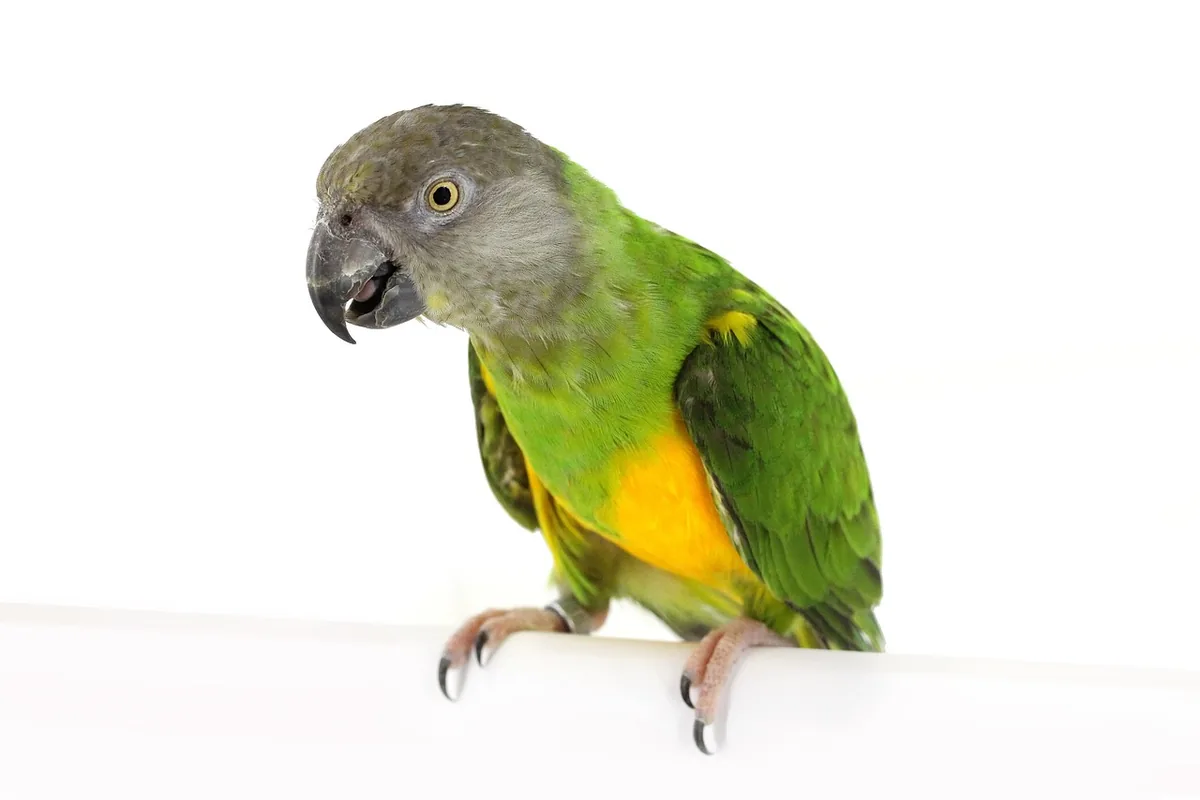
Senegal Parrots are hardy little birds that can live 25 to 40 years — but only if the specific risks of their genus are managed. As members of Poicephalus, Senegals carry a couple of well-documented vulnerabilities, and like all parrots they are prey animals that instinctively hide illness until they're seriously unwell. This guide covers the conditions this species actually faces, how to read the early warnings, and when a quiet bird becomes a genuine emergency.
The Foundation: Annual (or Better) Wellness Exams
The most important thing you can do for a Senegal's health is establish care with a certified avian veterinarian before there's a crisis. A "regular" dog-and-cat clinic often isn't equipped for birds. A wellness visit — at least once a year, twice for older birds — typically includes:
- A hands-on physical exam and an accurate weight in grams (healthy range 120–170 g)
- A look at feather, beak, and nail condition
- Baseline bloodwork to catch liver and organ trouble before symptoms show
- Fecal testing and, where indicated, screening for the diseases below
Keeping your own weekly gram-scale log at home turns you into your vet's best diagnostic instrument: a 5–10% drop in weight is often the first measurable sign that something is wrong.
Conditions Senegals Are Actually Prone To
Aspergillosis (the big one for Poicephalus)
Avian veterinary sources consistently note that Poicephalus parrots — Senegals included — are notably susceptible to aspergillosis, a respiratory infection caused by inhaling Aspergillus mold spores. It often takes hold in a bird under stress, on a poor (vitamin-A-deficient) diet, or living in damp, poorly ventilated, or dusty conditions. It can be maddeningly quiet in its early stages.
Watch for: a change or loss of voice, a subtle tail-bob with each breath, reduced stamina or exercise intolerance, open-mouth breathing, and gradual weight loss despite eating.
Prevention: excellent ventilation; scrupulous cleanliness (change substrate often, don't let food or bedding get damp); avoid dusty or moldy environments and old seed; feed a vitamin-A-rich, veg-forward diet to keep the respiratory lining healthy; and run a HEPA air purifier in the bird's room. Toronto's humid summers and closed-up winter homes both create mold-friendly conditions, so airflow matters year-round.
Obesity and Fatty Liver Disease
Senegals are enthusiastic eaters of fatty foods and gain weight easily. Chronic overfeeding of seeds and nuts leads to obesity and hepatic lipidosis (fatty liver disease) — one of the most common serious problems in this genus.
Watch for: fat pads along the flanks and over the chest, a "keel" you can no longer easily feel, laboured movement, an overgrown or flaky beak, and poor feather quality. Advanced liver disease can show up as green-tinged droppings.
Prevention: the low-fat, pellet-based, veg-forward diet detailed in our nutrition guide, portion control rather than free-feeding, seeds and nuts strictly as training treats, and plenty of out-of-cage flying and climbing for exercise.
Psittacine Beak and Feather Disease (PBFD)
PBFD is a serious viral disease (circovirus) that attacks the feathers, beak, and immune system. It's most often seen in younger birds and spreads through feather dust and droppings.
Watch for: abnormal, clubbed, or lost feathers that don't regrow properly, and beak deformities. There is no cure, which is why prevention matters.
Prevention: buy only from reputable sources, and quarantine any new bird for at least 30 days away from existing birds. Your avian vet can run a PBFD test if there's any doubt — essential before introducing a new bird to a household that already has one.
Feather-Destructive Behavior (Plucking)
Senegals are among the parrots that may resort to plucking or barbering their own feathers. It can be medical or behavioral, and you must rule out the medical side first.
Approach: have your vet exclude infection, skin disease, PBFD, allergy, and nutritional deficiency before assuming it's behavioral. On the environmental side, ensure adequate enrichment and foraging, 10–12 hours of quiet sleep, humidity of 40–60% (dry winter air is a common trigger in Canadian homes), regular bathing, and reduced hormonal pressure.
Psittacosis (Parrot Fever)
A bacterial infection (Chlamydia psittaci) that can spread to humans, causing flu-like illness — worth knowing about for any parrot household.
Watch for: lethargy and fluffed feathers, yellow-green droppings, nasal and eye discharge, and appetite loss.
Prevention: routine vet care, a clean environment, quarantine of new birds, and prompt testing if a bird and its owner are both unwell.
General Signs of a Sick Bird
Because Senegals mask illness, learn the universal warning signs and act on any of them:
| Sign | What it may indicate |
|---|---|
| Fluffed up and sleepy during the day | Illness, pain, feeling cold |
| Sitting low on the perch or on the cage floor | Weakness — often serious |
| Tail-bobbing with each breath | Respiratory distress |
| Changes in droppings (color, volume, consistency) | Digestive, liver, or kidney trouble |
| Loss of appetite or reduced water intake | A range of illnesses — never ignore |
| Unexplained weight loss on the scale | Early sign of many diseases |
| Discharge from nostrils or eyes | Respiratory or systemic infection |
Tip: A bird that suddenly sits fluffed and quiet on the bottom of the cage is not "resting" — it is very likely seriously ill and hiding it poorly. By the time a Senegal looks sick, it usually is. Trust the change and call your vet.
When It's an Emergency
Call an avian vet or emergency clinic immediately if your Senegal shows any of these:
- Labored, open-mouth breathing or heavy tail-bobbing
- Bleeding from anywhere — a broken blood feather, a nail, the beak
- Sitting on the cage floor and unable to perch
- Seizures, loss of balance, or collapse
- Complete refusal to eat for more than 12 hours (a bird this small has almost no reserves)
- Sudden swelling, a possible fracture, or a suspected toxin exposure (non-stick fumes, avocado, etc.)
A Brief First-Aid Note
Keep a small avian kit and your vet's emergency number on the fridge. For a bleeding nail or blood feather, apply gentle pressure with cornstarch or a styptic product and get to the vet if bleeding doesn't stop quickly. Keep a sick or injured bird warm (around 27–30 C / 80–85 F), quiet, and dark, minimize handling, and transport in a small covered carrier. Home first aid is only ever a bridge to professional care — it is never a substitute.
Preventive Care Checklist
- Annual (or twice-yearly for seniors) avian vet exam with baseline bloodwork
- Weekly weight check on a gram scale, logged over time
- Low-fat, pellet-based, veg-forward diet — no free-fed seed
- HEPA air purifier and excellent ventilation (aspergillosis defense)
- Humidity held at 40–60%; regular bathing or misting
- 10–12 hours of dark, uninterrupted sleep nightly
- Absolutely no non-stick cookware fumes, aerosols, or scented products near the bird
- 30-day quarantine and PBFD testing for any new bird
Explore related topics
Related Articles
Aspergillosis in Birds: The Invisible Fungal Killer
Aspergillosis is one of the most common and deadly avian diseases. It's caused by a fungus that's everywhere in our environment.
The Avian First Aid Kit: 25 Essential Supplies Every Bird Owner Needs
When an emergency happens, you need supplies ready NOW. Here's what every bird owner should have on hand.
Bird Insurance: Is It Worth It? A Complete Guide to Avian Pet Insurance
A single emergency vet visit can cost $2000+. Pet insurance for birds exists — here's whether it's worth the premium.