Quaker Parrot Care Guide: The Big Personality in a Small Green Package
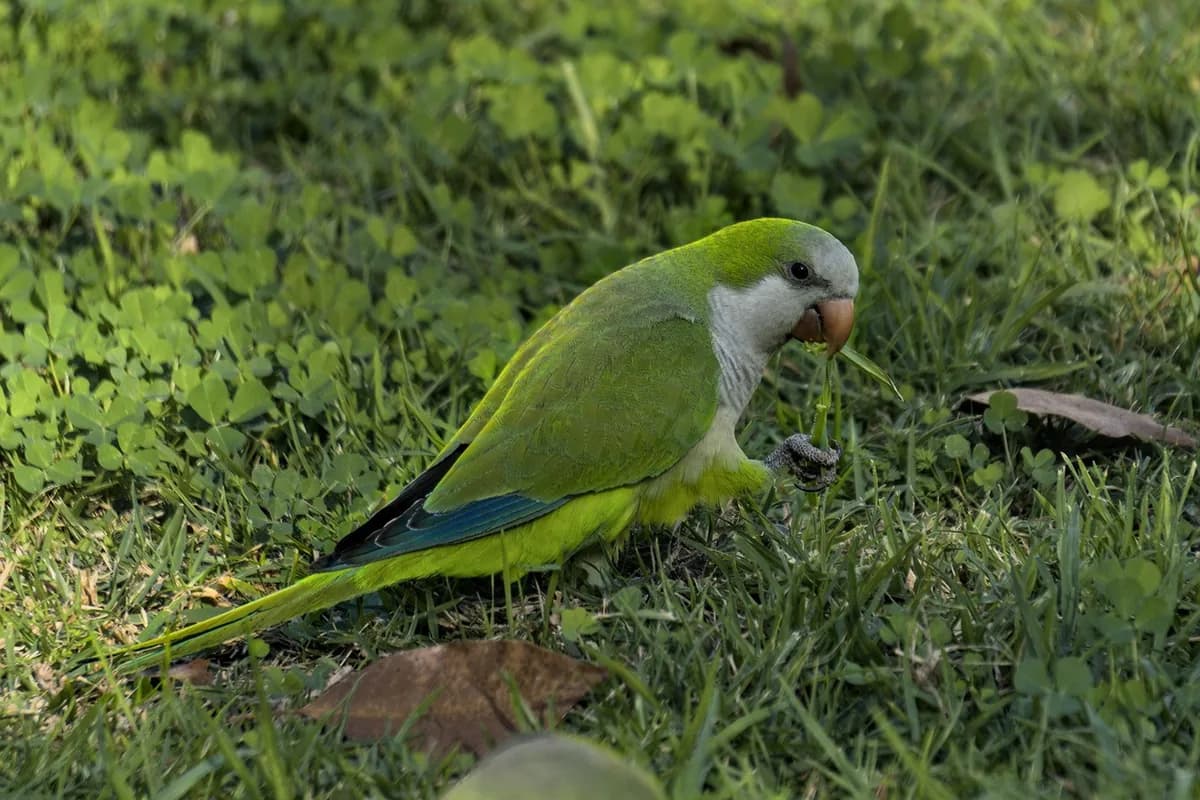
The Quaker Parrot (Myiopsitta monachus), also called the Monk Parakeet, is one of the most charismatic small parrots you can share a home with. Native to the woodlands and scrub of Argentina and Brazil, this stocky green bird packs the confidence, vocabulary, and opinions of a bird three times its size. At Bird Sitting Toronto, where we board hundreds of parrots every year, quakers are unforgettable guests — they name-call across the room, greet the staff by name, and firmly believe they own the building.
Who the Quaker Parrot Suits
A quaker is a bird for someone who wants genuine two-way relationship, not just a pretty cage ornament. Expect a companion who is:
- Highly social and interactive — they bond hard and want to be part of your daily life.
- A remarkable talker — pound for pound among the best-talking parrots, quakers often build vocabularies of dozens of words and phrases, plus whistles and sound effects.
- Loud in bursts — on a noise scale of 5, a quaker sits around a 4. They are not screamers all day, but their contact calls and alarm calls carry, which matters in an apartment or townhouse.
- Territorial — the single most defining behavior trait. Quakers are strongly protective of their cage and any "nest" they claim, and can lunge or nip when you reach into their space.
At roughly 29 cm (11 in) long and 90-130 g, this is a medium-small parrot with a 20-30 year lifespan. That is a two- to three-decade commitment — a bird you adopt in your twenties may still be with you in your fifties.
Warning: Quaker Parrots are illegal or restricted to own in several jurisdictions (including some U.S. states) because escaped birds form wild colonies. This is a legal matter, not a welfare one — confirm your local regulations before bringing one home. In most of Canada, including Ontario, they are legal to keep.
Housing: Space, Bars, and Placement
Quakers are active and busy, and they are the only parrot species that builds elaborate communal stick nests in the wild. That nest-building instinct means they love to chew, weave, and rearrange — so the cage needs to be roomy and escape-proof.
| Housing spec | Recommendation |
|---|---|
| Minimum cage footprint | 60 x 45 cm (24 x 18 in), 60 cm (24 in) tall |
| Better / ideal | 75 x 60 x 90 cm (30 x 24 x 36 in) or larger |
| Bar spacing | 1.3-1.6 cm (1/2 to 5/8 in) |
| Bar orientation | Include horizontal bars for climbing |
| Cage shape | Rectangular — never round |
Choose the largest cage your space allows; the numbers above are floors, not targets. Bar spacing matters more than most owners realize — bars wider than about 1.6 cm let a determined quaker wedge its head through and risk injury.
Tip: Round cages offer no corners, which leaves a territorial bird feeling exposed and unsettled. A rectangular cage gives your quaker a defensible corner to retreat to, which actually reduces anxious, cage-guarding behavior.
Fit the cage with perches of varying diameters — natural hardwood branches (manzanita, java, apple, willow) exercise the feet and prevent pressure sores far better than uniform plastic dowels. Skip sandpaper perch covers, which abrade the soles.
Placement makes or breaks a quaker's temperament. Put the cage in a busy, social room where your bird sees the family come and go, but:
- Keep it against a wall (not marooned in the middle of a room) so your bird feels its back is protected.
- Avoid drafts, direct sun, and the kitchen — airborne cooking fumes, especially from overheated non-stick (PTFE/Teflon) cookware, can kill a bird within minutes.
- Aim for a comfortable room temperature of 18-29°C (roughly 65-85°F). Quakers tolerate normal indoor temperatures well but hate sudden swings.
Toronto's dry winter indoor air (often below 30% humidity with the heat running) can stress feathers and skin; a room humidifier or regular bathing helps keep them at a healthier 40-60%.
A Daily Care Routine
Consistency reassures a smart, routine-loving bird. A realistic day looks like:
- Morning: Uncover, greet, fresh water, and a fresh serving of chop (vegetables and pellets). Quakers are most vocal and hungry first thing.
- Midday: Foraging toys and shredders while you work — quakers need mental jobs or they invent destructive ones.
- Afternoon/evening: 2-3 hours minimum of out-of-cage, hands-on time — talking, training, and shoulder time. This is non-negotiable for a bird this social.
- Night: Cover for 10-12 hours of dark, quiet, uninterrupted sleep. Sleep deprivation is a leading trigger of hormonal and plucking problems.
Spot-clean the cage and change water daily; do a full deep-clean weekly. Weigh your bird weekly on a gram scale — a stable weight in the 90-130 g range is one of the best early-warning tools you have.
Diet, Health, Enrichment, and Socialization — In Brief
This guide is your hub; each area below has a dedicated deep-dive article.
- Diet: A pellet-based diet (roughly 75-80% quality pellets, 20-25% fresh vegetables and sprouts, with seeds and nuts as about 5% treats). Quakers are especially prone to fatty liver disease from seed-heavy, high-fat diets, so getting this right is critical. See the Diet and Nutrition article.
- Health: Watch for fatty liver disease, obesity, feather-destructive behavior, the quaker-specific "mutilation syndrome," and PBFD. Annual avian-vet wellness exams are essential. See Common Health Issues.
- Behavior: Reading a quaker's body language — especially the cage-territorial signals — prevents most bites. See Behavior and Body Language.
- Training and socialization: Quakers are eager, food-motivated learners who excel at target training and speech. The trick is to train away from the cage in neutral territory. See Training Tips.
The Bottom Line
A Quaker Parrot rewards a committed owner with decades of conversation, comedy, and fierce loyalty. Give it a large rectangular cage in a social spot, a proper pellet-and-veg diet, real daily interaction, and firm respect for its territorial nature, and you will have one of the most engaging companions in the parrot world. If you ever travel, choose a boarding service experienced with parrots — a quaker away from home needs a caregiver who understands both its brilliance and its bite.
Explore related topics
Related Articles

Best Talking Parrot Species Ranked: From Chatterbox to Silent Type
Which parrots actually talk? Here's an honest ranking with realistic expectations for each species.
Bourke's Parakeet: The Complete Care Guide for This Gentle Species
Bourke's parakeets are the calmest, quietest parrots you'll ever meet. Perfect for beginners and apartments.
Lineolated Parakeet: The Complete Care Guide for Linnies
Lineolated parakeets (linnies) are quirky, quiet, and surprisingly cuddly. Here's everything you need to know.