Parrotlet Care Guide: The Smallest Parrot With the Biggest Attitude
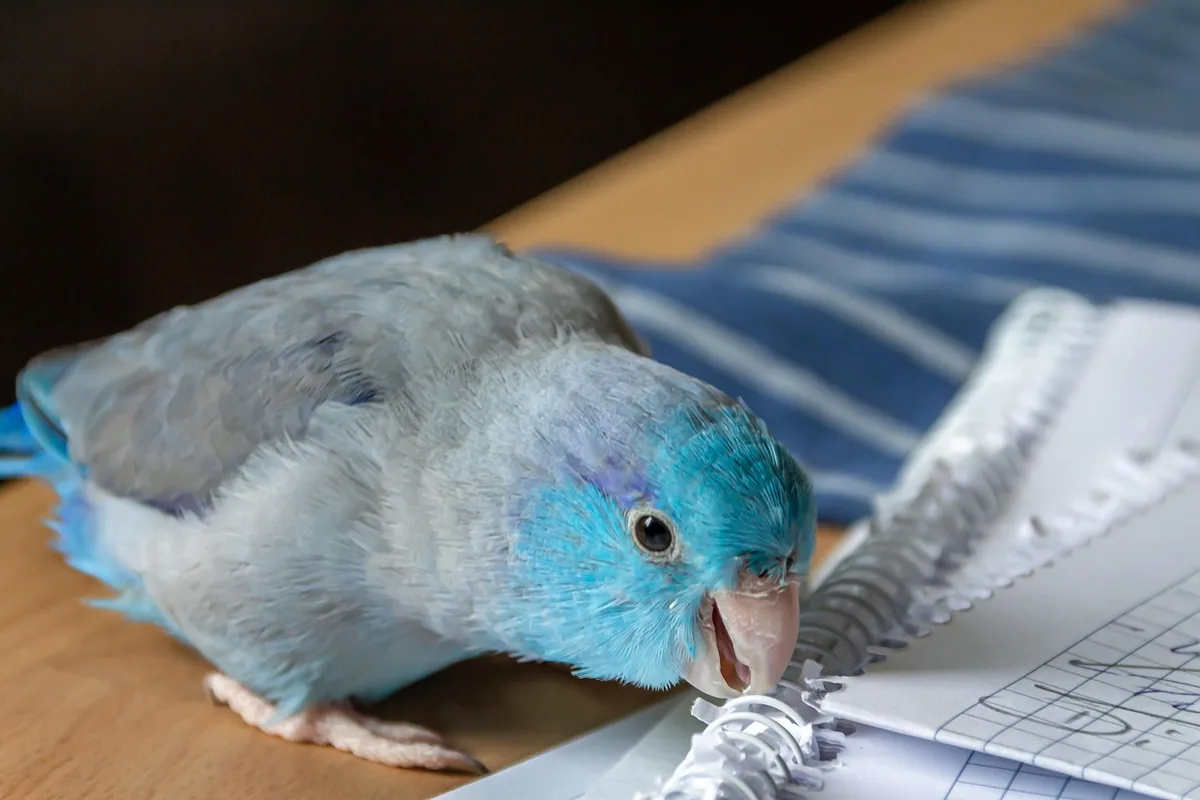
Few birds surprise new owners the way a parrotlet does. Members of the genus Forpus, native to Central and South America, these are the smallest true parrots in the world — just 12-14 cm (about 5 inches) from beak to tail-tip and weighing only 28-35 grams, roughly the mass of a few coins. Yet inside that sparrow-sized body lives the confidence, curiosity, and stubbornness of a bird ten times its size. At Bird Sitting Toronto, where we board hundreds of birds every year, parrotlets are consistently the ones that walk out of the carrier as if they own the room.
This guide is the hub for parrotlet care. It covers who these birds are, how to house them properly, and what a good daily routine looks like — then points you to our deeper articles on diet, health, behavior, and training.
Is a Parrotlet Right for You?
Parrotlets suit people who want genuine parrot personality without the volume or the decades-long commitment of a macaw or cockatoo. Here is the honest picture.
| Trait | Parrotlet reality |
|---|---|
| Size | 12-14 cm (5 in), 28-35 g — the smallest true parrot |
| Lifespan | 15-20 years with good care — a real long-term commitment |
| Noise level | Low (about 2 out of 5) — chatter and contact calls, not screams |
| Talking ability | Modest (about 2 out of 5) — some learn a handful of words |
| Temperament | Bold, fearless, independent, spirited |
| Experience level | Intermediate — small but genuinely willing to bite |
The low noise level makes parrotlets one of the better parrots for apartments and condos, which matters in a city like Toronto. But do not mistake quiet for easy. A parrotlet that is not handled regularly quickly becomes a one-person bird — bonding hard to a single human and treating everyone else as an intruder to be nipped. For their size, the bite is startling. These are birds that reward daily, consistent interaction and punish neglect with attitude.
Tip: Parrotlets are usually best kept singly if you want a tame, human-bonded companion. Housed in pairs they bond to each other and often lose interest in people. A pair can be delightful to watch, but decide up front which experience you want.
Housing: Small Bird, Serious Cage
The single biggest mistake with parrotlets is buying a "small bird" cage. These are active, athletic parrots that climb, hang, and play constantly, and they need room to move.
- Minimum cage size: 46 x 46 x 46 cm (18 x 18 x 18 in), and bigger is always better. For a single bird, aim for something closer to 60 x 45 x 60 cm (24 x 18 x 24 in) so there is real flight and climbing space.
- Bar spacing: 1 cm (about 3/8 in), and no wider than 1.3 cm (1/2 in). A parrotlet's head is tiny — wider bars are a genuine strangulation and escape risk.
- Cage shape: Rectangular, never round. Corners give a small bird a sense of security; round cages leave them nowhere to feel safe and can disorient them.
- Perches: Offer at least three or four perches of varying diameter and texture — natural branch wood (dowels of a single diameter cause pressure sores and foot problems), plus a rough concrete or mineral perch for nail wear. Place perches so droppings do not fall into food and water dishes.
Position the cage in a social part of the home — a living or family room where the bird sees the household — but against a wall rather than marooned in the middle of a room, and away from kitchen fumes, drafts, direct sun, and the fumes from self-cleaning ovens or non-stick cookware. Keep the room comfortable for a bird: roughly 18-26 C (65-80 F), avoiding sudden chills. Toronto's bone-dry winter indoor heating is hard on avian airways, so a room humidifier keeping humidity around 40-60% is a real help.
Warning: Never use non-stick (PTFE/Teflon) cookware, self-cleaning oven cycles, scented candles, or aerosol sprays anywhere a parrotlet can breathe the fumes. Their tiny, efficient respiratory system means airborne toxins that barely register to us can kill a parrotlet within minutes.
Because parrotlets are so small and so fearless, cover the basics of bird-proofing before free-flight time: ceiling fans off, windows and mirrors covered or accounted for, other pets secured, and toilet lids down. A curious parrotlet investigates everything.
A Daily Care Routine
Parrotlets thrive on predictability. A workable daily rhythm looks like this:
- Morning: Uncover, greet, and swap in fresh food and water. Offer the fresh vegetable-forward portion of the diet now, when appetite is highest.
- Midday: A short 5-10 minute training or handling session keeps the bird tame and mentally engaged.
- Afternoon/evening: Supervised out-of-cage time — at least 1-2 hours total across the day for flight, foraging, and interaction.
- Night: Cover the cage and give 10-12 hours of dark, uninterrupted sleep. A sleep-deprived parrotlet becomes cranky, nippy, and hormonal.
Spot-clean food and water dishes daily, change substrate/paper daily, and do a full cage deep-clean weekly. Weigh your bird weekly on a gram scale — at 28-35 g, even a 2-3 gram change is meaningful and is often your earliest warning of illness.
Diet, Health, Enrichment and Socialization — the Short Version
These four topics each have their own full article. Here is the overview.
Diet. Despite their size, parrotlets need a formulated diet: high-quality pellets should make up roughly 75-80% of intake, fresh vegetables and greens about 20-25%, and seeds and nuts only about 5% as treats. Parrotlets are surprisingly prone to obesity and fatty liver disease, so a seed-heavy bowl is genuinely dangerous, and adequate calcium matters. See our full Diet and Nutrition guide.
Health. The conditions to know are obesity and fatty (hepatic) liver disease, respiratory disease, psittacine beak and feather disease (PBFD), and egg-binding in small hens. Annual avian-vet wellness exams and weekly weigh-ins catch most problems early. See Common Health Issues.
Enrichment. A bored parrotlet is a destructive parrotlet. Rotate foraging toys, shreddable materials, and small foot toys, and offer chances to forage for food rather than eating from an open dish.
Socialization. Daily handling is not optional — it is what keeps a parrotlet tame and prevents the one-person, cage-territorial behavior the species is famous for. See Behavior and Body Language and our Training guide.
Get the housing and the daily rhythm right, and a parrotlet rewards you with 15-20 years of one of the most entertaining big personalities in the bird world — packed into a body that fits in the palm of your hand.
Explore related topics
Related Articles

Best Talking Parrot Species Ranked: From Chatterbox to Silent Type
Which parrots actually talk? Here's an honest ranking with realistic expectations for each species.
Bourke's Parakeet: The Complete Care Guide for This Gentle Species
Bourke's parakeets are the calmest, quietest parrots you'll ever meet. Perfect for beginners and apartments.
Lineolated Parakeet: The Complete Care Guide for Linnies
Lineolated parakeets (linnies) are quirky, quiet, and surprisingly cuddly. Here's everything you need to know.