Complete Care Guide for the Lovebird
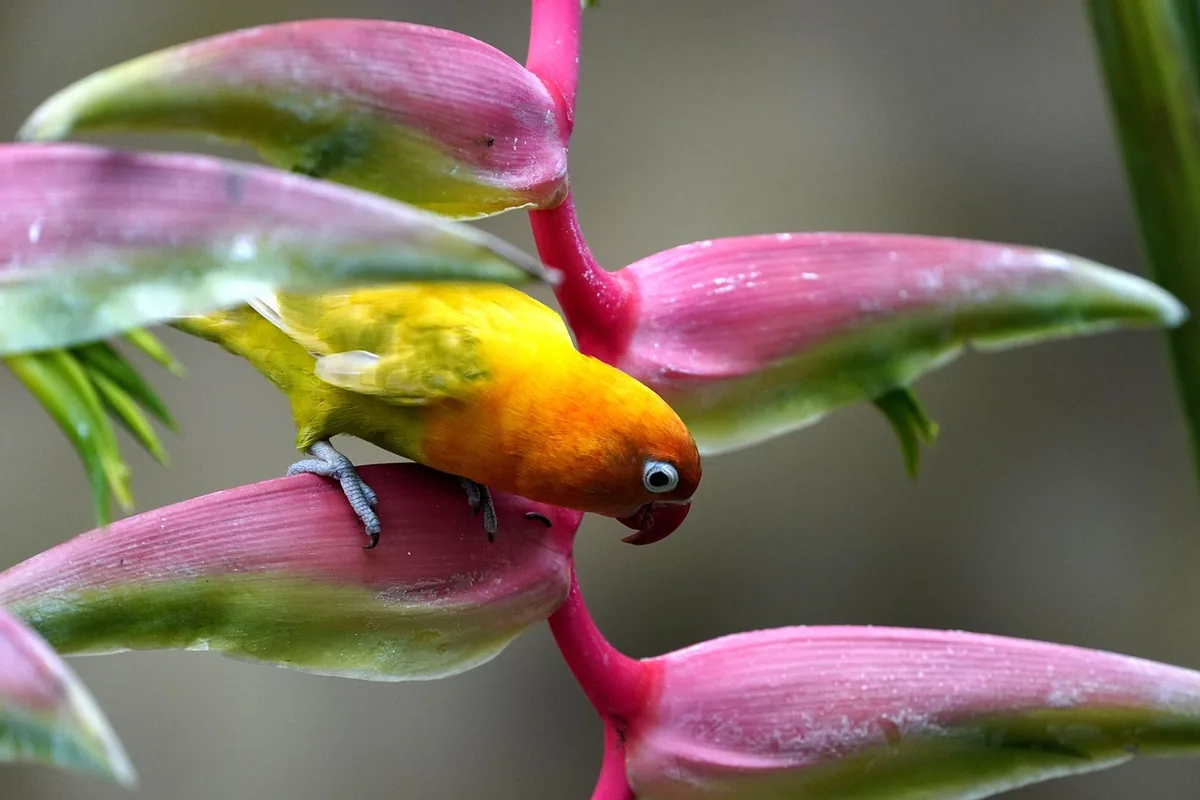
Weighing barely more than a golf ball, the lovebird (Agapornis spp.) packs the confidence, stubbornness, and devotion of a bird ten times its size. At Bird Sitting Toronto, where we board hundreds of birds every year, lovebirds are among the boldest little guests we meet — a 45-gram bird that will happily square up to a macaw. This guide is the hub for keeping one well: who they are, how to house them, and the daily rhythm that keeps them thriving. The diet, behavior, health, and training articles go deeper on each topic.
Is a Lovebird Right for You?
Native to Africa and Madagascar, lovebirds are small hookbills — 13 to 17 cm (5 to 7 in) from beak to tail and 40 to 60 g in weight. They earned their name for the intense pair-bonding you see in an aviary, but a common myth is that they must be kept in pairs. In reality, a single lovebird that receives daily attention from its human bonds deeply and thrives; a pair, by contrast, will often bond to each other and stay comparatively wild toward you.
Here is the honest personality picture. Lovebirds are:
- Feisty and bold — fearless for their size, and quick to defend their territory.
- Devoted — once bonded, they want to be near you and on you.
- Playful and busy — endless shredders, climbers, and foragers.
- Nippy — that big attitude comes with a sharp little beak, especially during hormonal seasons.
Tip: With a noise level around 3 out of 5, lovebirds are chirpy and chattery rather than shrieky, but they are not silent. Their piercing contact call carries. They suit apartment life better than a cockatoo, though thin condo walls may still tell on them.
On the commitment side: lovebirds live 10 to 20 years with good care, so this is a decade-plus relationship, not a passing pet. Their talking ability is minimal (about 1 out of 5) — a rare individual may pick up a raspy word, but you keep a lovebird for its acrobatics and affection, not its vocabulary. They are considered a beginner-friendly species, but "beginner" means forgiving of small mistakes, not maintenance-free.
Housing: The Foundation of Good Care
A lovebird is small, but it is also perpetually in motion — so floor space and horizontal room to fly matter more than height.
| Housing spec | Recommendation |
|---|---|
| Minimum cage (one bird) | 60 x 45 x 45 cm (24 x 18 x 18 in) |
| Better / two birds | 80 x 50 x 60 cm (32 x 20 x 24 in) or larger |
| Bar spacing | 1 to 1.3 cm (3/8 to 1/2 in) — no wider, or a head can get through |
| Bar orientation | Include horizontal bars for climbing |
| Cage shape | Rectangular; corners give a bird security. Avoid round cages |
| Room temperature | Comfortable indoor range, roughly 18 to 27 C (65 to 80 F); avoid drafts and sudden swings |
Bigger is always better — treat the minimum as a starting point, not a goal. Choose a rectangular cage from a bird-safe, non-toxic metal (powder-coated or stainless; never zinc or galvanized wire, which causes heavy-metal poisoning).
Furnish the inside for a small, active brain:
- Perch variety. Use natural wood branches (manzanita, java, apple) in a range of diameters, roughly 1 to 2 cm. Varied thickness exercises the feet and prevents pressure sores. Skip sandpaper perch covers.
- Toys, and lots of them. Lovebirds are compulsive shredders — offer soft wood, palm leaf, paper, and foraging toys, and rotate them to fight boredom.
- Placement. Put the cage in a social room where the family spends time, against a wall for a sense of security, at roughly chest height. Keep it away from kitchen fumes, drafts, direct sun, and the "always-on" TV.
Warning: Do not put a nest box, "happy hut," or tent in the cage. Enclosed dark spaces trigger hormonal nesting behavior in lovebirds — especially hens — which drives chronic egg-laying, aggression, and territoriality. This is one of the most common avoidable problems we see.
The Daily Care Routine
Lovebirds do best with a predictable rhythm:
- Morning: Uncover, greet, and refresh water. Serve the fresh/chop portion of the diet and top up pellets.
- Daytime: A minimum of 1 to 2 hours of out-of-cage time and direct interaction, plus foraging toys to keep the bird busy when you are not hands-on.
- Evening: Remove uneaten fresh food before it spoils, quick cage tidy, and quiet wind-down.
- Night: 10 to 12 hours of dark, quiet, uninterrupted sleep. Cover the cage or use a dim, separate sleep space. Short winter days in the Toronto area actually help regulate hormones — long artificial light does the opposite.
Weekly, do a deep clean of the cage, perches, and dishes. Monthly, weigh your bird on a gram scale; a stable weight in the 40 to 60 g band is one of your best early-warning tools.
Diet, Health, Enrichment, and Socialization at a Glance
Diet (see the nutrition guide). The house standard for lovebirds is roughly 75 to 80% high-quality pellets, 20 to 25% fresh vegetables and some fruit, with seeds and nuts held to about 5% as treats. Lovebirds are strongly obesity-prone on seed-heavy diets, so an all-seed bowl is a real hazard, not a minor one. Sprouted seeds are a great fresh addition.
Health (see the health guide). The conditions lovebirds are genuinely prone to include PBFD (psittacine beak and feather disease), feather-plucking and self-mutilation, chronic egg-laying in hens, and respiratory disease. Establish care with an avian vet and book a yearly wellness exam.
Enrichment. These are working birds. Foraging toys, destructible shreddables, swings, and puzzle feeders prevent the boredom that fuels plucking.
Socialization. Whether you keep one bird or two, daily gentle handling is what keeps a lovebird tame and confident. A single, well-socialized lovebird is an affectionate companion; a neglected one turns cage-bound and bitey fast.
Get the housing, routine, and diet right, and you will have a bright, busy, devoted little parrot for well over a decade. From here, move on to the deeper guides on nutrition, behavior and body language, health, and training.
Explore related topics
Related Articles

Best Talking Parrot Species Ranked: From Chatterbox to Silent Type
Which parrots actually talk? Here's an honest ranking with realistic expectations for each species.
Bourke's Parakeet: The Complete Care Guide for This Gentle Species
Bourke's parakeets are the calmest, quietest parrots you'll ever meet. Perfect for beginners and apartments.
Lineolated Parakeet: The Complete Care Guide for Linnies
Lineolated parakeets (linnies) are quirky, quiet, and surprisingly cuddly. Here's everything you need to know.