Complete Care Guide for the Indian Ringneck Parakeet
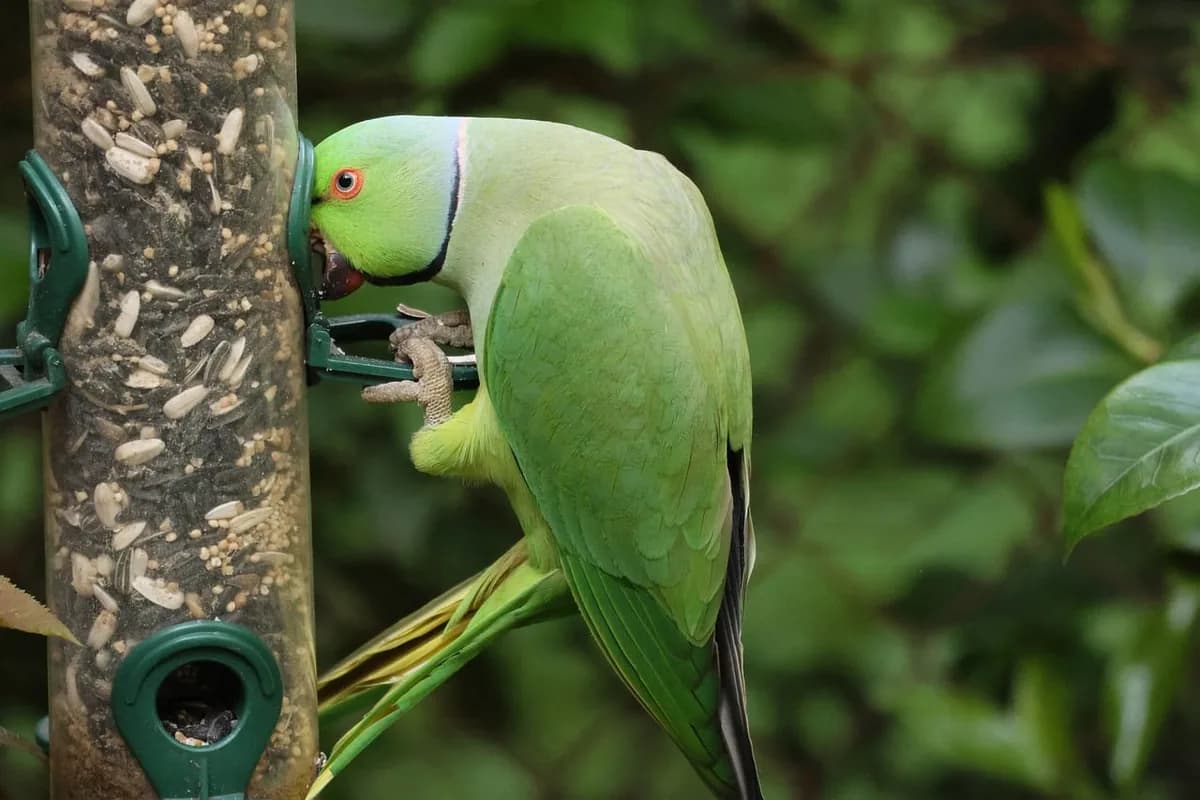
The Indian Ringneck Parakeet (Psittacula krameri manillensis) is one of the most talked-about parrots in aviculture — literally. Native to India, Pakistan, and Sri Lanka, this slim, long-tailed bird produces some of the clearest, most articulate speech of any companion parrot. It is also intelligent, independent, and, at times, gloriously aloof. Ringnecks do not fawn over you the way a needy cockatoo might. They give affection on their own terms, which is precisely why so many keepers find them fascinating.
This guide is the hub for caring for one. It covers who the Indian Ringneck is, how to house it properly, and what a good daily routine looks like — then points you to our deeper articles on diet, health, behavior, and training.
Is an Indian Ringneck Right for You?
Before anything else, a temperament reality check.
| Trait | Indian Ringneck |
|---|---|
| Adult size | ~40 cm (16 in) including the long tail |
| Weight | 115–140 g |
| Lifespan | 25–30 years |
| Noise level | 3 / 5 — moderate; chatters and has a piercing contact call |
| Talking ability | 4 / 5 — among the clearest talkers in the parrot world |
| Care level | Intermediate |
| Personality | Independent, intelligent, talkative, sometimes aloof |
A few honest points. That 25–30 year lifespan means an Indian Ringneck is a multi-decade commitment — plan for who cares for the bird if your circumstances change. The noise is moderate rather than deafening, but the ringneck's contact call is a sharp, carrying screech that will get your attention. And the talking, while remarkable, is not guaranteed; some ringnecks stay quiet their whole lives.
Warning: Indian Ringnecks go through an adolescent "bluffing" phase — a temporary, hormone-driven stage (often around 4–12 months) of sudden nippiness and standoffishness in a bird that was previously sweet. It is normal, it passes, and it is not the bird "turning on you." Crucially, ringnecks can drift back toward semi-feral if handling lapses during this window. If you want a hands-on bird, you must stay calm and consistent through bluffing. We cover this in depth in the behavior and training articles.
Housing Your Indian Ringneck
Ringnecks are active, athletic fliers with a tail that can be more than half their total length. Horizontal room to move and to hold that tail clear of the bars matters more than sheer height.
Minimum cage size (single bird): 90 × 60 × 90 cm (36 × 24 × 36 in). Bigger is genuinely better — 90 × 60 × 120 cm (36 × 24 × 48 in) or a flight cage is ideal. The bird should be able to fully spread both wings and turn without brushing the sides, and the tail should not drag or bend against the bottom.
- Bar spacing: 1.3–1.6 cm (1/2 to 5/8 in). Ringnecks have slim heads and can get stuck in gaps that are too wide; never exceed 1.9 cm (3/4 in).
- Bar orientation: Include horizontal bars on at least some sides — ringnecks love to climb, and horizontal bars give them purchase.
- Cage shape: Rectangular. Round cages give a bird no corner to feel secure in and can be disorienting.
- Perches: Offer varied natural-wood perches of different diameters (roughly 1.5–2.5 cm) to exercise the feet and prevent pressure sores. Skip the sandpaper covers. A couple of safe branch perches (apple, willow, dogwood) beat identical dowels.
Placement and Room Environment
Put the cage in a social part of the home — a family room or home office — so the bird is part of daily life, but not in the kitchen, where cooking fumes (especially overheated non-stick cookware) can be rapidly fatal to any bird. Keep it out of direct sun and away from drafts, vents, and exterior doors.
Ringnecks are comfortable at normal household temperatures, roughly 18–29°C (65–85°F). They tolerate cooler conditions better than tropical species but hate rapid swings and cold drafts. In a Toronto winter, forced-air heating drops indoor humidity sharply; aim for 40–60% humidity and offer regular bathing or misting to keep skin and feathers healthy.
A Daily and Weekly Care Routine
A predictable rhythm keeps a ringneck calm and well.
Every day
- Fresh water, changed at least twice; wash the dish, don't just top it up.
- Fresh chopped vegetables in the morning; remove perishable food after a few hours.
- Refill pellets; scatter or hide some to encourage foraging.
- Direct interaction and out-of-cage time — talking, training, or supervised flight/climbing in a bird-safe room.
- A quick visual health scan: droppings, appetite, posture, breathing.
Every week
- Deep-clean the cage, perches, and dishes.
- Rotate toys to keep the environment novel.
- Weigh the bird on a gram scale and log it — steady weight in the 115–140 g range is one of your best early health signals.
Nightly: 10–12 hours of dark, quiet, uninterrupted sleep. A well-rested ringneck is a friendlier, healthier ringneck.
The Rest of the Picture — Where to Go Deeper
This hub keeps the following short on purpose; each has its own full guide.
- Diet: Build the diet on high-quality pellets (about 75–80%), a veg-forward mix of fresh foods and sprouts (about 20–25%), with seeds and nuts as roughly 5% treats. Ringnecks are prone to obesity and fatty liver disease, so seed-heavy bowls are a genuine health risk. Full food lists, a toxic-foods rundown, and how to convert a seed junkie are in our Diet and Nutrition guide.
- Health: Ringnecks are susceptible to PBFD, polyomavirus, aspergillosis, feather-plucking, and fatty liver. An annual avian-vet wellness exam is the backbone of prevention — see our Common Health Issues guide for signs to watch and what counts as an emergency.
- Enrichment & behavior: These are busy, clever birds that shred, forage, and problem-solve. Understanding their body language — and the bluffing phase — is covered in Behavior and Body Language.
- Socialization & training: Consistency is everything, especially through adolescence. Target training, recall, and speech are all well within a ringneck's reach; see Training Tips.
At Bird Sitting Toronto, where we board hundreds of birds every year, ringnecks stand out as the ones most likely to greet the staff by name. Give them structure, space, and steady handling, and you will have a brilliant companion for decades.
Explore related topics
Related Articles

Best Talking Parrot Species Ranked: From Chatterbox to Silent Type
Which parrots actually talk? Here's an honest ranking with realistic expectations for each species.
Bourke's Parakeet: The Complete Care Guide for This Gentle Species
Bourke's parakeets are the calmest, quietest parrots you'll ever meet. Perfect for beginners and apartments.
Lineolated Parakeet: The Complete Care Guide for Linnies
Lineolated parakeets (linnies) are quirky, quiet, and surprisingly cuddly. Here's everything you need to know.