How to Recognize When Your Bird Is Sick: Warning Signs Every Parrot Owner Should Know
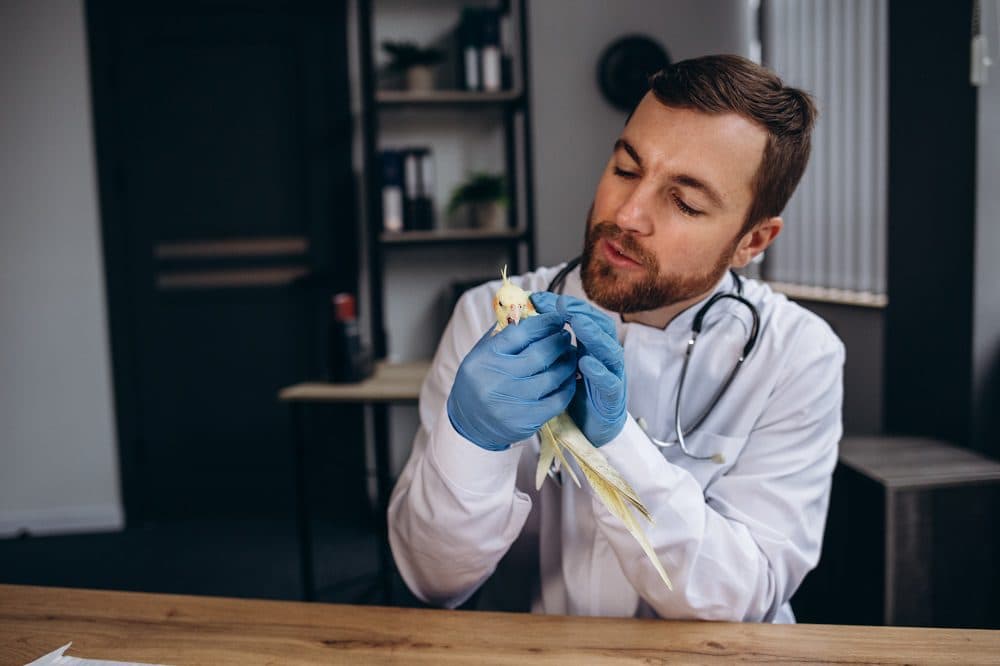
Why Birds Hide Illness
In the wild, showing any sign of weakness puts a bird in danger. A flock member that looks sick may be driven off or singled out by a predator, so birds evolved to mask symptoms of illness for as long as they possibly can. That instinct does not switch off in your living room. By the time a companion parrot openly looks unwell, it has often been fighting something for days.
This is exactly why the phrase "he was fine yesterday" is so common in avian emergency rooms — and so misleading. Your bird was likely not fine yesterday; it was simply still hiding it. At Bird Sitting Toronto, where we board hundreds of birds every year, the owners who catch problems early are almost always the ones who know their bird's normal baseline cold and notice the moment something drifts from it.
Tip: Assume your bird is a master of disguise. Do not wait for "obvious" symptoms. Treat any consistent change from normal as worth investigating.
Know Your Bird's Normal First
You cannot spot a change if you never learned the baseline. The single most useful health habit you can build is a weekly weigh-in on a gram scale — a small kitchen scale with a perch taped on top works perfectly.
Weight is the earliest and most honest illness signal a bird gives, because a sick bird stops eating well before it looks sick, and a full crop can hide loss of body condition. Weigh at the same time each week (first thing in the morning, before the first big meal, is most consistent) and write it down.
| Species | Typical healthy weight | Watch closely if it drops by |
|---|---|---|
| Budgie (parakeet) | ~30–40 g | 2–3 g (roughly 5–10%) |
| Cockatiel | ~80–120 g | 6–10 g (roughly 5–10%) |
| Conure | ~70–120 g | ~5–10% |
| African grey / Amazon | ~350–550 g | ~5–10% |
The exact number matters less than the trend. A steady 5–10% drop in a small bird is meaningful and warrants a call to your vet, even if your bird still looks bright. A gram of loss on a 35 g budgie is a bigger deal than it sounds.
Beyond weight, learn your bird's normal: how loud and chatty it is in the morning, how much it eats and drinks, how it sits on the perch, and what its droppings usually look like. That mental picture is your early-warning system.
The Warning Signs, at a Glance
Watch for consistent changes rather than a single odd moment — every bird has a lazy afternoon. The table below groups the signs owners most often miss and how urgently each one deserves attention.
| What you notice | What it may signal | Urgency |
|---|---|---|
| Feathers fluffed for long stretches when it is not cold or napping | Conserving heat; often unwell | See a vet soon |
| Sitting low on the perch or on the cage floor, sleeping far more than usual | Weakness, illness | Same day |
| Both eyes half-closed or dull much of the day | Systemic illness | See a vet soon |
| Not eating or drinking the usual amount | Many causes; birds decline fast when off food | Same day |
| Steady weight loss over a week or two | Underlying disease | See a vet soon |
| Tail bobbing, open-mouth breathing, wheezing or clicking | Respiratory distress | Emergency |
| Discharge from the nostrils (cere) or eyes; matted facial feathers | Infection | See a vet soon |
| Vomiting/regurgitation onto surfaces (not courtship feeding) | Crop or GI problem | See a vet soon |
| Visible swelling, lump, or a leg/wing held oddly | Injury, tumour, or infection | See a vet soon |
| Fresh blood, or something unusual on the cage floor | Injury or serious internal problem | Emergency |
Reading the feathers-fluffed, eyes-closed, floor-sitting picture together matters more than any single item. A bird that is fluffed, quiet, sitting on the floor, and off its food is telling you clearly that it needs help.
Reading the Droppings
Droppings are a daily health readout, and line the cage with plain white paper so you can actually see them. A normal parrot dropping has three parts:
- Feces — the solid, coiled portion, usually green to brown.
- Urates — the chalky white or cream part.
- Urine — a small amount of clear liquid.
Learn to tell a real change from a harmless one. Diet naturally tints droppings: pellets can give them a uniform tan or a dye-related colour, while berries, beets, or leafy greens can turn them red, purple, or bright green with no cause for alarm. What does matter is a persistent shift you cannot explain by food.
Warning: Take these dropping changes seriously — call your vet: bright red or black tarry stool (possible blood), mustard-yellow or lime-green urates (possible liver disease), watery droppings for more than a day, or a sharp drop in the number of droppings, which often means your bird has stopped eating.
Emergencies: Go Now
Some signs cannot wait for a regular appointment. Treat the following as same-day emergencies and get to an avian or exotics vet immediately:
- Labored breathing — open-mouth breathing, tail bobbing with each breath, or a bird straining to breathe.
- Active bleeding — from a broken blood feather, nail, or wound.
- Suspected toxin exposure — Teflon/PTFE fumes from overheated non-stick cookware, aerosols, smoke, or ingestion of anything toxic. Get the bird into fresh air first, then call.
- Seizures, sudden collapse, or inability to perch or stand.
- A hen straining and unable to pass an egg (egg binding), or any tissue protruding from the vent.
While arranging transport you may need brief first aid or stabilization — for example, keeping a chilled bird warm (about 26–29°C / 80–85°F) and quiet, or applying gentle pressure and cornstarch to a bleeding nail. First aid buys time; it does not replace the vet.
A Health Routine That Prevents Problems
The best warning-sign strategy is a bird that rarely gets sick in the first place. A few durable habits do most of the work:
- Feed a species-appropriate diet. For most parrots that means pellets making up about 75–80% of the diet, fresh vegetable-forward foods about 20–25%, and seeds and nuts only around 5% as treats. Convert budgies and cockatiels to pellets slowly, leaning on veg and sprouts. Lorikeets are the exception — they need a specialized nectar diet, not pellets — and eclectus do best on a veg-forward, additive-free menu. Hookbill parrots do not need grit; it can cause crop impaction.
- Weigh weekly and log it, as above.
- Keep the air clean. No non-stick cookware near the bird, no aerosols, scented candles, or smoke. Avian lungs are extraordinarily efficient and extraordinarily vulnerable.
- Book an annual wellness exam with an avian vet, even for a bird that seems perfectly healthy. This is where an experienced clinician catches the subtle changes you cannot.
Tip: Line up your avian or exotics vet before you need one. Many Toronto and GTA general and emergency clinics do not treat birds, so know in advance who does and how to reach them after hours. Our guide to finding a qualified avian veterinarian walks through what to look for.
The Bottom Line
Because birds hide illness so well, your daily attention is their best medicine. Learn your bird's normal weight, appetite, posture, voice, and droppings, and act on consistent changes rather than waiting for something dramatic. When in doubt, call — avian veterinary consensus (echoed by the Association of Avian Veterinarians and the Merck Veterinary Manual) is that early professional care almost always beats home remedies and "wait and see." With birds, a day can be the difference between a routine visit and an emergency.
Explore related topics
Related Articles
Aspergillosis in Birds: The Invisible Fungal Killer
Aspergillosis is one of the most common and deadly avian diseases. It's caused by a fungus that's everywhere in our environment.
The Avian First Aid Kit: 25 Essential Supplies Every Bird Owner Needs
When an emergency happens, you need supplies ready NOW. Here's what every bird owner should have on hand.
Bird Insurance: Is It Worth It? A Complete Guide to Avian Pet Insurance
A single emergency vet visit can cost $2000+. Pet insurance for birds exists — here's whether it's worth the premium.