The Complete Finch Care Guide: Housing, Routine and Flock Life
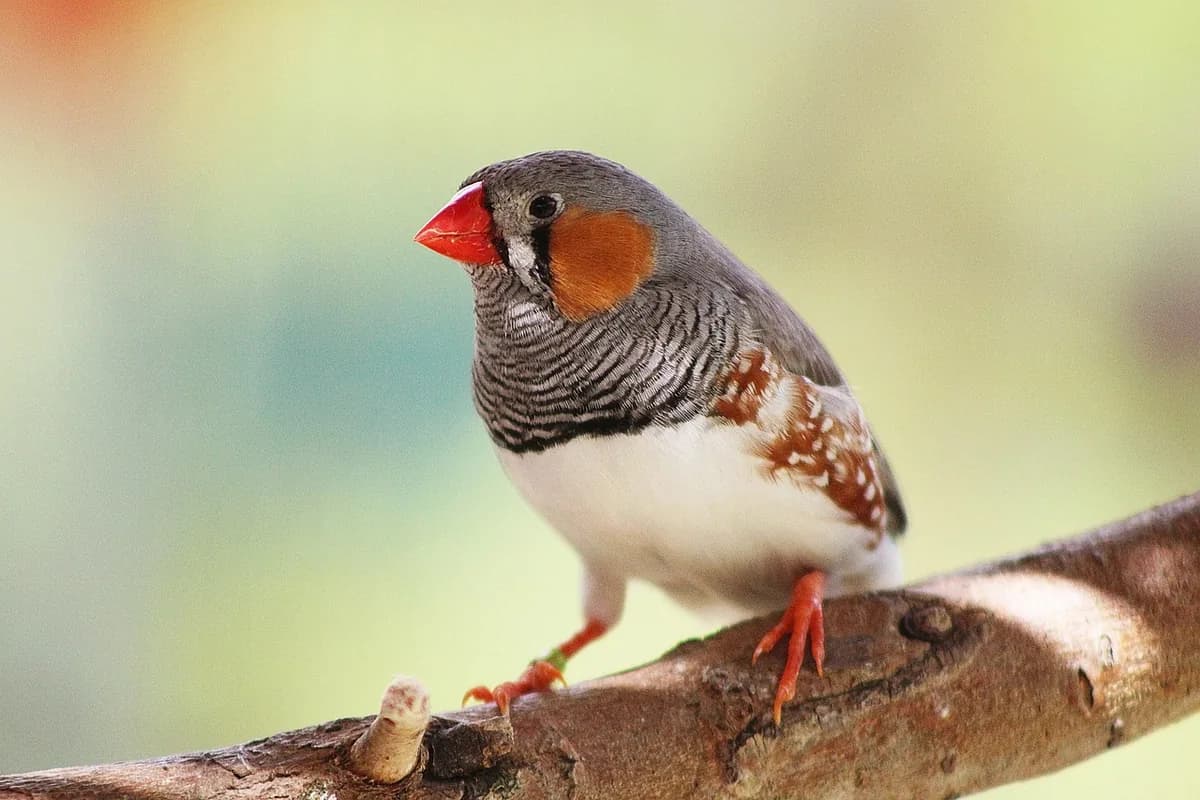
Finches are the busy little songbirds of the bird world — a flickering, chattering flock of movement that fills a room with soft sound and almost never demands to sit on your shoulder. At Bird Sitting Toronto, where we board hundreds of birds a year, finches are among the most rewarding "watch, don't hold" pets we see. This guide is the hub for their care: who they suit, how to house them properly, and the daily rhythm that keeps them well. The deeper articles on diet, behavior, health and taming pick up where this one leaves off.
Who Finches Are — and Who They Suit
Finches belong to the Estrildidae and Fringillidae families — true passerines (perching songbirds), not parrots. Popular pet species include the zebra finch (so well studied that neuroscientists use it as the model animal for how brains learn song), the society finch, and the strikingly colored Gouldian. They are small: 10–15 cm (4–6 in) from beak to tail and just 10–30 g in weight, roughly the mass of a few coins.
They are an excellent beginner bird, but for a specific kind of keeper. Finches are flock animals that should never be kept alone. They bond to their own kind, not to your hand, and thrive when they can flit, forage and call to companions all day. If you want a bird to cuddle, teach to talk, or wear on your shoulder, a finch will disappoint you — they have no talking ability and dislike being handled. If you want a low-noise (a gentle 1 out of 5), endlessly entertaining living tableau, they are perfect.
Tip: Keep finches in same-species pairs or small groups. A single finch is a lonely finch. Two males or a small bachelor group often coexist peacefully without the egg-laying pressures of a breeding pair.
Their lifespan is 5–10 years — a real commitment, but shorter than the decades a parrot demands, which makes finches a sensible choice for a first bird or a household not ready for a 40-year companion.
Housing: Length Beats Height
This is the single most important thing to get right. Finches are horizontal flyers. In the wild they fly in fast, straight dashes, so they need a cage that is long, not tall. A narrow "tower" cage sold for a single canary is close to useless for finch fitness — the birds cannot build up any real flight.
| Setup | Minimum footprint | Notes |
|---|---|---|
| One pair | 76 × 46 × 46 cm (30 × 18 × 18 in) | Absolute minimum; prioritize the 76 cm length |
| Small flock (3–6) | 90–120 cm (36–48 in) long | A proper flight cage; longer is always better |
| Bar spacing | No wider than 1 cm (3/8 in) | Finches slip through or trap their heads in wide bars |
Choose a rectangular cage — round cages give no protected corner for a bird to feel secure, and their converging bars can trap toes. Coated or stainless wire is safest; avoid galvanized wire, which can shed zinc.
Perching should vary in diameter and texture to keep feet healthy: natural branch (willow, apple, dogwood) of different thicknesses, plus a rope perch or two. Skip sandpaper perch covers — they abrade the soles and cause sores. Place perches at the ends of the cage so the birds fly the length between them, and leave the center flight path clear of clutter. A shallow bathing dish is a daily favorite; finches bathe enthusiastically.
Placement and climate. Put the cage in a lived-in room where the flock can watch household activity, but out of direct sun, off the floor, and away from drafts, kitchen fumes and the fatal invisible threat of overheated non-stick (PTFE/Teflon) cookware. Finches are comfortable at normal room temperature, roughly 18–24 °C (65–75 °F). They tolerate cool better than sudden swings, so avoid placing them by a door that opens to Toronto winter air. Our dry heated winters drop indoor humidity hard — a nearby humidifier and daily bathing help keep feathers and skin in good condition.
A Day in the Life: The Care Routine
Finches run on a simple, predictable rhythm. Consistency matters more than fuss.
- Morning: Refresh water (finches foul it quickly), refill the seed/pellet dish, and put in the day's fresh greens. Do a quick "well-bird" scan — see below.
- Midday: A fresh bathing dish and a check that food and water are clean.
- Evening: Remove any wilted fresh food before it spoils. Finches need 10–12 hours of dark, quiet sleep, so cover or move the cage to a calm space if your evenings are bright and loud.
- Weekly: Deep-clean the cage, scrub perches and dishes, and replace paper liners. Weigh each bird on a gram scale if you can — weight loss is the earliest warning of trouble in a species this small.
Every morning, spend thirty seconds simply watching. A healthy finch is bright-eyed, active, singing or contact-calling, eating, and holding its feathers sleek. A bird sitting fluffed on the cage floor, tail bobbing with each breath, or "going light" (thin over the breastbone) needs an avian vet promptly.
The Rest of Their Care, in Brief
Each of these has its own full article — here is the one-line version:
- Diet: A quality finch seed mix is a legitimate staple for these granivores, rounded out with pellets, fresh greens and egg food (especially during molt or breeding). See the diet guide for the full breakdown, safe and toxic foods, and how to add pellets.
- Health: Finches are prone to air-sac mites, scaly leg and face mites, "going light" (avian gastric yeast / megabacteria), egg-binding and overgrown beaks and nails. Catch problems early — the health guide covers signs and prevention.
- Enrichment: Flight space is their main enrichment. Add swings, millet sprays to forage, fresh browse, and companions to squabble and preen with.
- Socialization: They socialize with each other, not with you. The behavior and taming guides explain how to earn calm trust without ever forcing a hand into the cage.
Get the flight cage and the flock right, keep the routine steady, and finches will reward you with years of song, motion and easy charm.
Explore related topics
Related Articles
Best Talking Parrot Species Ranked: From Chatterbox to Silent Type
Which parrots actually talk? Here's an honest ranking with realistic expectations for each species.
Bourke's Parakeet: The Complete Care Guide for This Gentle Species
Bourke's parakeets are the calmest, quietest parrots you'll ever meet. Perfect for beginners and apartments.
Lineolated Parakeet: The Complete Care Guide for Linnies
Lineolated parakeets (linnies) are quirky, quiet, and surprisingly cuddly. Here's everything you need to know.