The Complete Budgie Care Guide
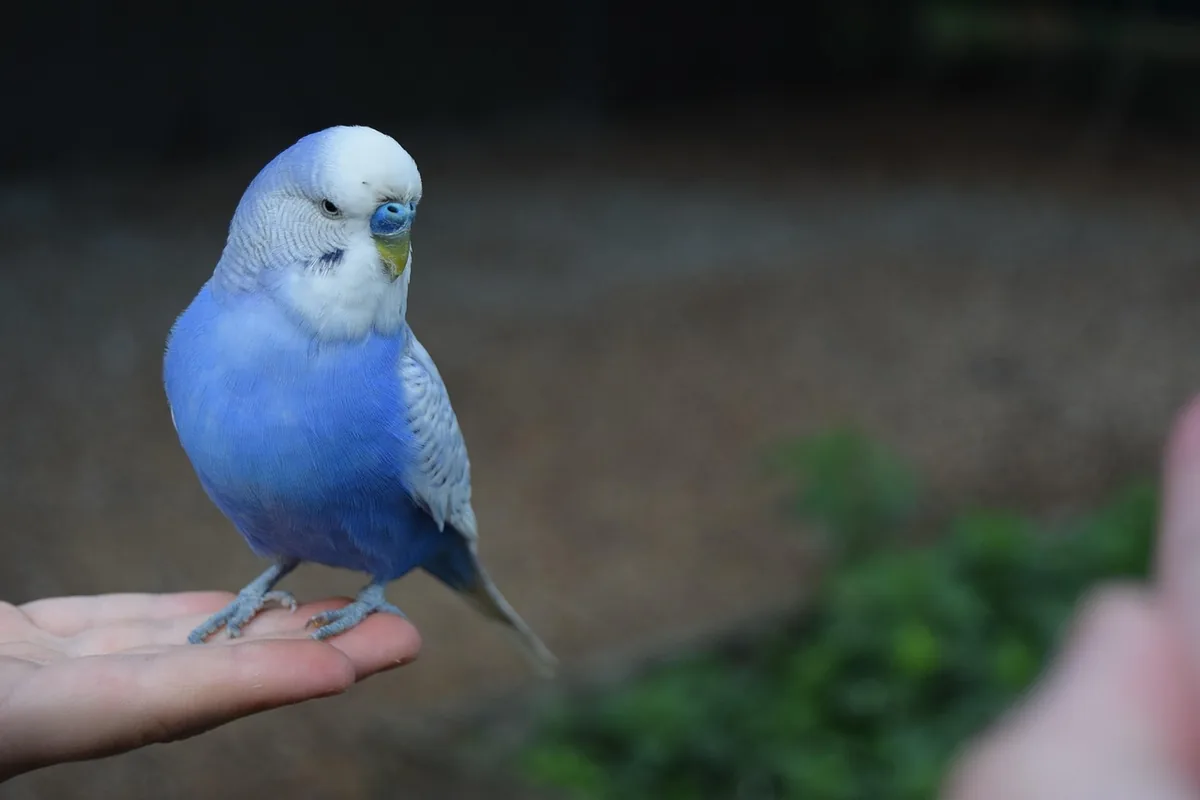
The budgerigar (Melopsittacus undulatus) is the little grass parakeet from the arid interior of Australia that became the most-kept pet bird on earth — and for good reason. At Bird Sitting Toronto, where we board hundreds of birds every year, budgies are the species new owners fall for hardest: a 30-to-40-gram bird, roughly 18 cm (7 in) beak to tail, that whistles, mumbles, hangs upside down from its millet, and greets you with a burst of flock chatter when you walk in the door. This guide is the hub for everything budgie. It goes deep on who they are and how to house them, then points you to the detailed diet, health, behaviour, and training articles.
Is a Budgie the Right Bird for You?
Budgies are a genuinely beginner-friendly parrot, but "easy" is relative — they are still an 8-to-15-year commitment with real daily needs.
- Sound level (2/5): One of the quietest parrots. A budgie's constant background chatter is apartment-friendly; they don't produce the ear-splitting screams of a conure or cockatoo. Two or more budgies are chattier than one, but still gentle.
- Talking (3/5): Surprising talkers for their size. Many — especially males — pick up a soft, mumbly vocabulary of words and phrases. A budgie named Puck holds the Guinness record for the largest bird vocabulary ever documented, at 1,728 words.
- Temperament: Social, playful, curious, and busy. Budgies are flock animals to their core; they do not thrive in isolation and need either daily human interaction or a companion budgie.
- Colour: Bred into 30-plus mutations across green, blue, yellow, white, and violet — so no two birds look quite alike.
Tip: A single budgie can be wonderfully bonded to you, but only if you provide the social contact a flock would. If you work long days and can't offer a few hours of interaction, keep two. A well-matched pair is happier than a lonely single.
Housing: Bigger and Wider Always Wins
Budgies are horizontal flyers built for darting flight across open scrub, so floor width matters more than height. The cage is where your bird spends most of its life — buy the largest you can fit.
| Setup | Minimum footprint | Better target |
|---|---|---|
| One budgie | 45 x 45 x 45 cm (18 x 18 x 18 in) | 60 x 45 x 45 cm (24 x 18 x 18 in) |
| A pair | 60 x 45 x 50 cm (24 x 18 x 20 in) | 80 x 50 x 50 cm (32 x 20 x 20 in) |
The numbers above are for a cage the bird also gets flight time outside of daily. Treat any single-budgie cage as a minimum, never a maximum.
- Bar spacing: No wider than 1.25 cm (1/2 in). Wider bars let a budgie wedge its head through and get stuck. Horizontal bars on at least some sides give them a ladder to climb.
- Cage shape: Rectangular, always. Round cages waste width, offer no corner for a bird to feel secure in, and can be disorienting.
- Perches: Skip the uniform plastic dowels that come with most cages. Offer natural-wood perches of varying diameter (roughly 1-2 cm) so the feet keep changing grip — this prevents pressure sores and arthritis. Add one rope perch and a cuttlebone-mounted spot. Never sandpaper perches; they abrade the soles.
- Placement: Put the cage in a lived-in room, against a wall so at least one side feels protected. Keep it out of direct sun, away from drafts and open windows, and well clear of the kitchen — non-stick (PTFE/Teflon) fumes kill birds fast.
- Temperature and air: Budgies are comfortable at normal room temperature, roughly 18-28°C (65-82°F), and tolerate cooler better than sudden swings. Toronto's dry winter indoor heating pulls humidity down; aim for 40-60% with a humidifier if your home runs arid.
A Realistic Daily Routine
Budgies thrive on rhythm. A workable day looks like this:
- Morning: Uncover the cage, refresh water, and put out the day's chopped vegetables and pellets. Say good morning — budgies are most vocal and alert early.
- Midday / after work: Open the cage for supervised out-of-cage flight and interaction in a bird-proofed room. Even 30-60 minutes of flight burns the energy that otherwise becomes fat.
- Evening: Quieter interaction, training, or foraging games. Remove uneaten fresh food before it spoils.
- Night: Budgies need 10-12 hours of dark, quiet, uninterrupted sleep. A partial cover in a busy household helps. You'll often hear soft beak-grinding as they settle — that's a content, sleepy bird.
Warning: Chronic sleep deprivation and too many daylight hours push hens toward hormonal, chronic egg-laying, which drains calcium and can be dangerous. Keeping nights genuinely long and dark is one of the simplest health protections you can offer.
The Rest, in Brief
This is the overview; each topic below has its own full article.
- Diet: Budgies are seed-loving granivores, but an all-seed diet is the classic cause of iodine-deficiency goitre, obesity, and fatty liver. Pellets should form the majority of the diet, with generous leafy greens, grated carrot and broccoli, and sprouted seed — though budgies are famously stubborn converters, so expect the switch to take weeks. See the Diet and Nutrition guide.
- Health: Watch for lipomas (fatty tumours), tumours of the kidney and testicles (a classic early sign is one-sided leg lameness plus a cere colour change in males), the "clicking" and regurgitation of goitre, and crusty Knemidokoptes "scaly face" mites around the beak and cere. Details and emergencies are in Common Health Issues.
- Behaviour: Learn to read cere colour (it signals sex and hormonal state), head-bobbing, contact calls, and bedtime beak-grinding in Behavior and Body Language.
- Training: Budgies are very trainable with spray millet as a high-value reward — step-up, target, recall, and talking are all within reach. Start with the Training Tips guide.
Get the cage, the sleep, and the diet right, and a budgie will reward you with a decade or more of chatter, colour, and personality far bigger than seven inches has any right to be.
Explore related topics
Related Articles

Best Talking Parrot Species Ranked: From Chatterbox to Silent Type
Which parrots actually talk? Here's an honest ranking with realistic expectations for each species.
Bourke's Parakeet: The Complete Care Guide for This Gentle Species
Bourke's parakeets are the calmest, quietest parrots you'll ever meet. Perfect for beginners and apartments.
Lineolated Parakeet: The Complete Care Guide for Linnies
Lineolated parakeets (linnies) are quirky, quiet, and surprisingly cuddly. Here's everything you need to know.