Best Parrots for Apartment Living: Quiet Species for Small Spaces
Finding Your Perfect Apartment Companion
Living in an apartment doesn't mean you have to give up your dream of sharing your life with a feathered friend. The key is choosing the right species — one that will thrive in smaller spaces without driving you (or your neighbors) to distraction with constant noise.
In our experience boarding over 1,000 birds at BST, we've learned that some parrots are natural apartment dwellers while others... well, let's just say they're better suited to homes with acreage and very understanding neighbors. Here's everything you need to know about finding the perfect apartment parrot.
Why Some Parrots Don't Make Good Apartment Birds
Before we dive into the best options, let's talk about why certain species are apartment nightmares. The biggest culprits? Volume and timing.
Large parrots like cockatoos, macaws, and Amazon parrots have voices that can literally be heard blocks away. We're talking 100+ decibels — that's lawn mower level noise. Cockatoos, in particular, have a habit of screaming at dawn and dusk (and sometimes just because they feel like it), while macaws can produce ear-splitting contact calls that penetrate walls like they're made of paper.
Important: Even "quiet" birds will make noise. The goal isn't silence — it's finding species whose natural vocalizations won't result in noise complaints or eviction notices.
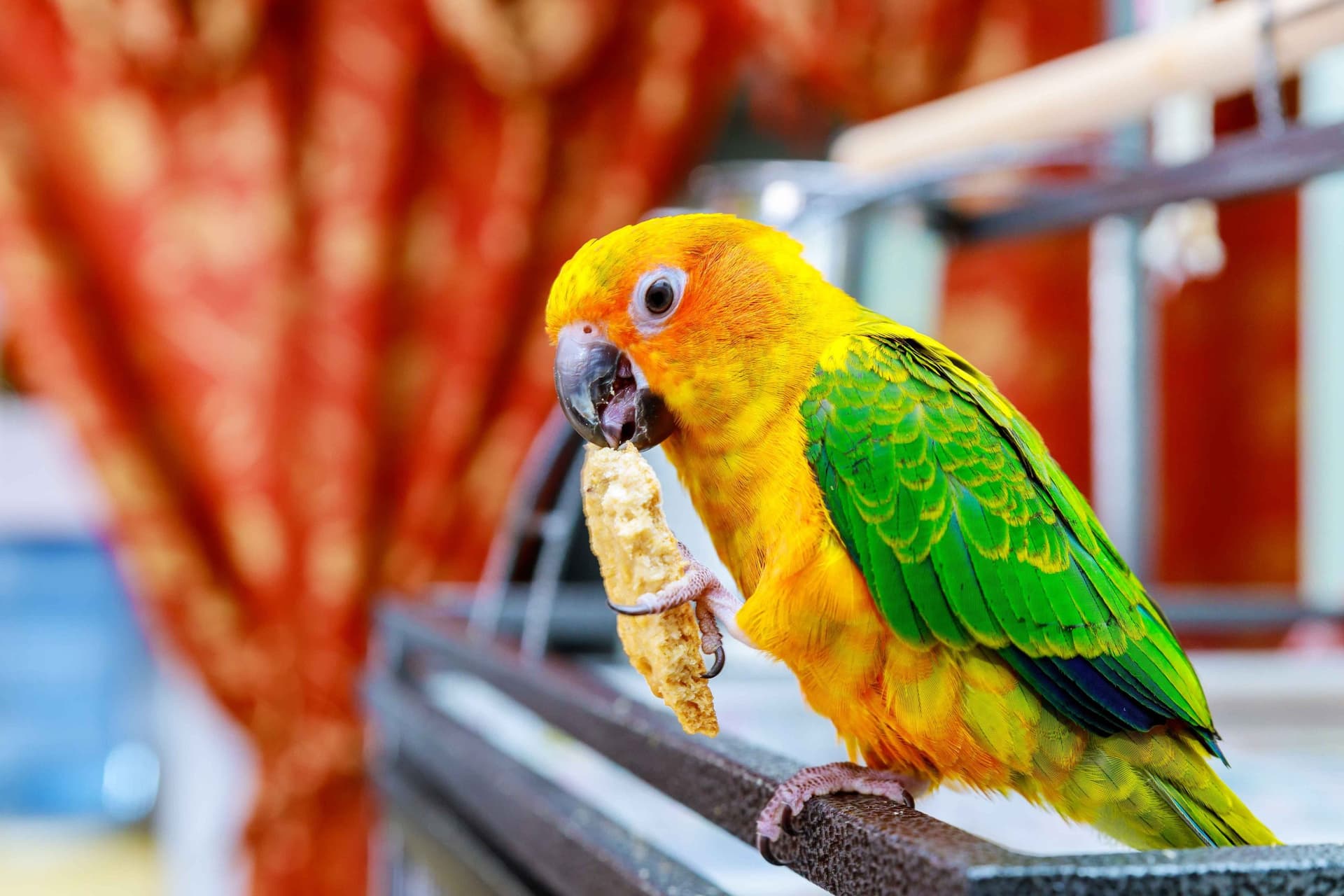
Sun conures, despite their smaller size, are another apartment no-go. These beautiful birds have voices that seem impossibly loud for their compact bodies, and they love to use them frequently throughout the day.
The Top 8 Apartment-Friendly Parrot Species
1. Budgerigars (Budgies)
Noise Level: 2/5
Space Needs: Minimum 18" x 18" x 24" cage
Personality: Social, playful, can learn to talk
Budgies are the classic apartment bird for good reason. Their chatter is pleasant and rarely loud enough to bother neighbors. They're happiest in pairs, which actually helps with noise — they'll chat with each other instead of screaming for attention. The downside? They can be prolific talkers, so if you work from home on important calls, their constant conversation might become distracting.
2. Cockatiels
Noise Level: 2/5
Space Needs: Minimum 20" x 20" x 24" cage
Personality: Gentle, affectionate, excellent whistlers
Cockatiels are wonderfully apartment-appropriate. Their vocalizations are typically soft whistles, chirps, and the occasional contact call. Males tend to be more vocal than females, often serenading you with elaborate whistled tunes. The main noise concern is their "flock call" — a louder call they use when they can't see you — but this is manageable with proper training.
3. Pacific Parrotlets
Noise Level: 1/5
Space Needs: Minimum 18" x 18" x 18" cage
Personality: Feisty, intelligent, big personality in tiny package
Don't let their size fool you — parrotlets pack enormous personalities into their tiny bodies. They're naturally quiet birds with soft chirps and occasional chatter. However, they can be territorial and may become nippy if not properly socialized. They're perfect for apartment dwellers who want parrot intelligence without the volume.
4. Lineolated Parakeets (Linnies)
Noise Level: 1/5
Space Needs: Minimum 18" x 18" x 24" cage
Personality: Calm, gentle, easy-going
Linnies are probably the quietest parrots you'll find. They have soft, pleasant voices and rarely raise them. They're also less destructive than many parrot species and have a reputation for being gentle and easy to handle. The trade-off is that they're less interactive than some other species — they're content to do their own thing much of the time.
5. Green-Cheeked Conures
Noise Level: 3/5
Space Needs: Minimum 24" x 24" x 30" cage
Personality: Playful, mischievous, very social
Green-cheeked conures are the largest birds on our apartment-friendly list, and they do come with more noise than the smaller species. However, they're significantly quieter than their sun conure cousins. Their vocalizations are typically chattering and contact calls rather than screaming. They're incredibly social and playful — just be prepared for a bird with the energy level of a toddler.
6. Bourke's Parakeets
Noise Level: 1/5
Space Needs: Minimum 30" x 18" x 18" cage (they prefer horizontal space)
Personality: Peaceful, gentle, most active at dawn and dusk
Bourke's parakeets are the gentle souls of the parrot world. They have soft, musical voices and are naturally calm birds. They're most active during twilight hours, which works well for people with traditional work schedules. They do need more horizontal flight space than vertical climbing space, so factor that into your cage selection.
7. Canaries
Noise Level: 2/5
Space Needs: Minimum 24" x 16" x 16" cage
Personality: Independent, excellent singers (males)
While not technically parrots, canaries deserve mention as fantastic apartment birds. Male canaries are renowned for their beautiful songs, especially during breeding season. Their vocalizations are musical rather than harsh, and most neighbors find canary song pleasant rather than annoying.
8. Society Finches
Noise Level: 1/5
Space Needs: Minimum 30" x 18" x 18" cage for a pair
Personality: Social, gentle, do best in pairs or groups
Finches are perfect for apartment dwellers who want the joy of bird ownership without much noise. Their soft chirping and twittering is barely audible through apartment walls. They're happiest in pairs or small groups and are relatively low-maintenance compared to parrots.
Apartment Bird Comparison Table
| Species | Noise Level | Min. Cage Size | Talking Ability | Social Needs | Maintenance Level |
|---|---|---|---|---|---|
| Budgies | 2/5 | 18"×18"×24" | Excellent | High - prefer pairs | Low |
| Cockatiels | 2/5 | 20"×20"×24" | Good whistlers | Moderate | Low |
| Parrotlets | 1/5 | 18"×18"×18" | Limited | Low - can be solo | Low |
| Linnies | 1/5 | 18"×18"×24" | Limited | Moderate | Low |
| Green-Cheek Conures | 3/5 | 24"×24"×30" | Good | Very high | Moderate |
| Bourke's | 1/5 | 30"×18"×18" | None | Low | Low |
| Canaries | 2/5 | 24"×16"×16" | Songs only | Low | Low |
| Finches | 1/5 | 30"×18"×18" | None | High - need pairs | Low |
Managing Noise in Your Apartment
Even with a quiet species, you'll want to minimize noise for your neighbors' sake — and your own sanity.
Soundproofing Tips
Strategic cage placement makes a huge difference. Keep cages away from shared walls when possible, and never place them against bedroom walls where neighbors might be sleeping. A corner location often works well, as it provides security for your bird while buffering sound.
Soft furnishings help absorb sound. Curtains, rugs, and upholstered furniture all help reduce noise transmission. Some apartment bird owners invest in acoustic panels, though this usually isn't necessary with quieter species.
Cage covers can help muffle early morning and evening vocalizations. Many birds naturally quiet down when covered, though some may take time to adjust to this routine.
Managing Flock Calls
Here's the thing about flock calls — they're natural behavior, but you can minimize them with smart management. Flock calls happen when birds can't see their "flock" (that's you), so strategic cage placement where your bird can see main living areas helps reduce these louder vocalizations.
Training quiet commands works well with intelligent species like cockatiels and conures. Start by rewarding quiet behavior with treats and attention, and teach a "quiet" command for those times when you need them to tone it down.
Pro Tip: Never yell at a screaming bird — you'll just teach them that loud noises get attention. Instead, ignore the noise and reward quiet behavior.
Being a Considerate Neighbor
The best defense against noise complaints is proactive communication. When you first move in (or get your bird), introduce yourself to immediate neighbors and let them know you have a pet bird. Most people are understanding when they know what to expect.
Share your schedule if your bird has predictable vocal times. Let neighbors know that your cockatiel likes to sing in the morning, or that your budgies get chatty around dinner time. This transparency goes a long way.
Provide your contact information and encourage neighbors to reach out if noise becomes an issue. Most reasonable people will appreciate your consideration and work with you to find solutions.
Final Thoughts
The right apartment bird can bring years of joy without causing neighbor relations nightmares. Focus on naturally quieter species, invest in proper setup and training, and maintain open communication with neighbors. Remember, even the quietest bird will make some noise — but with thoughtful species selection and management, you can enjoy feathered companionship in your apartment home.
At BST, we've seen countless apartment birds living happily in smaller spaces. The key is matching the bird's natural tendencies with your living situation. Choose wisely, and you'll have a perfect apartment companion who brings song and personality to your home without bringing complaints to your door.
Explore related topics
Related Articles

Best Talking Parrot Species Ranked: From Chatterbox to Silent Type
Which parrots actually talk? Here's an honest ranking with realistic expectations for each species.
Bourke's Parakeet: The Complete Care Guide for This Gentle Species
Bourke's parakeets are the calmest, quietest parrots you'll ever meet. Perfect for beginners and apartments.
Lineolated Parakeet: The Complete Care Guide for Linnies
Lineolated parakeets (linnies) are quirky, quiet, and surprisingly cuddly. Here's everything you need to know.