Training Your Quaker Parrot: Trust, Tricks, and Talking
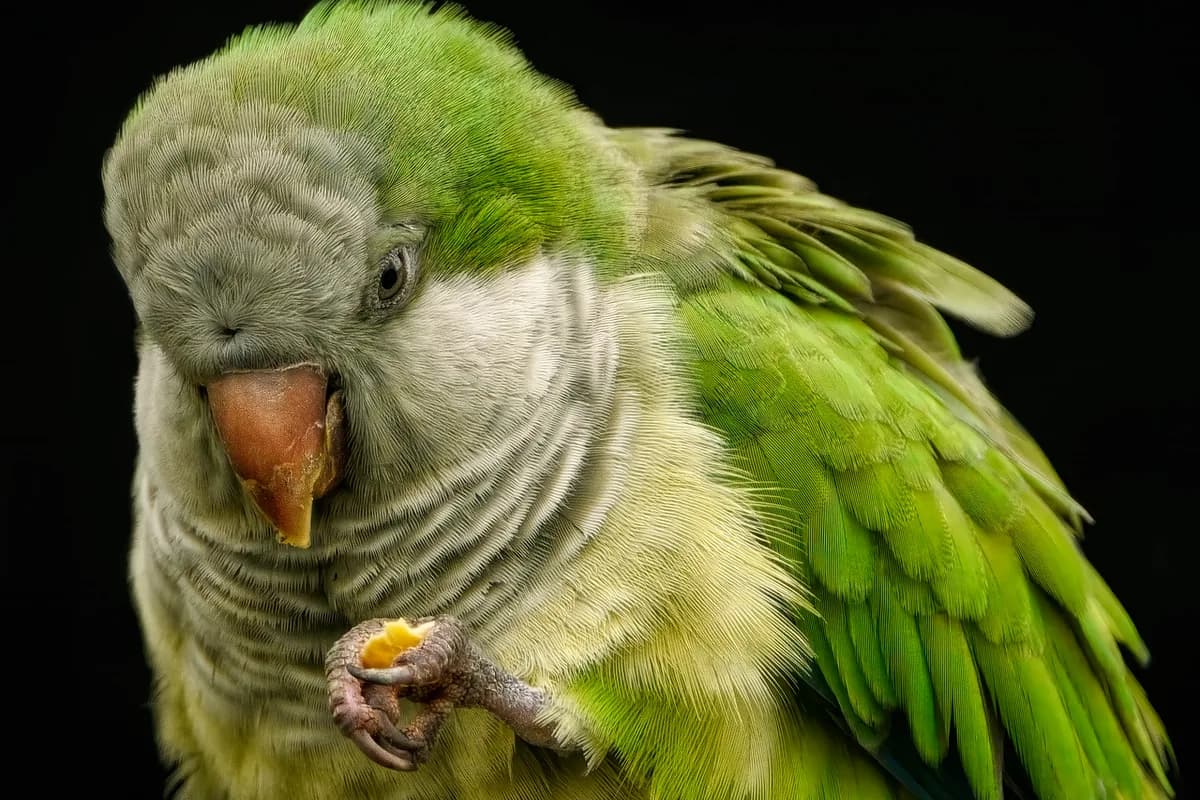
Few small parrots are as fun to train as a Quaker Parrot (Myiopsitta monachus). They are bright, food-motivated, quick to learn, and genuinely eager to interact — quakers are intermediate-level birds whose intelligence rivals parrots several times their size. The one twist that trips up new owners is their territoriality: a quaker that guards its cage will fight you there but happily work with you three feet away. Master that single insight and everything else in this guide falls into place. All training here uses positive reinforcement — reward the behavior you want, and simply withhold the reward for the behavior you don't. No punishment; a quaker that fears your hand stops learning and starts biting.
Train in Neutral Territory
This is the golden rule for the species. Quakers are strongly territorial around the cage and any nest they claim, so:
- Move sessions to a neutral perch, playstand, or table away from the cage, in a calm room.
- Ask for a step-up at the open cage door and carry your bird to the training spot — don't reach in and grab.
- Keep the environment quiet and free of distractions so your quaker can focus on you.
Tip: Nearly every "aggressive" quaker is simply defending its cage. Change the location before you change anything else, and you will often find the same bird is cooperative and sweet on neutral ground.
Building Trust First
Before any command, your quaker needs to trust you. If the bird is new or nervous:
- Let it settle for at least two weeks before hands-on work.
- Sit near the cage and talk softly so your presence predicts good things, not grabs.
- Offer a favorite treat (a millet piece or sliver of nut) through the bars, then from an open hand.
- Wait for the bird to choose to approach — curiosity signals like leaning toward you, coming to the bars, and taking food gently mean you are ready to begin.
Reading Readiness and Using the Right Rewards
Train when your quaker is alert and a little hungry — mid-morning is ideal — never right after a big meal. Use a high-value treat reserved only for training: a small piece of sunflower seed, a nut sliver, or a bit of dried fruit. Keep the pieces tiny so the bird can eat fast and stay engaged, and remember these treats count toward the ~5% seed/nut share of the diet, so don't overdo them.
Step-Up: The Foundation
Every other skill builds on a reliable step-up.
- With your bird on a neutral perch, press your finger or a flat hand gently against its lower belly, just above the feet.
- Say "Step up" in a clear, upbeat tone.
- The moment both feet land on your hand, reward instantly and praise.
- Repeat 3-5 times, then quit while your bird is winning.
Keep your hand steady and confident — a wobbling perch feels unsafe. If your quaker hesitates, lure it with the treat held just beyond its feet so stepping up earns the reward.
Target Training
Target training is where quakers shine, and it is the safest way to move a territorial bird without hands. It teaches your quaker to touch a target stick (or the tip of a chopstick) with its beak on cue.
- Hold the target an inch from the beak. The instant the bird touches it, mark the moment (say "Yes!" or use a clicker) and reward.
- Once it reliably touches, move the target so the bird takes a step to reach it.
- Use the target to guide your quaker onto a scale, into a carrier, around obstacles, or back into its cage — all without a hand it might guard against.
Tip: Target training doubles as bite prevention. A quaker following a target with its beak literally can't bite your hand, which makes it perfect for cage-territorial birds and for cooperative vet and grooming handling.
Recall (Coming When Called)
Once step-up and targeting are solid, teach recall in a safe, enclosed room (wings should be flighted or you should work at very short distances):
- Have a helper hold the bird, or start on a nearby perch.
- Show the treat, say "Come" or hold out your hand, and reward the instant your quaker flies or climbs to you.
- Increase distance gradually. Always end with a success.
Tricks
Quakers love the mental challenge of tricks, and their small size makes many easy:
- Wave — capture a raised foot, mark, reward; add the cue.
- Turn around / spin — lure a full circle with a treat, then fade the lure to a hand cue.
- Shake / high-five — reward a foot lifted toward your finger.
- Retrieve — reward the bird for picking up and then dropping a small object into your hand.
Shape each trick in small steps, rewarding closer and closer approximations. Two or three five-minute sessions a day beat one long one.
Talking and Whistling
On a talking scale of 5, quakers score about a 4 — pound for pound among the best talkers in the parrot world, capable of dozens of words, phrases, whistles, and sound effects, often used in context.
- Pick a short word and say it with energy and consistency, always in the same situation ("hello" when you enter, "night-night" at cover time).
- Reward any attempt — even a garbled first try — with attention and praise.
- Speech comes on the bird's schedule; some quakers chatter within weeks, others take months.
Warning: Teach words on purpose, or your quaker will teach itself the sounds that get the biggest reaction — the microwave beep, a phone ringtone, or that word you muttered stubbing your toe. Whatever draws attention gets repeated, so reinforce the sounds you actually want to live with.
Solving Typical Problem Behaviors
- Cage biting: the classic quaker issue. Stop reaching into a guarded cage; use target training and step-ups at the door, and do all real interaction on neutral ground.
- Attention screaming: reward quiet, ignore the demanding call, and answer a soft contact call with a calm word or whistle so you reinforce the volume you want.
- One-person aggression: have every household member offer treats and do easy target sessions so the bird stays social with the whole family.
- Hormonal nippiness: manage with 10-12 hours of sleep, no nest huts, and head-only petting rather than trying to "train" the hormones away.
Keep every session short, upbeat, and rewarding, respect your quaker's territory, and end on a win. Done that way, training is not a chore — it is the daily conversation that turns a bold little parrot into a genuinely bonded companion.
Explore related topics
Related Articles
Clicker Training for Parrots: The Complete Beginner's Guide
Clicker training is the most effective way to communicate with your parrot. Here's how to start from zero.

Crate Training Your Parrot: Stress-Free Vet Visits and Travel
The travel carrier doesn't have to be terrifying. Crate training makes vet visits and travel manageable.

Desensitization Training: Helping Fearful Parrots Overcome Their Fears
New toys, strangers, vet visits — many parrots are terrified. Systematic desensitization changes that safely.