Reading Your Parrot’s Body Language: A Guide to Understanding Their Moods and Needs
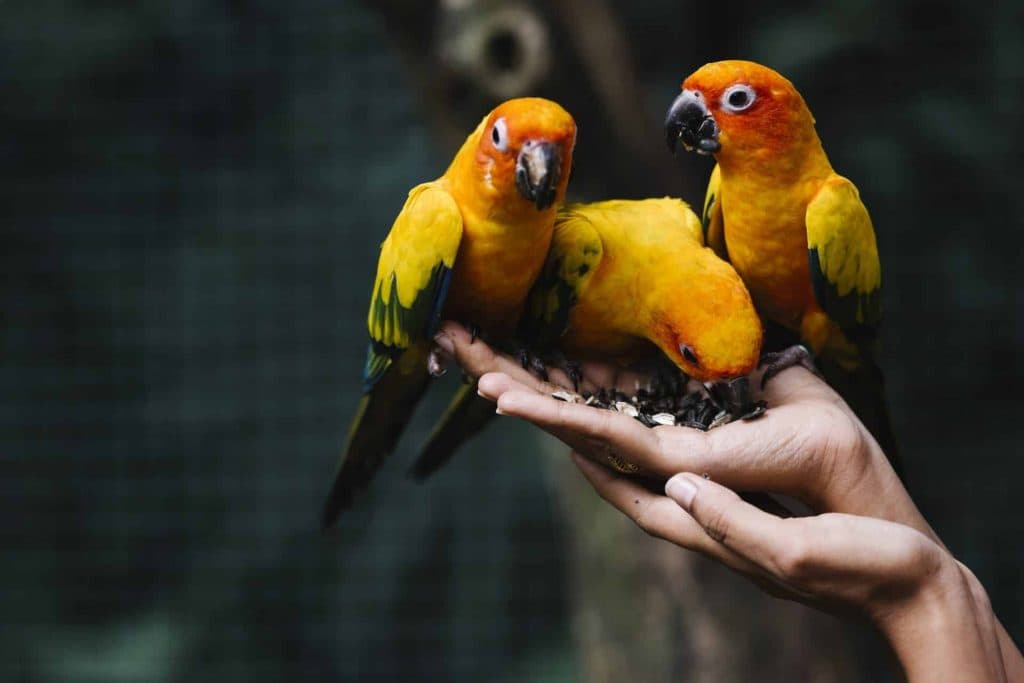
Building a strong relationship with your parrot starts with understanding how they communicate. A few birds learn to use human words, but every parrot — talker or not — expresses itself primarily through body language and vocalizations. Feathers, posture, the set of the eyes, and the tension in the body carry a running commentary on how your bird feels. Learning to read those cues lets you respond to your bird's emotions, earn its trust, and sidestep the misunderstandings that lead to bites.
The single most important principle is this: read the whole bird in context, not one signal in isolation. A raised crest can mean curiosity, alarm, or aggression depending on what the eyes, tail, and body are doing at the same moment, and depending on what just happened in the room. Beak grinding at bedtime means something very different from beak grinding while a stranger reaches into the cage. Before you decide what a gesture means, take in the full picture — the feathers, the feet, the eyes, the voice, and the situation.
Body language also varies by species and by individual. A cockatiel telegraphs its mood with a mobile crest; an African Grey, with no crest to raise, keeps its signals in the fine set of its feathers and the pinning of its eyes. The clusters below are the common vocabulary. Spend a week simply watching your own bird and you will start to learn its personal dialect.
The Six Core Moods at a Glance
| Mood | What you'll see | What to do |
|---|---|---|
| Happy / content | Quick full-body fluff and shake; tail wag side to side; beak grinding; tongue clicking (cockatiels, cockatoos); lowered, fluffed head | Enjoy it — offer head scratches if the head is bowed, and reward calm with quiet attention |
| Relaxed | Standing on one foot; wing-and-tail stretch; beak grinding; slow, steady movements | Leave the bird to settle; this is a bird that feels safe |
| Playful | Wing flapping in place; leaning forward with wings slightly open; one foot raised; rocking, head bobbing, hanging upside down | Engage — foraging toys, gentle interaction, or step-up if a foot is offered |
| Fearful | Body crouched ready to fly; feathers slicked tight; crest flattened; wide eyes, frozen posture; growling (Greys); hissing (cockatoos, cockatiels) | Stop, back off, lower your energy, and let the bird choose to re-approach |
| Aggressive / overstimulated | Eye pinning; feathers slicked back over a crouched body; tail fanning, crest raised; open beak, foot stomping (cockatoos); hackled nape; facial blushing (macaws) | Give space immediately — do not reach in; wait for the arousal to drain |
| Unwell | Fluffed for long stretches; sitting low and quiet; tail bobbing with each breath; panting or labored breathing | Warm, quiet, dark — then contact an avian vet; labored breathing is an emergency |
Contentment and Calm
A happy parrot looks loose and unhurried. The classic greeting is a quick full-body fluff followed by a shake, as if resettling every feather at once. Tail wagging from side to side is a cheerful "hello," and a lowered, fluffed head pushed toward your hand is a direct request for scratches. Beak grinding — that soft, gritty sound of the mandibles rubbing together — is one of the most reassuring noises a bird makes; it usually appears as a content bird winds down toward sleep. Tongue clicking is common in cockatiels and cockatoos and often signals a bird that is comfortable and looking for mild attention.
Relaxation shows in the feet and the stretch. A bird perched on one foot, with the other tucked up into its belly feathers, is telling you it feels secure — a bird that expects trouble keeps both feet planted. Slow wing-and-tail stretches and unhurried movement round out the picture of a settled, safe parrot.
Fear, Overstimulation, and the Pre-Bite Zone
Fear and aggression sit closer together than most owners realize, and both live in the same warning zone that precedes a bite. A fearful bird makes itself small: feathers clamped flat, body crouched and angled to launch into flight, eyes wide, crest slicked down. African Greys may growl; cockatoos and cockatiels may hiss. This is a bird asking for distance, not a bird being difficult.
An overstimulated or aggressive bird does the opposite — it makes itself big and tense. The feathers on the nape stand up (hackling), the crest goes up, the tail fans, and the body tips forward over a braced stance. Cockatoos may stomp a foot and gape; macaws "blush" as the bare skin of the face flushes with excitement. Excitement and aggression are the same physiological state at high intensity, which is exactly why an over-aroused bird can tip from delighted to biting in a heartbeat.
Warning: These displays are the warning before the bite, not random moodiness. When you honor them — freezing, backing off, giving space until the arousal drains — you teach your bird that its signals work and that it never needs to escalate to a bite to be heard. Push through them, and you train the bird that only teeth get results. The most bite-prone bird is the one whose quieter warnings have been ignored for years.
Eye Pinning: The Signal Owners Miss Most
Eye pinning — also called flashing — is the rapid dilation and constriction of the iris, so the pupil pulses quickly larger and smaller. It appears at the top of the aggressive and overstimulated cluster above, and it is the single cue new owners most often overlook, because it is small and silent. Pinning simply means high arousal and intense focus. By itself it is neutral: a bird may pin its eyes over a favorite food, an exciting new toy, or a person it adores.
The meaning comes from the company it keeps. Pinning eyes paired with soft, fluffed feathers and an eager lean is excitement you can enjoy. Pinning eyes paired with a fanned tail, raised nape feathers, a rigid body, and an open beak is a loud "back off right now." This is the clearest possible illustration of the read-the-whole-bird rule: the eyes tell you how much the bird is feeling, and the feathers and posture tell you what it is feeling.
Tip: Learn your own bird's pin-plus-posture combinations. Watch it flash over a treat versus flash at a stranger's hand, and note how the rest of the body differs. Once you can read pinning in context, most "sudden, unprovoked" bites stop being sudden at all.
When Body Language Signals Illness
Some postures are not moods at all — they are medical red flags, and telling them apart can be life-saving. Birds are prey animals, and avian veterinary consensus holds that they instinctively mask illness until they can no longer compensate. By the time a parrot looks visibly sick, it has often been unwell for days (VCA Animal Hospitals; Lafeber). That biology is why subtle changes matter so much.
A content bird fluffs briefly and then resettles; a bird that stays fluffed for long stretches, sits low and quiet on the perch, sleeps far more than usual, or perches on the cage floor is showing possible illness, not contentment. The most urgent respiratory signs are tail bobbing — the tail pumping with every breath — and panting or open-mouthed, labored breathing in a bird that has not been exercising or overheated. These indicate the bird is working hard to breathe and warrant an avian vet the same day. Other warning signs include changes in droppings, discharge from the nostrils or eyes, a change in voice, loss of appetite, and any unexplained drop in weight.
Tip: Weigh your parrot weekly on a gram scale, at the same time of day, and log it. Weight loss is one of the earliest and most objective signs of illness, and it often shows up on the scale before you can see anything wrong with the naked eye — sometimes days ahead of any change in posture.
At Bird Sitting Toronto, where we care for hundreds of birds every year, this instinct to hide illness is precisely why our team watches for the quiet signals — the bird that is a little too fluffed, a little too still, eating a little less. A parrot rarely announces that it feels unwell, so the caregivers around it have to notice for it. Keep the number of an avian veterinarian on hand before you ever need it; in an emergency is the wrong time to start searching.
Why It Matters
Reading your parrot's body language does more than help you avoid bites — it changes the relationship. When a bird sees that its signals are heard and respected, that "no" is honored and "come closer" is welcomed, it learns that you are safe and predictable. That trust is the foundation everything else is built on, and with parrots that can live for decades — and, as Dr. Irene Pepperberg's decades of work with African Greys have shown, think and remember with startling sophistication — it is a foundation worth building carefully. Watch closely, respond honestly, and let your bird teach you its language. In time you will read the most subtle cues at a glance, and respond with the quiet confidence of someone the bird can rely on.
Explore related topics
Related Articles
Clicker Training for Parrots: The Complete Beginner's Guide
Clicker training is the most effective way to communicate with your parrot. Here's how to start from zero.
Crate Training Your Parrot: Stress-Free Vet Visits and Travel
The travel carrier doesn't have to be terrifying. Crate training makes vet visits and travel manageable.
Desensitization Training: Helping Fearful Parrots Overcome Their Fears
New toys, strangers, vet visits — many parrots are terrified. Systematic desensitization changes that safely.