Parrotlet Training Tips: Taming and Teaching the Bold Little Parrot
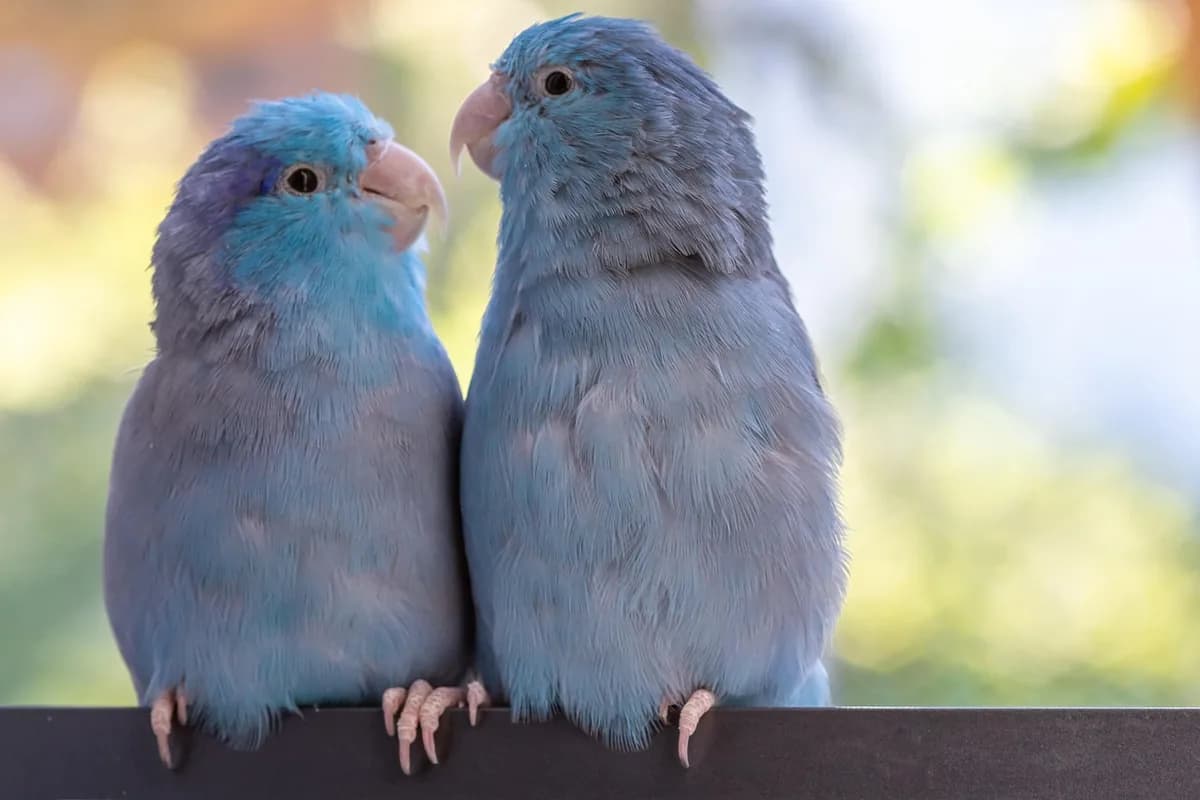
Parrotlets are one of the most rewarding small parrots to train, for two reasons. They are intensely food-motivated, which gives you a clear currency for rewards, and they are bold and curious rather than timid, so they engage quickly. But that same boldness is why training is not optional: a parrotlet that is not handled regularly reverts to a nippy, one-person bird within weeks. Think of training less as teaching tricks and more as the ongoing conversation that keeps a fearless little parrot tame and pleasant for its whole 15-20 year life. Every method here is positive reinforcement — you reward what you want and simply ignore what you do not.
Before You Start
Set the bird up to succeed:
- Give it time to settle — at least two weeks in your home before serious training.
- Confirm it will eat in front of you — a bird too nervous to eat with you nearby is too nervous to train.
- Find its jackpot treat — for most parrotlets that is a few seeds of spray millet or a single sunflower or safflower kernel. Reserve that treat for training only, so it stays special.
- Train when slightly hungry — a short session before the morning meal, not after the bird has already filled up, keeps motivation high.
- Keep sessions short — 5-10 minutes, two or three times a day. A parrotlet's attention and your window of good behavior are both brief. Always end on a success.
Tip: Never train a parrotlet by grabbing, chasing, or "toweling" it into cooperation. Force teaches a bold bird to bite harder and trust less. Everything below works by making the right choice the rewarding choice — the bird chooses to come to you because good things happen when it does.
Building Trust First
With a new or hand-shy parrotlet, start slowly. Sit near the cage and talk softly so your presence becomes ordinary. Then offer the special treat through the bars, letting the bird take it from your fingers on its own terms. Progress to offering it on a flat open palm inside the cage door, so the bird has to step slightly toward your hand to eat. Do not rush this — a parrotlet that learns your hand only ever brings good things is a parrotlet that will happily step onto it later.
Step-Up
Step-up is the foundation skill and the one you will use every day.
- Present a perch — a finger for a confident bird, or a hand-held wooden dowel for one that is still nippy. Hold it just above the bird's feet, lightly touching the lower belly so stepping up is the easy option.
- Cue it — say "step up" in a clear, upbeat tone every time, so the words come to mean the action.
- Reward the instant both feet are on the perch — treat and warm praise, immediately, so the bird connects the reward to the step.
- Repeat a few times per short session and stop while it is still going well.
A parrotlet is small enough to step onto a single finger, but if the bird is biting, a dowel keeps the lesson positive while you build trust — there is no shame in it, and you can transition to a finger later.
Gentle Bite-Pressure Work
Because parrotlets bite surprisingly hard for their size, teaching soft beak use is worth real effort. The principle is simple: reward gentle mouthing, and remove your attention the moment the beak clamps down. When the bird explores your finger with a soft beak, stay relaxed and calm; the instant it bites hard, quietly end the interaction — set the bird down, look away, pause. No drama, no yelling (which a parrotlet may read as an exciting reaction and repeat). Over many repetitions the bird learns that soft beak keeps the fun going and hard beak ends it. Just as important, learn to read the warning posture — open beak, tense body, a lean-in — and back off before the bite, so you are never rewarding the escalation.
Target Training
Target training is the workhorse behind almost every other trick, and parrotlets take to it fast.
- Hold a small target stick (a chopstick works) near the bird.
- The moment it touches the tip with its beak, mark the instant — a clicker or a consistent word like "yes" — and reward.
- Once the bird reliably touches, move the target so it must take a step, then a few steps, to reach it.
From here you can lead the bird onto scales, into carriers, across a tabletop, and through the motions of tricks — all without a hand on the bird.
Recall (Coming When Called)
A confident, flighted parrotlet can learn to fly to you on cue. Start at arm's length: cue "come" and reward the bird for stepping or hopping to your hand, then gradually widen the gap to short flights across a bird-proofed room. Recall is genuinely useful — it turns "getting the bird back" from a chase into a game the bird wants to win. Only practice free flight in a fully enclosed, hazard-checked space.
Tricks, Whistling, and Talking — a Realistic Look
Once step-up and targeting are solid, parrotlets can learn crowd-pleasers like wave, turn-around/spin, and retrieving a small object, all built with the target stick and treats.
On talking: keep expectations grounded. Parrotlets have modest talking ability — about a 2 out of 5 — and their voice is quiet and scratchy. Some individuals, more often males, pick up a handful of words or whistles; many never talk at all, and that is completely normal for the species. If you want to encourage it, repeat a short word or whistle warmly and consistently during calm one-on-one time, and reward any attempt. But value your parrotlet for its personality and its willingness to interact, not for a vocabulary it may never build.
Solving Typical Problem Behaviors
| Challenge | What is really going on | What to do |
|---|---|---|
| Biting hands | Fear, over-arousal, or learned that biting gets a reaction | Read the warning posture and back off early; reward soft beak; never grab |
| Cage territoriality | Instinct to defend the "nest" | Let the bird come out to a neutral perch rather than reaching in to grab it |
| One-person bird | Bonded hard to a single human | Have several household members offer treats and short daily sessions, from day one and for life |
| Refuses to step up | Distrust, or no reason to comply | Rebuild with target training and hand-feeding; make your hand the source of good things |
The Golden Rule
Training a parrotlet is not a project you finish; it is a habit you keep. A few short, positive minutes every day — a step-up, a target session, a treat taken gently from your fingers — is what maintains the tameness and trust you built. Skip it for a few weeks and a bold little parrot will happily go back to running its own life. Stay consistent, stay positive, and this pocket-sized parrot will reward you with one of the biggest personalities in the bird world.
Explore related topics
Related Articles
Clicker Training for Parrots: The Complete Beginner's Guide
Clicker training is the most effective way to communicate with your parrot. Here's how to start from zero.

Crate Training Your Parrot: Stress-Free Vet Visits and Travel
The travel carrier doesn't have to be terrifying. Crate training makes vet visits and travel manageable.

Desensitization Training: Helping Fearful Parrots Overcome Their Fears
New toys, strangers, vet visits — many parrots are terrified. Systematic desensitization changes that safely.