Training Tips for Lovebirds: A Step-by-Step Guide
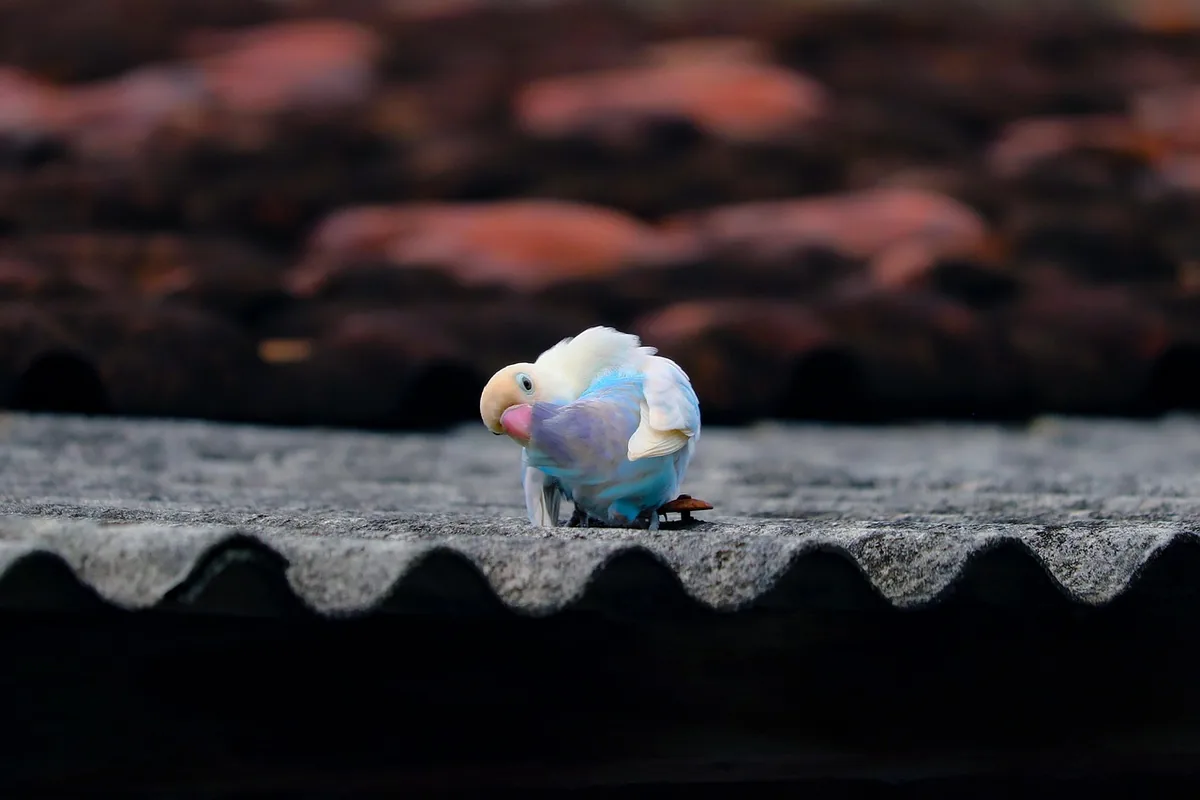
Do not let the size fool you: a lovebird is a bright, opinionated little parrot that learns quickly when you make training a game worth playing. The catch is temperament. Lovebirds are feisty, territorial, and slower to trust than a hand-fed cockatiel, and a bird bonded to a mate may barely notice you exist. But a single, well-socialized lovebird can become genuinely tame, step up on cue, target, recall across a room, and learn a handful of tricks. At Bird Sitting Toronto, the tamest lovebirds we host all have one thing in common — an owner who put in patient, daily, food-motivated practice. Here is how.
The Golden Rule: Positive Reinforcement Only
Everything below rests on one method: reward what you want, ignore what you do not, and never punish. A lovebird cannot be scared into trusting you — grabbing, yelling, or "beak flicking" only convinces a territorial bird that hands are the enemy, and it will bite harder. You are always building a simple equation in the bird's mind: good things happen when I cooperate with this human.
Find your bird's currency first. Because lovebirds are strongly food-motivated (and obesity-prone), tiny high-value treats used only during training are perfect leverage.
Tip: Spray millet is the gold-standard lovebird training treat — break off a single seed head or even a few seeds per reward. A sunflower or safflower seed also works as a jackpot. Keep these out of the daily bowl so they stay special, and keep pieces tiny so a session does not blow the diet.
Before You Begin
Set the bird up to succeed:
- Let a new lovebird settle in for at least two weeks before any hands-on training.
- Train when the bird is alert and a little hungry — mornings, before the main meal, not after a full bowl.
- Work outside the cage where possible, on a neutral perch or play stand. Lovebirds are territorial at the cage door, so a neutral zone means far fewer bites.
- Keep sessions 5 to 10 minutes, two or three times a day, and always end on a success.
Step 1: Taming and Trust-Building
Before a lovebird will step up, it has to decide you are safe. Move slowly and let the bird set the pace.
- Just exist nearby. Sit by the cage and talk or read softly so your presence stops being a threat.
- Hand-feed through the bars. Offer millet from your fingers. When the bird takes it calmly, you have your first real breakthrough.
- Hand in the cage, still. Once it eats from your fingers at the bars, rest a still hand inside with a treat and let curiosity do the rest. Do not grab.
- Treat closer to your hand each day, so the bird has to approach you to earn the reward.
Patience is everything with this species — trust can take days for a young hand-raised bird or weeks for a nervous one. Never rush to the next step.
Step 2: Step-Up
The step-up is the foundation of all handling.
- With the bird calm and taking treats, press a finger gently against its lower belly, just above the feet.
- Say "step up" in a clear, upbeat tone.
- The moment it steps onto your finger, reward instantly with millet and warm praise.
- Repeat 3 to 5 times per short session. A lovebird steps up onto a single finger easily.
If the bird bites or backs away, you moved too fast — drop back to hand-feeding and rebuild.
Step 3: Target Training
Target training is the secret weapon for lovebirds, because it lets you direct a nippy bird without using your hand as bait — you guide the beak somewhere useful instead.
- Present a small stick (a chopstick works). When the bird looks at or touches the tip, click or say "yes" and reward.
- Once it touches reliably, move the target slightly so the bird takes a step to reach it, then reward.
- Build up to following the target across a perch, onto a scale, or back into the cage on cue.
Target training builds confidence, sharpens focus, and becomes the on-ramp for recall and tricks.
Step 4: Recall
Recall — flying to you on cue — is both a bond-builder and a safety skill.
- Start with the bird on a perch, just a hand's width away. Cue "come" and hold out a finger with a visible treat.
- When it hops or leans over to you, reward immediately.
- Increase the distance a little at a time until the bird flies to you across the room.
Always practice recall in a safe, enclosed room, and make coming to you the most rewarding thing in the world.
Step 5: Tricks, Whistles, and Talking
Once step-up and targeting are solid, lovebirds can learn crowd-pleasers like turn-around/spin, wave, and step onto a hand-held perch, usually by shaping with the target stick. Trick training is superb enrichment for such a busy brain.
Manage expectations on speech. With a talking ability of about 1 out of 5, lovebirds are not reliable talkers — the odd individual may pick up a raspy word or a wolf-whistle, but most communicate in chatter and whistles. If you want to try, repeat a short word or tune consistently at a calm time; treat any mimicry as a delightful bonus, not the goal.
Solving the Classic Lovebird Problems
- Biting. Almost always territorial (at the cage) or a missed warning. Read the pre-bite cues — beak open, tense forward lean, hard-pinning eyes — and give space before it lands. Train on a neutral perch, never reach at a bird defending its cage, and if a bite happens, calmly put the bird down and end the session rather than reacting dramatically (drama can become a reward).
- The hormonal, territorial phase. A suddenly bratty lovebird is often hormonal. Progress stalls when hormones spike, so lean on management from the behavior guide — 10 to 12 hours of sleep, no nest huts, no petting down the back — and keep sessions light until it passes.
- The bonded pair that will not tame. Two lovebirds bonded to each other often ignore people entirely. If tameness matters to you, handle both birds individually every day, or accept that a bonded pair is more "aviary companions" than "hands-on pets."
- Screaming for attention. Reward quiet, ignore the escalating demand call, and never come running mid-scream — you would simply be training a louder scream.
Keep sessions short, keep them positive, and keep them daily. A little feisty parrot that once lunged at the cage door can, with patient reinforcement, become a bird that flies across the room to land on your shoulder — and that transformation is the best part of living with a lovebird.
Explore related topics
Related Articles

Clicker Training for Parrots: The Complete Beginner's Guide
Clicker training is the most effective way to communicate with your parrot. Here's how to start from zero.

Crate Training Your Parrot: Stress-Free Vet Visits and Travel
The travel carrier doesn't have to be terrifying. Crate training makes vet visits and travel manageable.

Desensitization Training: Helping Fearful Parrots Overcome Their Fears
New toys, strangers, vet visits — many parrots are terrified. Systematic desensitization changes that safely.