Training an Indian Ringneck: Taming, Talking, and Tricks
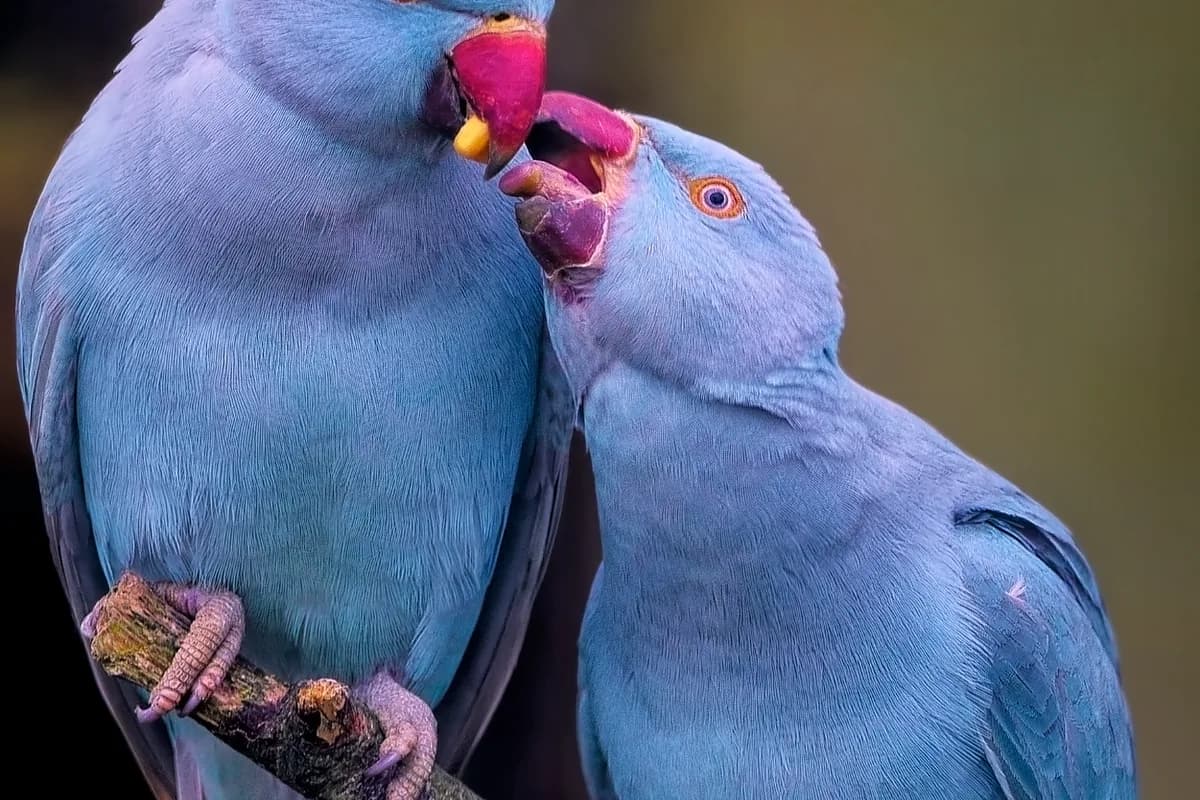
Indian Ringnecks are wonderful training subjects for keepers who understand what they are working with. They are highly intelligent, motivated by food and novelty, and capable of some of the clearest speech in the parrot world (a 4-out-of-5 talker). What they are not is naturally clingy. A ringneck works with you because you have made it worth its while and earned its trust — never because it needs to please you. Positive reinforcement is not just the kindest approach with this species; it is the only one that reliably works, because pressure and force send a ringneck straight back toward being flighty.
Start With Trust, Not Tricks
Before any command, your ringneck needs to be settled and to see you as safe. Wait until the bird has been in your home at least a couple of weeks and is:
- Eating comfortably while you are nearby.
- Showing curiosity about you — approaching the bars, watching your hands, taking a treat through the cage.
- Not visibly panicked when you move around the cage.
Rush this and you will spend months undoing the fear. Spend time simply near the cage — talking softly, reading aloud, offering a favorite food through the bars — until the bird comes to you.
The Positive-Reinforcement Method
Every exercise below runs on the same simple loop: the bird does something you like, and immediately gets something it values. Keep four rules in mind.
- Find the currency. Identify a high-value treat the bird only gets during training — a sliver of almond or walnut, a single sunflower or safflower seed, a bite of favorite fruit. Small, fast to eat, instantly rewarding.
- Reward the instant it happens. Timing is everything; the treat must land within a second of the behavior so the bird connects the two. Many trainers add a marker word ("good!") or a clicker to bridge that gap.
- Keep sessions short. 5–10 minutes, once or twice a day, ideally in the morning when the bird is alert and a little hungry (never starved).
- End on a win. Always finish with a behavior the bird does easily, so it walks away from training feeling successful.
Tip: Never yell at, flick, chase, or "punish" a ringneck. This species reads confrontation as a reason to distrust hands, and punishment is the fastest way to create a flighty, biting bird. If a session is going badly, calmly stop and try again later — a bad session is just information, not a failure.
Step-Up
Step-up is the foundation skill. Because ringnecks value their tails and personal space, teach it calmly and without grabbing.
- Offer a steady perch — a finger, or a hand-held perch/dowel for a bird that is not yet hand-tame — held just above the feet, gently touching the lower belly.
- Say "step up" once, in a clear, upbeat tone.
- Reward the instant both feet are on your hand or the perch.
- Practice a few reps per session and stop while it is still going well.
A hand-held perch is a great confidence bridge for a nervous or bluffing bird — you get the behavior without either of you feeling cornered, then transition to your hand once trust is solid.
Target Training
Target training — teaching the bird to touch a stick (a chopstick works fine) with its beak — is the single most useful skill for a ringneck, because it lets you guide the bird without ever using your hands.
- Present the target tip an inch from the beak. Curious ringnecks usually investigate it.
- The instant the beak touches it, mark ("good!") and reward.
- Once that is reliable, move the target so the bird takes a step to reach it, then a turn, then onto a scale or into a carrier.
Target training builds step-up, recall, scale training, and stationing, and it turns "handling" into a game the bird chooses to play.
Recall
Recall — flying or moving to you on cue — flows naturally out of target training and is well within a ringneck's ability. Start with tiny distances: bird on a perch, you a hand's width away, present your hand (or target), give the cue, and reward the moment it steps or hops to you. Extend the distance gradually. Practice recall only in a safe, enclosed room, and never rely on it outdoors — a startled ringneck is a strong flier and will keep going.
Talking and Whistling
This is where ringnecks shine. To encourage speech:
- Repeat short words and phrases clearly and with enthusiasm, at consistent moments (a "hello" every time you walk in, a "night night" at cover-up).
- Emotion and repetition sell it — birds latch onto words said with feeling and in a steady context.
- Reward attempts with attention and warmth; talking is largely self-reinforcing once the bird realizes it gets a reaction.
- Mind what you teach — ringnecks pick up incidental sounds fast, so be deliberate, and be warned that some birds fixate on the one whistle or word you least want on repeat.
Not every ringneck talks, and that is normal — value the bird you have rather than training only for speech.
Training Through the Bluffing Phase
You cannot talk about ringneck training without the bluffing phase — the adolescent, hormone-driven stage (often around 4–12 months) when a formerly sweet bird turns suddenly nippy and standoffish. It is temporary and normal, but it is also the point where many owners give up and the bird drifts back toward semi-feral.
The training answer is consistency, not confrontation. Keep up short, gentle, positive sessions. Lean on target training and a hand-held perch so you can keep working without hands-on conflict. Do not grab, chase, or punish a bluffing bird — respect the "no," reward the good moments, and keep showing up every day. Owners who stay calm and consistent through bluffing come out the other side with the affectionate, talkative bird they started with.
Solving Common Problem Behaviors
- Biting: Almost always preceded by a warning (lean-away, eye pin, tail flick). Read the cue and stop before the bite; reward calm, gentle beak contact instead. Never react dramatically — a big reaction can become the reward.
- Cage aggression / one-person bonding: Train and take treats through the bars, do sessions in a neutral room away from the "territory," and have every household member offer good things so the bird generalizes trust.
- Screaming for attention: Reward quiet, answer genuine contact calls promptly, and never reward the escalation. Most attention-screaming eases when the bird has enough foraging, enrichment, and predictable interaction to occupy a very busy mind.
- Going flighty: Rebuild with pure trust work — food through the bars, no pressure, no grabbing — until the bird chooses to approach again.
Train a ringneck with patience, a clear reward, and unshakeable consistency, and you will have one of the most impressive companion parrots there is — a clever, characterful bird that greets you by name and means it.
Explore related topics
Related Articles
Clicker Training for Parrots: The Complete Beginner's Guide
Clicker training is the most effective way to communicate with your parrot. Here's how to start from zero.

Crate Training Your Parrot: Stress-Free Vet Visits and Travel
The travel carrier doesn't have to be terrifying. Crate training makes vet visits and travel manageable.

Desensitization Training: Helping Fearful Parrots Overcome Their Fears
New toys, strangers, vet visits — many parrots are terrified. Systematic desensitization changes that safely.