Training an Eclectus: Trust, Step-Up, Foraging & Working With a Zen Bird
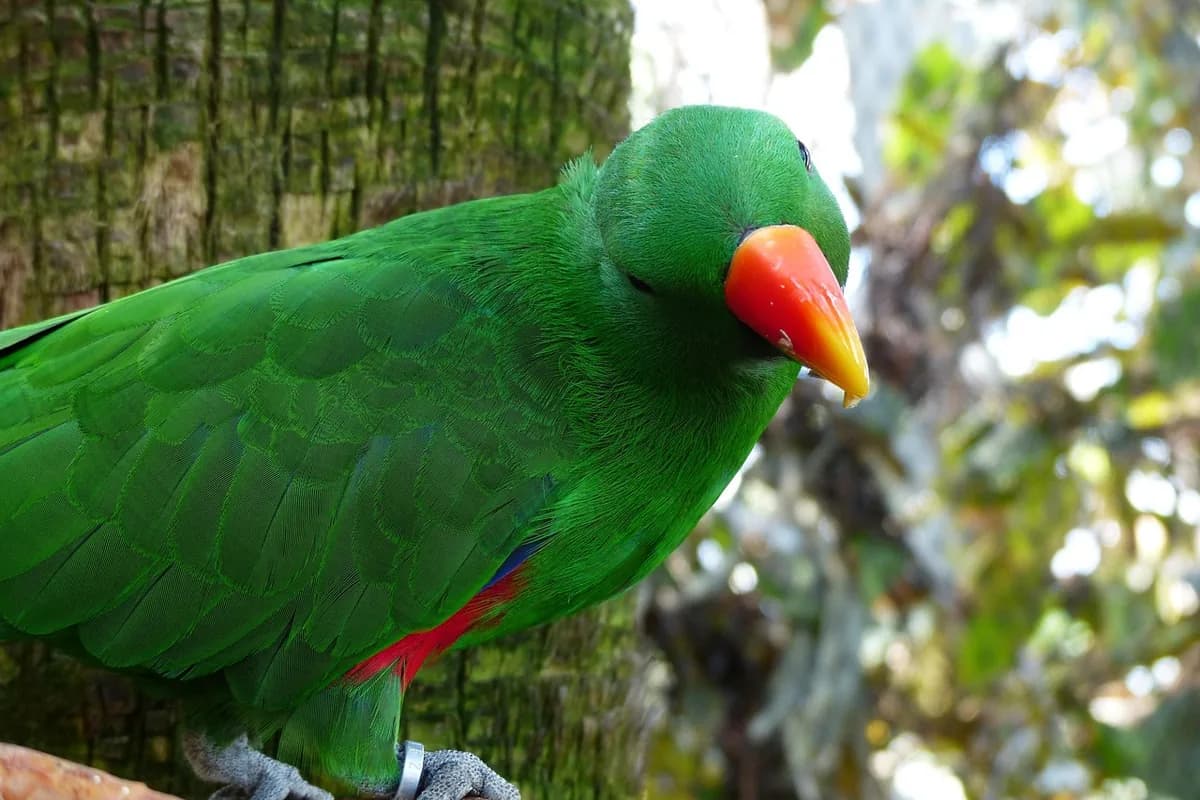
The Eclectus is a rewarding student, but not for the reasons a cockatoo or macaw is. This is the calm, observant "zen" parrot — it doesn't leap into a new game so much as study it, then commit. That deliberate nature, paired with strong food motivation and real talking ability, makes the Eclectus an excellent candidate for gentle, reward-based training. At Bird Sitting Toronto, where we board hundreds of parrots a year, the Eclectus that respond best are the ones whose owners trained trust before tricks. Just remember the species' real priority: dietary management matters more than any behaviour on cue. Get the food right first (see our diet guide), then train.
The Method: Positive Reinforcement Only
Reward the behaviour you want; ignore or redirect what you don't. Never grab, hit, "beak flick," or squirt water — punishment terrifies a sensitive Eclectus and erodes trust you can't easily rebuild. Because Eclectus read household mood so closely, your own calm, patient energy is part of the training.
Pick a reward your bird truly values — often a sliver of nut, a favourite fruit piece, or a warm cooked grain — and reserve it for training so it stays special. Keep treats small and low-fat; this is a species where diet is delicate.
Tip: Train just before a meal, when your bird is a little hungry and most motivated — never when it's already full or already stressed. Short and frequent beats long and draining.
Step One: Building Trust
Before any command, your Eclectus needs to feel safe.
- Let a new bird settle for a couple of weeks before hands-on work.
- Sit near the cage and talk softly, read aloud, or simply share the room so the bird learns you're safe.
- Offer favourite foods through the bars, then from an open hand, letting the bird approach on its own timeline.
- Watch the body language (see our behaviour guide) — pinning eyes with raised nape feathers means back off; a relaxed, curious lean means proceed.
You'll know trust is forming when your bird eats calmly in your presence and moves toward you rather than away.
Step-Up: The Foundation
Every other behaviour builds on a reliable step-up.
- Present a steady perch — a level forearm or finger just above the bird's feet, gently touching the lower belly.
- Cue clearly — say "step up" in a warm, even tone.
- Reward the instant the bird steps on — treat and praise immediately, so it connects the action with the reward.
- Keep it short — 3 to 5 reps, then stop on a win.
For a bird this size, offer a flat, confident perch; a wobbly or hesitant hand invites a steadying bite. Never yank away if the beak reaches out — Eclectus often use the beak to test balance before stepping, not to bite.
Target Training
Target training — teaching the bird to touch its beak to the end of a stick or chopstick — is the most useful skill you can build with an Eclectus, and it doubles as a way to move a hormonal, territorial hen without confrontation.
- Hold the target near the beak; the curious bird touches it.
- Mark the touch (a click or a consistent word like "yes") and reward.
- Gradually move the target so the bird follows it — onto a scale, into a carrier, off a guarded corner.
Tip: During hormonal seasons, a target stick lets you guide a territorial hen out of her "nest" spot and back to her cage without a battle of wills. It replaces force with a game she wants to play.
Recall Training
Once step-up and targeting are solid, teach recall — flying or stepping to you on cue.
- Start at arm's length: cue "come," reward the step across.
- Extend the distance slowly, always rewarding arrival.
- Practise only in a safe, enclosed room. Never rely on recall outdoors — a startled Eclectus can be lost in seconds, and a bird outside is at the mercy of hawks and traffic.
Talking, Whistling, and Tricks
Eclectus are strong talkers (a 4 out of 5 for clarity) and many build genuine vocabularies used in context. To encourage speech, repeat a short word warmly and consistently around a specific event ("hello" at greetings, "night-night" at cover-up), and reward any attempt. Because they mimic readily, be mindful of sounds you'd rather not hear repeated forever.
Simple tricks — wave, turn around, retrieve a ring — are well within reach for this intelligent bird. But keep sessions varied: the observant Eclectus bores of pure repetition. Foraging enrichment often engages this species more than performance tricks, so blend the two.
Foraging: Training's Best Partner
In the wild, an Eclectus spends its day working for food. Recreate that: hide favourite foods in shreddable paper, foraging boxes, and puzzle toys so your bird has to work them out. Foraging exercises the mind, slows eating, curbs boredom-driven feather-picking, and channels that watchful intelligence somewhere productive. Rotate the puzzles so novelty keeps them interesting.
Solving Typical Problem Behaviours
- Biting almost always follows a missed warning. Learn the pre-bite signals, respect them, and use target training to move the bird instead of forcing a step-up.
- Hormonal territoriality (especially in hens guarding a corner or box) is instinct, not defiance. Manage the environment — long dark nights, no nesty hideaways, head-only petting — and rely on targeting to relocate her calmly.
- Attention screaming grows when loud calls are rewarded with a rush of attention. Answer contact calls briefly and calmly, and reward quiet with the interaction the bird wanted.
- Shutdown in a tense home — the sensitive Eclectus won't learn while stressed. Lower the household volume before you expect any training to stick.
Warning: If a normally steady Eclectus suddenly resists training, tapping its toes or flicking its wings, stop and look at the diet, not the "attitude." Toe-tapping and wing-flipping are diet-driven medical signs (see our health guide), not stubbornness.
Train with patience, food, and respect for this bird's calm, watchful nature, and the Eclectus becomes a gentle, cooperative companion. Build trust first, keep the priority on diet, and let foraging and targeting — not flashy tricks — do most of the work.
Explore related topics
Related Articles

Clicker Training for Parrots: The Complete Beginner's Guide
Clicker training is the most effective way to communicate with your parrot. Here's how to start from zero.

Crate Training Your Parrot: Stress-Free Vet Visits and Travel
The travel carrier doesn't have to be terrifying. Crate training makes vet visits and travel manageable.

Desensitization Training: Helping Fearful Parrots Overcome Their Fears
New toys, strangers, vet visits — many parrots are terrified. Systematic desensitization changes that safely.