Training Tips for Cockatoo: Building an Independent, Confident Bird
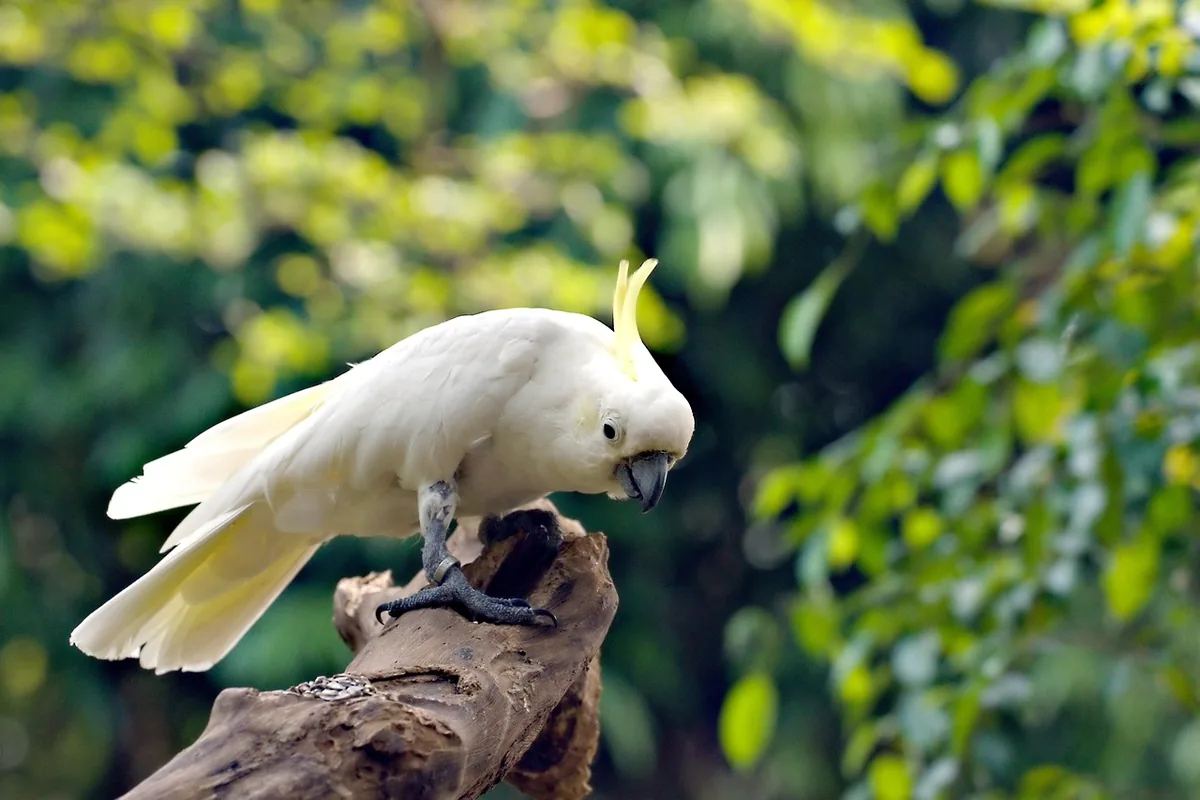
Most parrot training aims to build a bond. With a cockatoo, the bond is rarely the problem — cockatoos bond too easily and too hard. The real work of training a cockatoo is teaching independence: giving this brilliant, needy, dramatic bird the confidence to play alone, tolerate being set down, and earn attention through calm behavior rather than screaming. Get that right and you have a delightful companion; get it wrong and you have a velcro bird that shrieks the moment you leave the room. At Bird Sitting Toronto, the cockatoos who settle best in our care are always the ones whose owners taught them to be okay on their own.
Everything here uses positive reinforcement only. You reward the behavior you want and simply withhold the reward for the rest. Cockatoos are sensitive and hold grudges; punishment, grabbing, or yelling teaches them to fear hands and fuels biting and plucking.
Before You Start
Set the bird up to succeed. Make sure your cockatoo is:
- Settled into your home for at least two weeks
- Eating comfortably in your presence
- Showing curiosity — coming to the front of the cage, watching you, taking a treat through the bars
Pick a high-value reward the bird only gets during training — for this obesity-prone species, a sliver of nut or a single seed, not a whole handful. Train before a meal when the bird is a little hungry and motivated, and keep sessions short.
Taming and Trust
Trust is built at the bird's pace. Sit near the cage and talk softly, then offer a favourite treat through the bars. Let the bird approach you rather than reaching in. Over days, progress to taking a treat from your open palm inside the cage, then to accepting your hand nearby without treats. The rule is simple: whenever the bird leans away, slicks down its feathers, or raises its crest in alarm, you have gone too fast — back off and reward calm. A cockatoo that learns your hands are always safe and always optional will step up willingly for years.
Step-Up
Step-up is the foundation of everything.
- Hold a treat in one hand. Present your other hand or forearm as a low, steady perch just above the bird's feet, lightly touching the lower belly.
- Say "step up" once, clearly and warmly.
- The instant both feet are on your hand, mark it (a consistent word like "good" or a clicker) and give the treat.
- Keep it to 3–5 reps, then stop while the bird is still enjoying it.
For large cockatoos, offer a forearm rather than fingers so the bird has a solid, confident perch. Practice step-up in both directions — off your hand back onto a perch too — so being set down becomes a rewarded, positive event rather than a rejection worth screaming about.
Tip: Deliberately reward "off." Cockatoos hate being put down and will scream to get back on you. If stepping onto a play stand always earns a treat and a foraging toy, being independent becomes the thing that pays.
Target Training
Target training — teaching the bird to touch its beak to the end of a stick or chopstick — is the most useful skill you can add, and cockatoos take to it quickly.
- Present the target stick near the beak. The moment the bird touches it, mark and reward.
- Move the target a little farther each rep so the bird steps toward it to touch.
- Use targeting to guide the bird onto a perch, into a carrier, or around a play gym — no hands, no force.
Targeting is also your best tool for cooperative care: a bird that follows a target will walk into a travel carrier for a vet visit calmly, which for a decades-long companion is invaluable.
Recall (Coming When Called)
Once step-up and targeting are solid, teach recall. Start with the bird on a perch just an arm's length away, hold up your hand or the target, say "come," and reward a step onto your hand. Increase the distance gradually across sessions. Recall is genuinely useful, builds a cooperative relationship, and gives a big, energetic bird a rewarding way to burn energy indoors.
Tricks, Talking, and Whistling
Cockatoos are intelligent and love a job, so simple tricks — wave, turn around, shake, retrieve — come readily and are fantastic mental exercise. Shape each trick by rewarding successive approximations toward the finished behavior.
Be realistic about speech. Cockatoos are modest talkers by parrot standards; expect a handful of words and, more likely, enthusiastically mimicked household sounds, whistles, and tunes. A word of caution unique to this family: whatever noise you reinforce, you get more of. If you teach a cockatoo to imitate a scream, a wolf-whistle, or a phone ringing, be prepared to hear it at full volume for years. Reward the pleasant sounds and the quiet.
Session Structure
- Length: 5–15 minutes — stop before the bird loses interest.
- Frequency: 2–3 short sessions a day beats one long one.
- Best time: morning, when the bird is alert and slightly hungry.
- End on success: always finish with a behavior the bird nails, so it leaves the session winning.
Solving the Classic Cockatoo Problems
- Screaming. Most cockatoo screaming is a learned attention-getter or a contact call. Never come running, shout back, or scold — any reaction rewards it. Instead, give attention when the bird is quiet, answer normal contact calls calmly before they escalate, and load the day with foraging so there is less idle time to fill with noise.
- Biting. Bites are almost always warned — raised crest, pinning eyes, a stiff leaning body. Learn those signals (see the behavior guide), stop reaching before the bite, and reward calm acceptance. Never punish a bite; it teaches fear.
- Over-bonding / separation screaming. This is the core cockatoo challenge, and training is the cure. Reward independent play on a stand, rotate foraging toys constantly, and keep affection warm but limited to the head and neck — long full-body cuddling drives the hormonal, obsessive attachment you are trying to avoid.
Warning: Do not "cuddle-train" a cockatoo into calmness. Excessive petting and constant lap time feel loving but create a hormonal, over-dependent, screaming bird — and chronic hormonal straining is linked to serious health problems in this species. The kindest training you can give a cockatoo is the confidence to stand on its own.
Train in short, upbeat, positive sessions; reward independence as generously as you reward tricks; and you will raise a cockatoo that is affectionate and self-possessed — the version of this magnificent bird that thrives for a lifetime.
Explore related topics
Related Articles
Clicker Training for Parrots: The Complete Beginner's Guide
Clicker training is the most effective way to communicate with your parrot. Here's how to start from zero.

Crate Training Your Parrot: Stress-Free Vet Visits and Travel
The travel carrier doesn't have to be terrifying. Crate training makes vet visits and travel manageable.

Desensitization Training: Helping Fearful Parrots Overcome Their Fears
New toys, strangers, vet visits — many parrots are terrified. Systematic desensitization changes that safely.