Budgie Training Tips: Taming, Tricks, and Talking
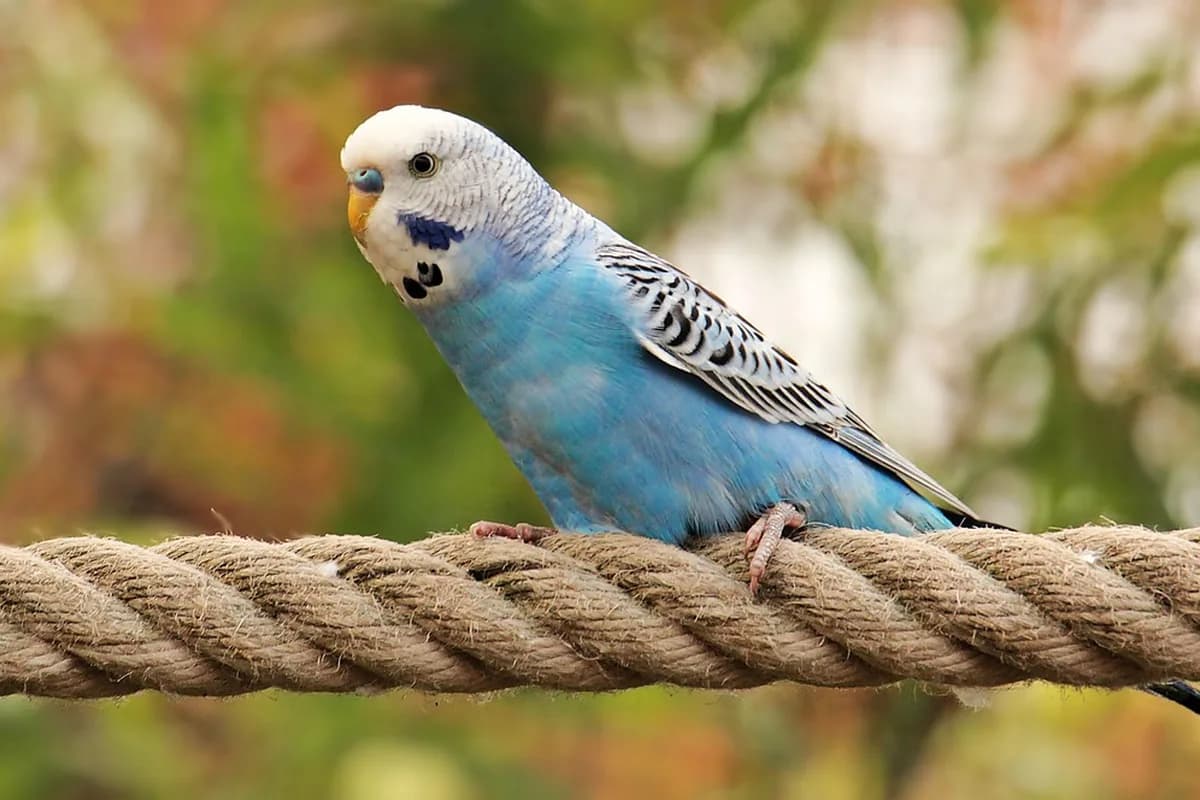
Pound for pound, budgies are one of the most trainable parrots you can keep. They are bright, food-motivated, and — thanks to that flock wiring — genuinely eager to engage once they trust you. The record-holding budgie, Puck, learned 1,728 words, and while your bird may not rival that, the same aptitude means step-up, target, recall, and talking are all realistically within reach at home. At Bird Sitting Toronto, where we board hundreds of birds every year, the difference between a confident, hands-on budgie and a fearful one is almost always the training approach — not the bird. The method that works is simple: positive reinforcement, one high-value reward, and patience.
The One Rule: Millet and Reward, Never Force
Budgies learn by good things happening, not by being made to comply. Spray millet is the single best training currency there is — break off a small sprig so you can deliver a quick reward the instant your bird does the right thing. Grabbing, chasing, or "toweling" a budgie to force interaction destroys trust and creates a biter. Everything below is built on offering a choice and paying for the right answer.
Tip: Train just before a meal, when your bird is keenest for the millet, and always end a session while your budgie is still winning. A few good minutes, stopped on a high note, beats a long session that fizzles into frustration.
Before You Start
Set the bird up to succeed first:
- Let a new budgie settle for at least two weeks before any hands-on work — just talk near the cage and move slowly.
- Confirm it will eat in your presence; a bird too nervous to eat while you're there isn't ready for training.
- Watch for curiosity signals — coming to the front bars, cocking its head at you, taking millet through the bars. That's your green light.
- Keep sessions 5-10 minutes, two or three times a day, in a quiet room with the ceiling fan off and no other pets around.
Step 1: Taming and Trust
Start by making your hand boring and generous. Rest your hand near (not in) the cage while you read or talk, several times a day, until the bird stops reacting. Then offer millet through the bars, then from your fingers just inside the door, then from your open palm resting in the cage. The goal is for your budgie to choose to step toward your hand for the treat. Let this take as many days as it takes — rushing here is what creates hand-shy birds.
Step 2: Step-Up
The step-up is the foundation of every other behaviour.
- With your budgie calm and taking millet from your hand, rest a finger against its lower belly, just above the feet.
- Gently press — the natural response is to lift a foot onto your finger — and say "step up" in a light, upbeat voice.
- Reward the instant both feet are on your finger, with millet and warm praise.
- Repeat 3-5 times per session. A budgie is small enough to step onto a single finger.
Once step-up onto your finger is reliable inside the cage, practise it just outside the door, then around the room.
Step 3: Target Training
Target training is where a budgie's cleverness really shows, and it makes every later trick easier.
- Hold a small stick or chopstick near your bird and reward it for touching the tip with its beak (most budgies investigate a new object anyway).
- Say a cue like "touch" as it makes contact, and pay immediately.
- Move the target a little farther each time so your bird follows it — onto a new perch, across a table, up a ladder.
Targeting lets you guide your bird without hands, teach spins and ladders, and coax a nervous bird into new spaces on its own terms.
Step 4: Recall (Coming When Called)
Once step-up and targeting are solid, teach flight recall. Start with the bird on a perch or your partner's hand a short distance away, hold out your hand (or the target) with visible millet, give a clear cue like "come" and an inviting whistle, and reward generously the moment it flies to you. Build distance gradually. Recall is the trick that turns out-of-cage time from a worry into a joy — a budgie that reliably comes back is a budgie you can safely let fly.
Teaching Talking and Whistling
Budgies rank a solid 3-out-of-5 for talking, and males are especially prolific — they fold learned words and sounds into a fast, mumbly warble.
- Pick one word or a short whistle and repeat it with energy at the same times each day — morning greetings are ideal, because budgies are most vocal then.
- Keep it consistent and pair the word with meaning ("step up," a name, "hello") so it isn't just noise.
- A single budgie learns human speech more readily than a bonded pair, who will happily just talk budgie to each other.
- Budgie speech is quiet and blurry by nature — listen closely and reward any attempt, even a garbled first try.
Solving Common Problem Behaviours
- Biting: Almost always fear or hormones, not aggression. Never pull away sharply or yell — that's a dramatic reaction that can actually reinforce it. Read the body language (beak open, feathers slick, lunging = "stop"), back off before the bite, and rebuild trust with millet. During breeding season, expect more nippiness and give more space.
- Cage-bound / won't come out: Don't reach in and grab. Make the outside rewarding — target-train the bird to the doorway, leave the door open with a millet spray just outside, and let it choose to explore.
- Screaming for attention: Budgies are quiet by parrot standards, but a bird can learn that a loud contact call brings you running. Answer calm contact calls, but don't reward escalating shrieks; reward the quiet moments instead.
- Fear of hands: Go back to Step 1. Time and millet, never force, is the entire cure.
Train a little every day, pay in millet, and quit while you're ahead, and you'll be amazed how much personality a seven-inch bird can pack into a trick repertoire — and how quickly a nervous budgie becomes a confident, hands-on companion.
Explore related topics
Related Articles

Clicker Training for Parrots: The Complete Beginner's Guide
Clicker training is the most effective way to communicate with your parrot. Here's how to start from zero.

Crate Training Your Parrot: Stress-Free Vet Visits and Travel
The travel carrier doesn't have to be terrifying. Crate training makes vet visits and travel manageable.

Desensitization Training: Helping Fearful Parrots Overcome Their Fears
New toys, strangers, vet visits — many parrots are terrified. Systematic desensitization changes that safely.